









What eleven hours actually buys you
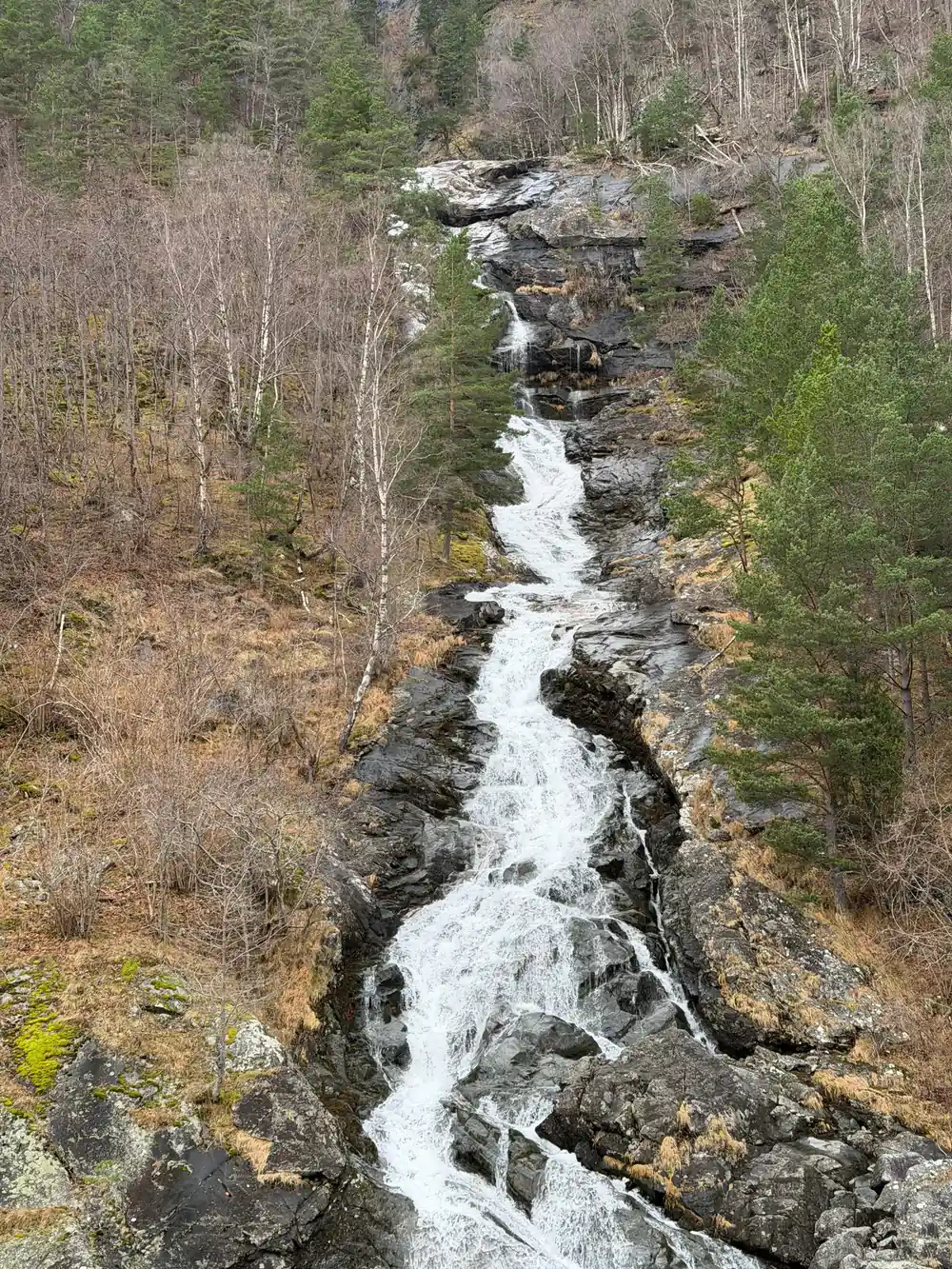
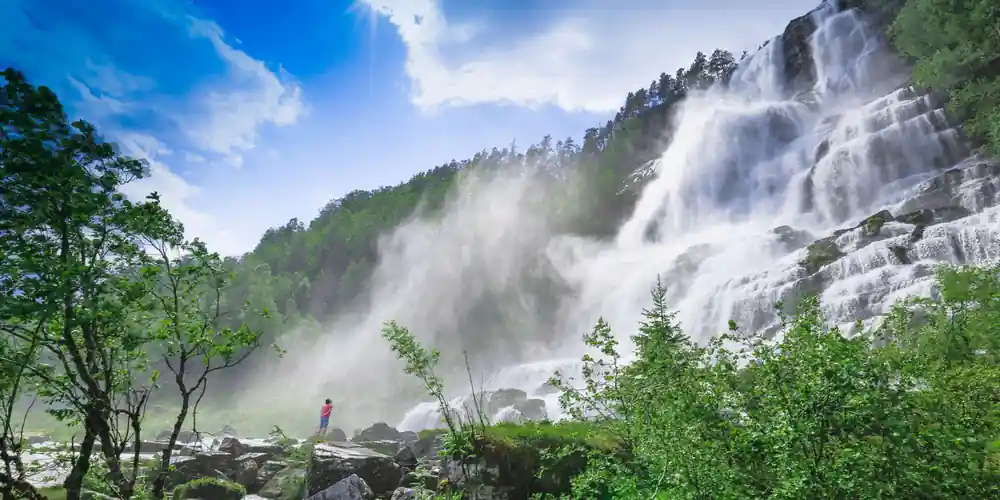
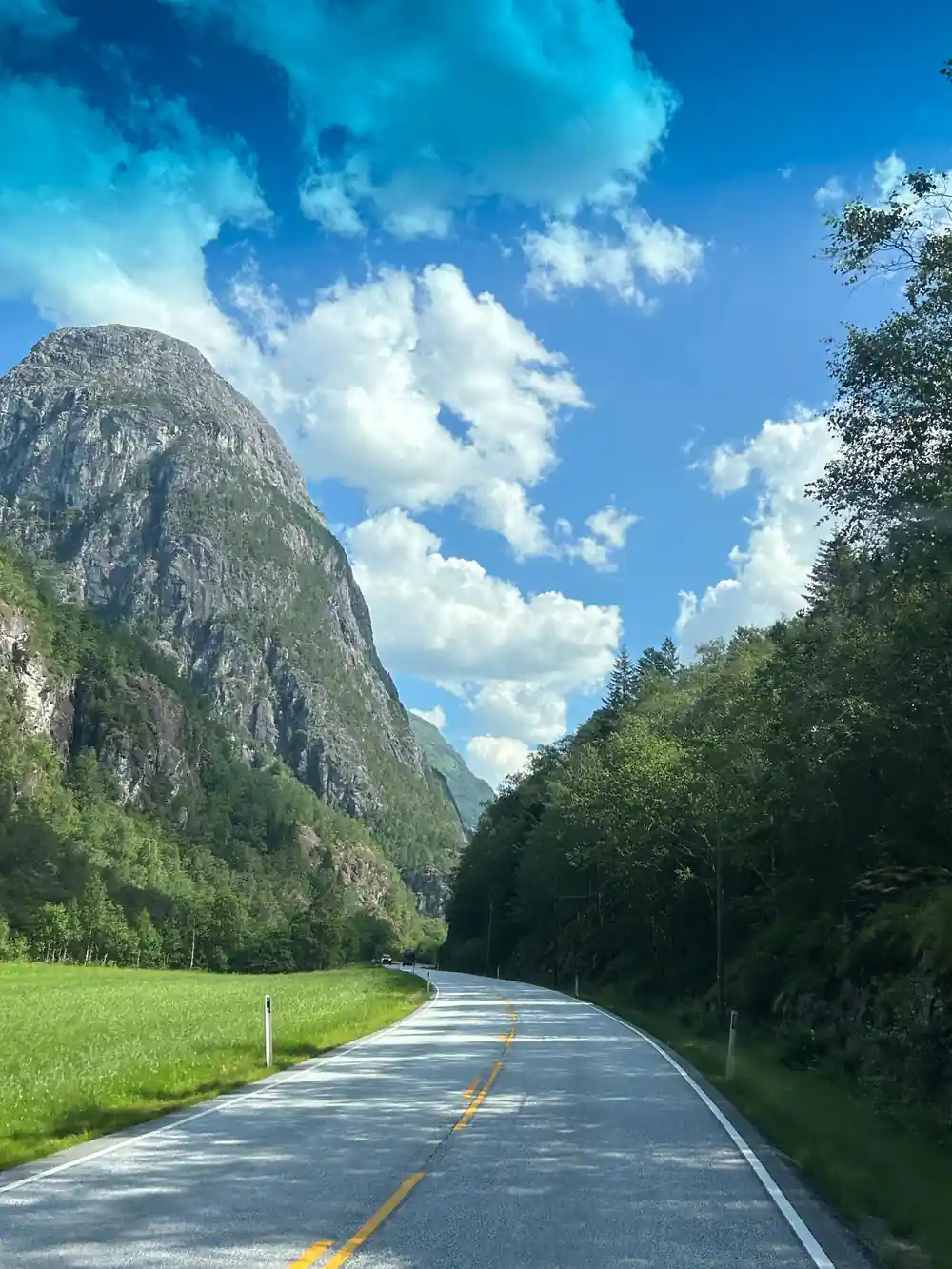
The bus leaves Strandkaien at eight in the morning and returns to the same spot in the early evening. In between it covers the road east out of Bergen, a waterfall, two villages at either end of a fjord arm, two hours on the water, and a viewpoint six hundred and fifty metres above it. Five stops in all, one of them a two hour boat, and a great deal of road.
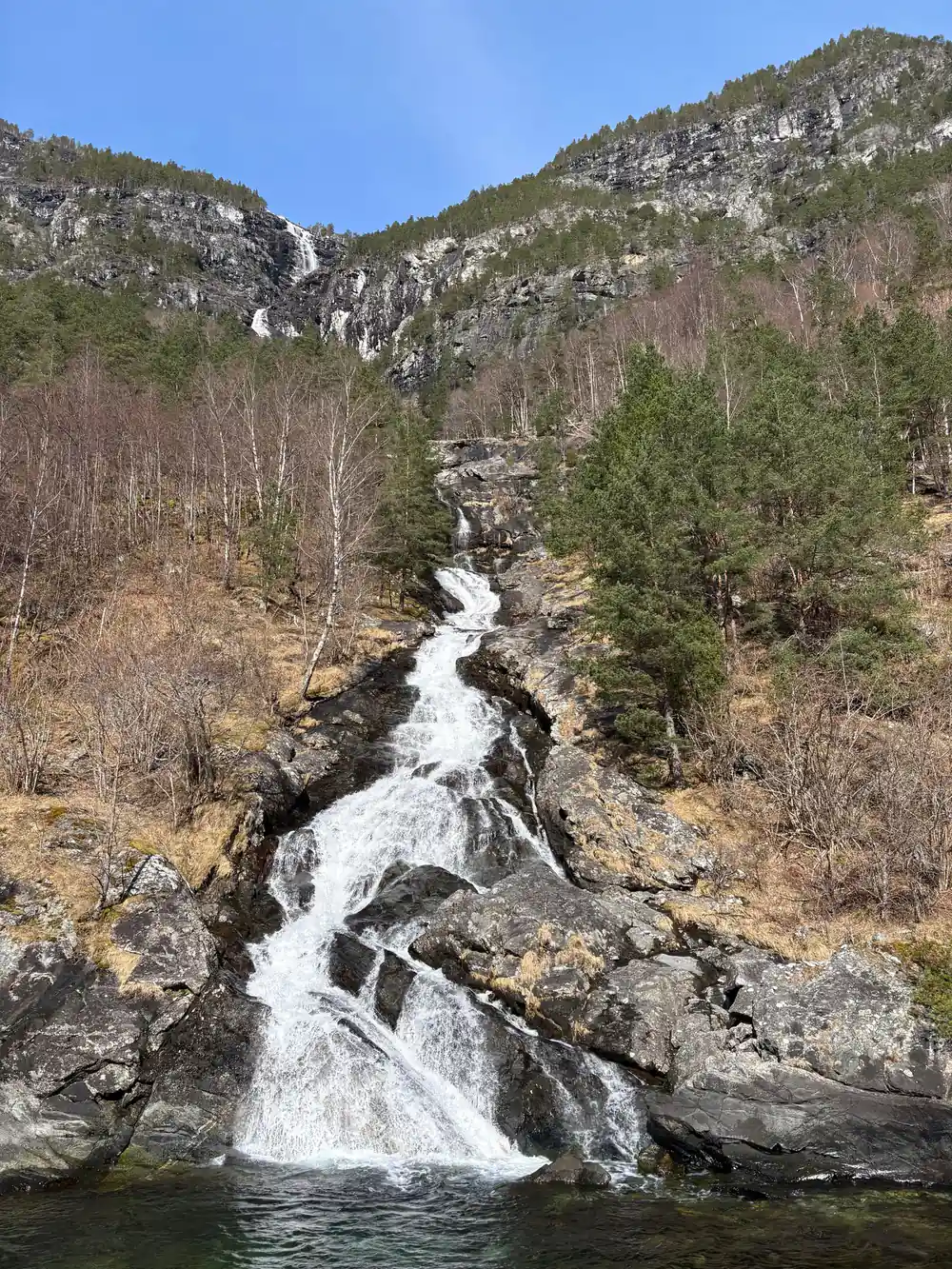
Three admissions are part of the fare: Tvindefossen, the Stegastein Lookout and the Naeroyfjord cruise. That matters more than it sounds, because assembling this day independently means buying each of those separately and arranging the connections between them, in a part of Norway where the connections do not run often.
What is not included is food and drink, at any point. There is a thirty minute stop in Flam where you can buy something, and that is the whole of the catering arrangement. Bringing your own is the sensible move and most people wish they had.
Why a minibus rather than a coach
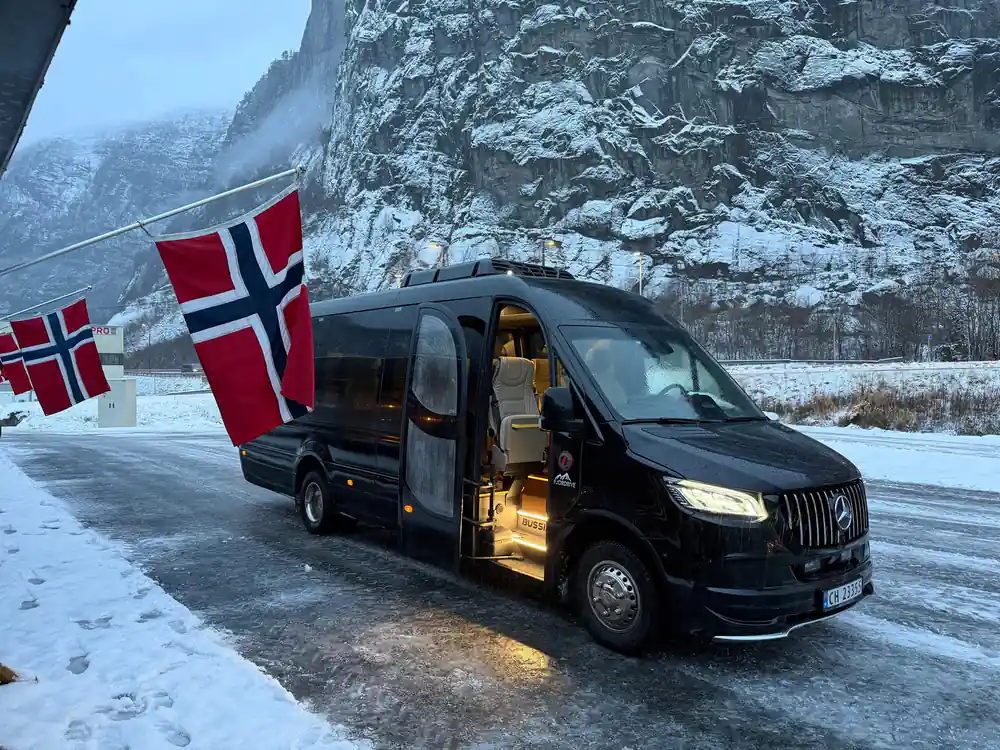
The vehicle is a black Mercedes Sprinter, and the difference from a full-size coach is not comfort but access. The road up to Stegastein from Aurland is a series of tight hairpins climbing the side of a fjord, and the vehicles that can turn on it are limited. A smaller bus simply goes places a larger one cannot.
It also changes the day socially. A Sprinter carries a fraction of a coach party, so stops take minutes rather than the twenty it takes fifty people to disembark, photograph something and get back on. Over five stops that difference adds up to real time spent looking at things.
The trade is that these tours sell out and that they need a minimum number of travellers to run at all. Both are stated plainly, and both are worth knowing before you build a day around the booking.
The two hours on the Naeroyfjord
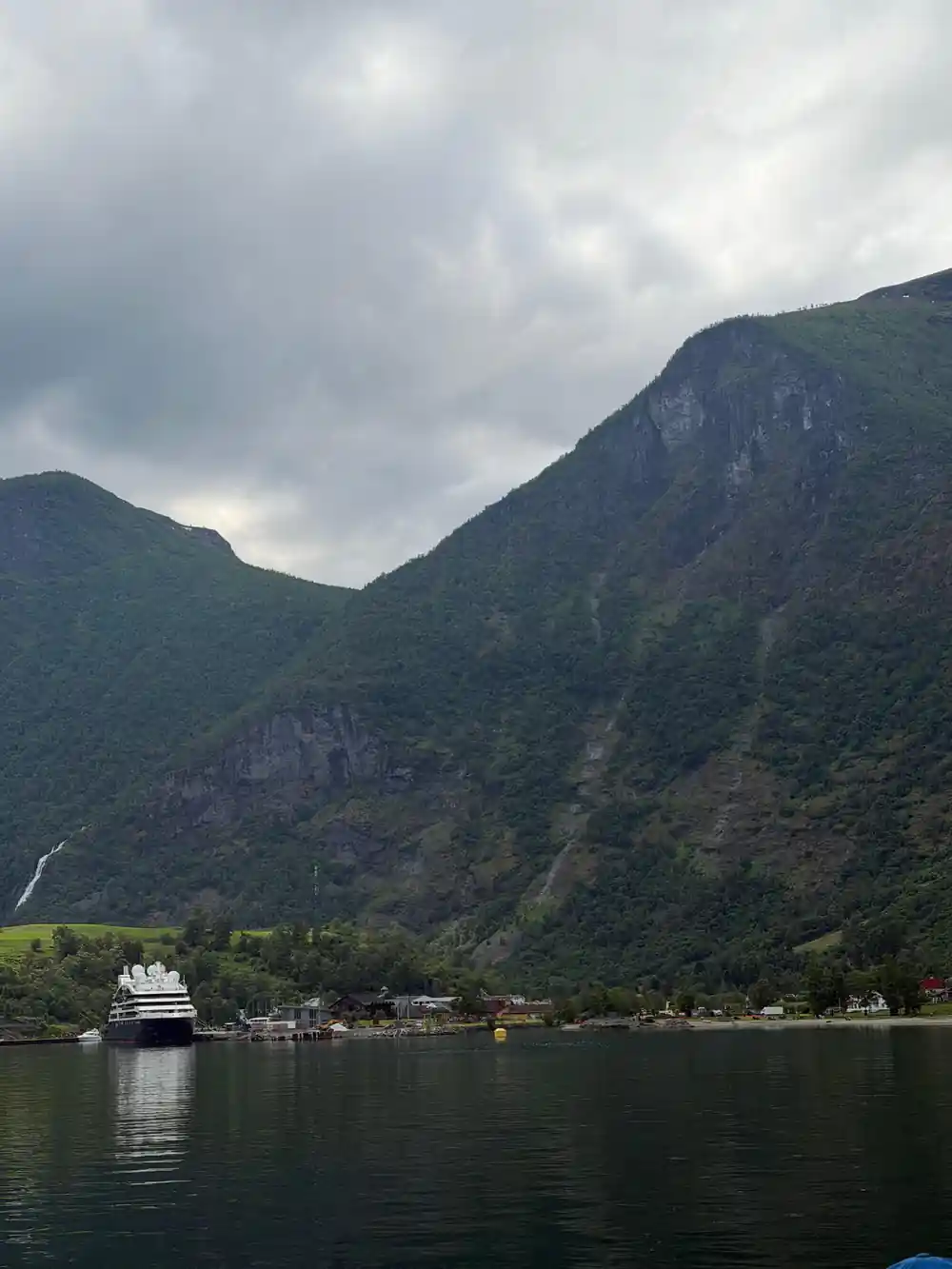
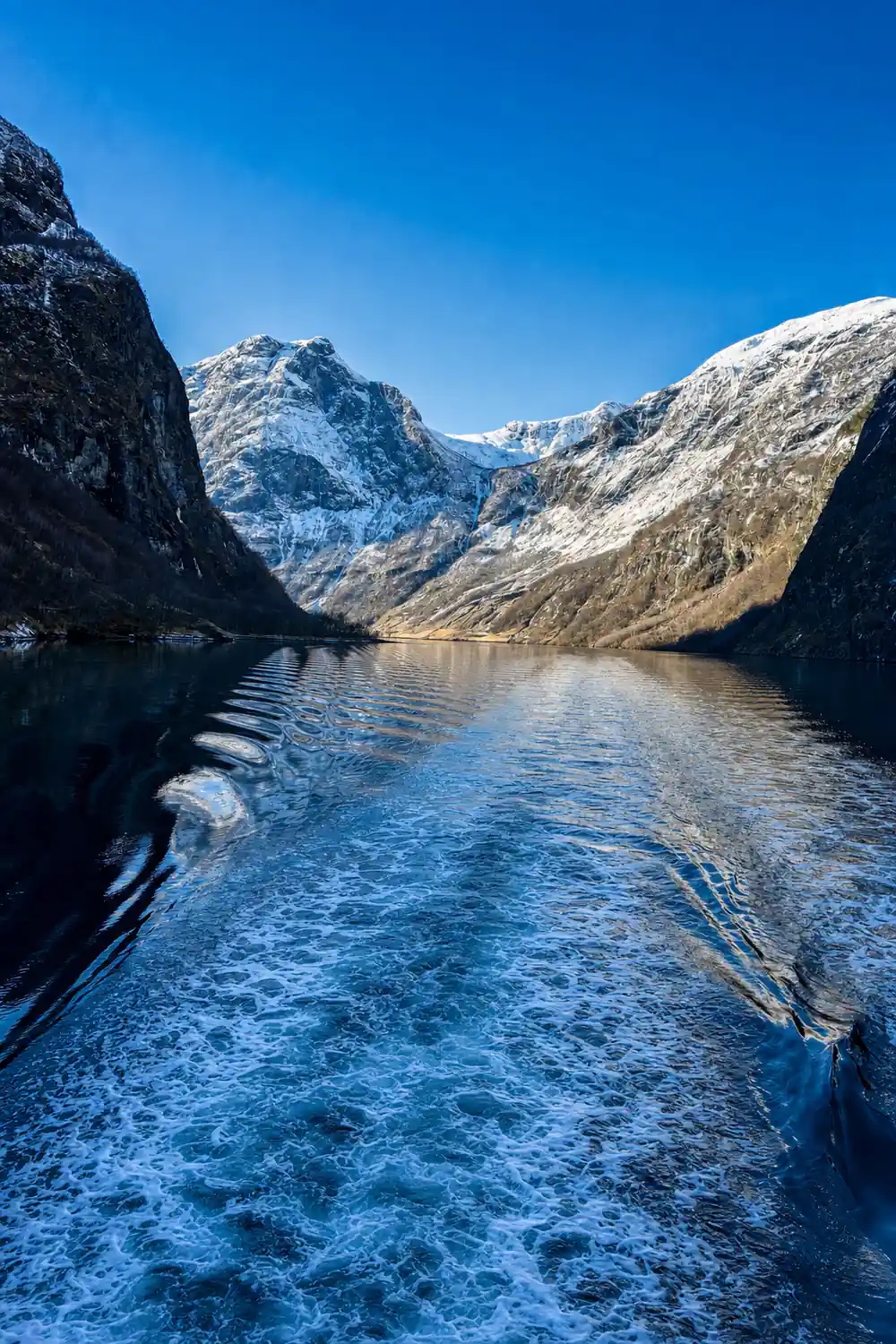
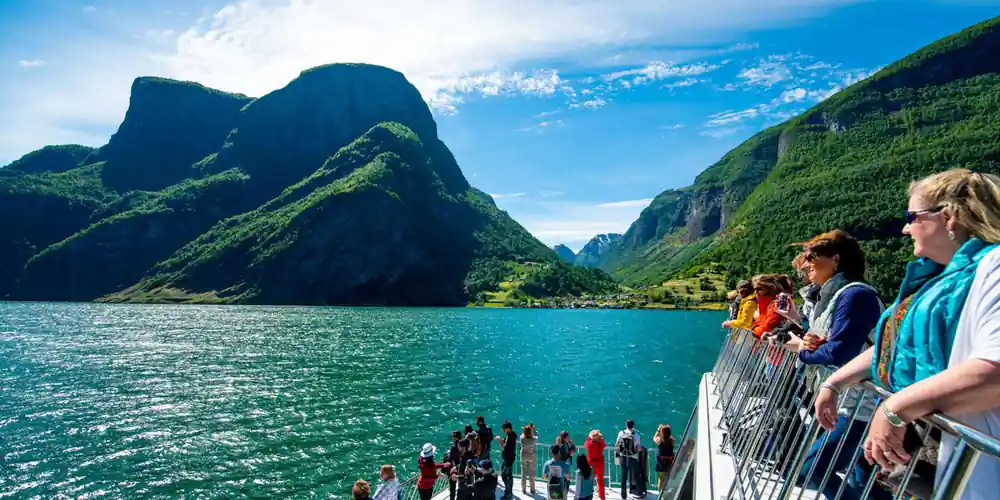
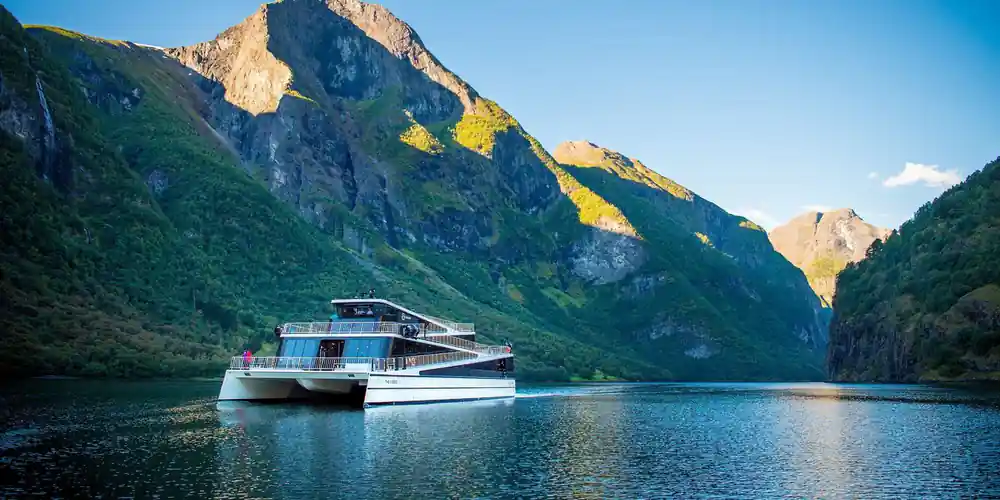
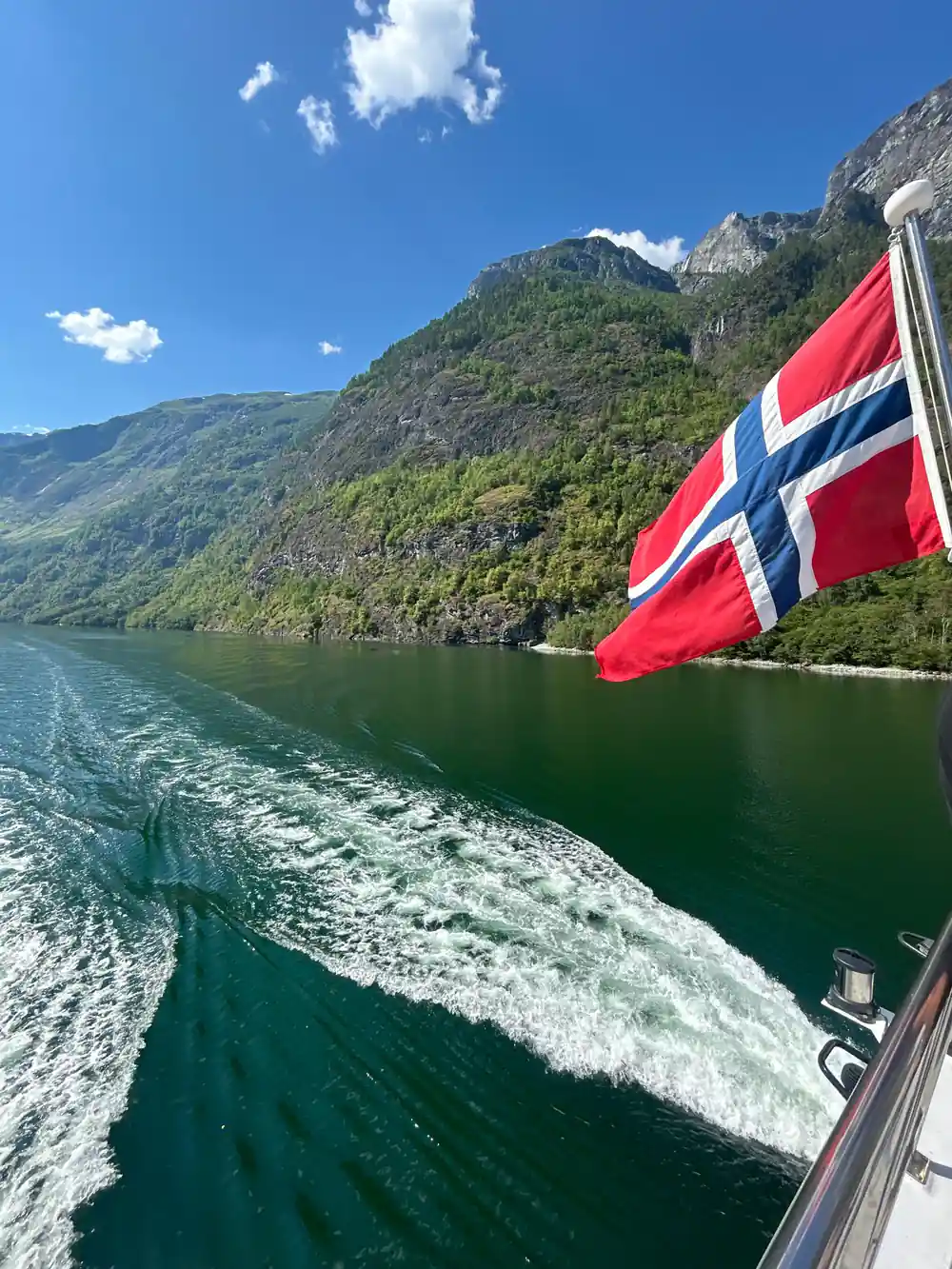
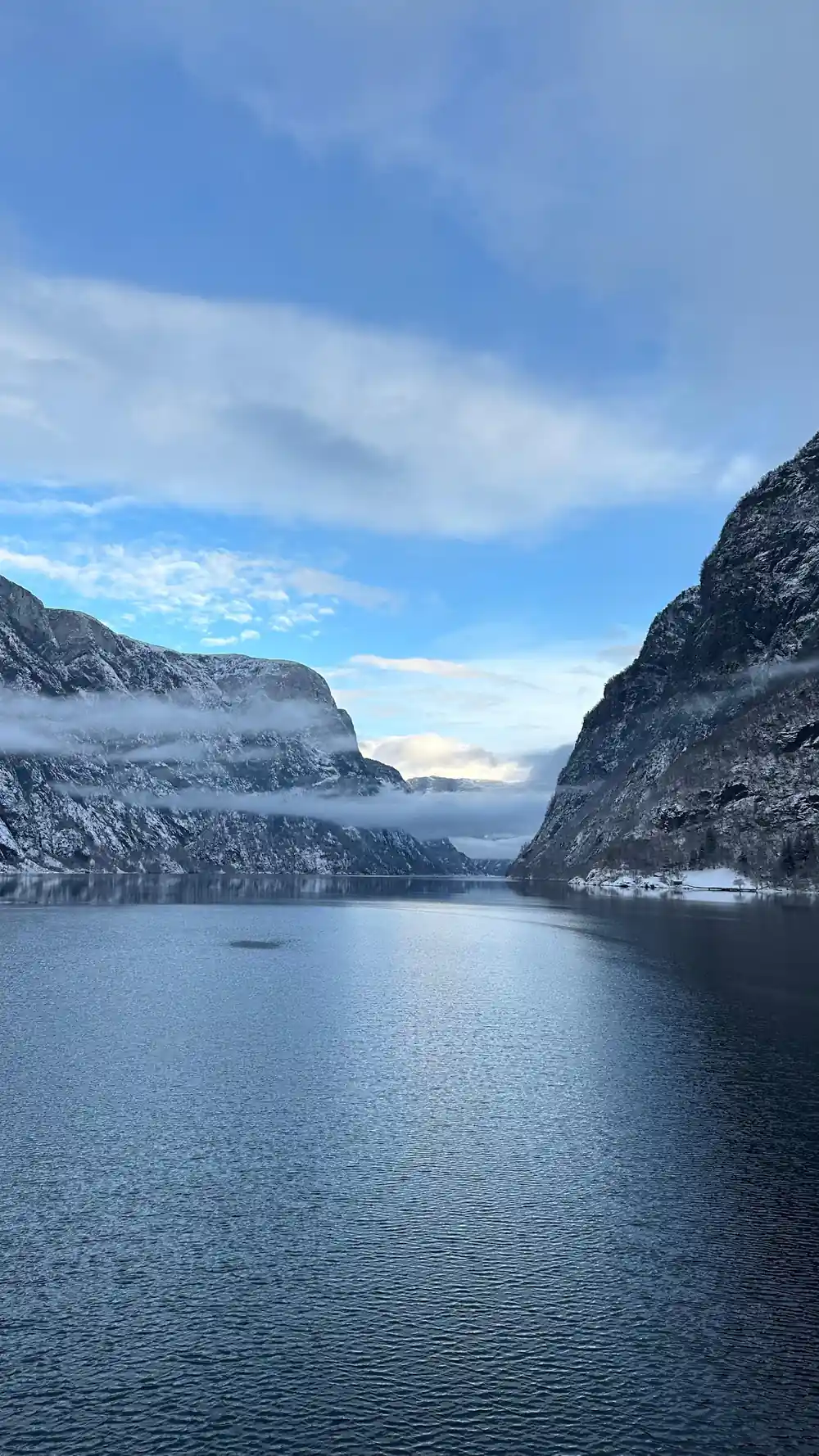
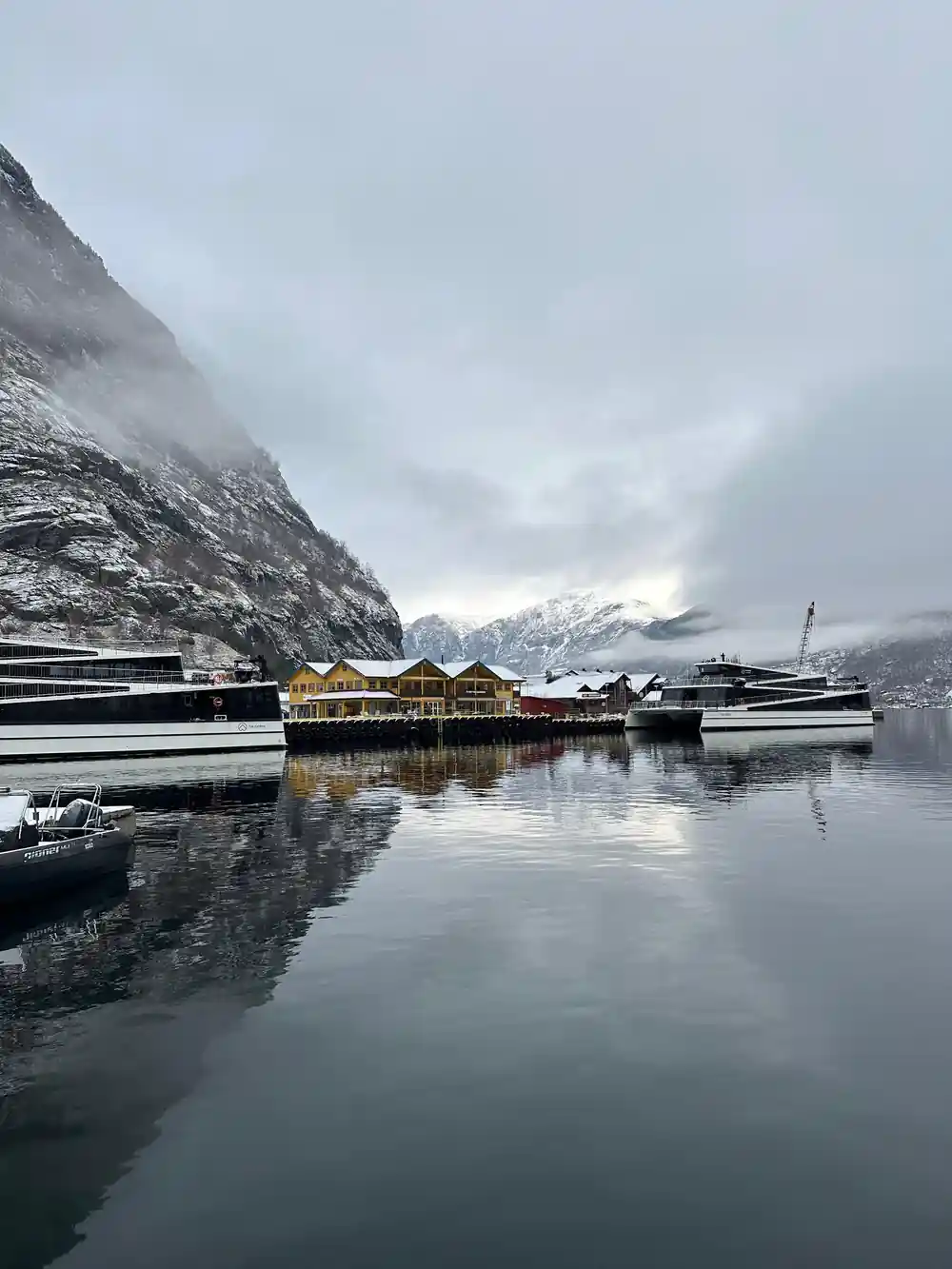
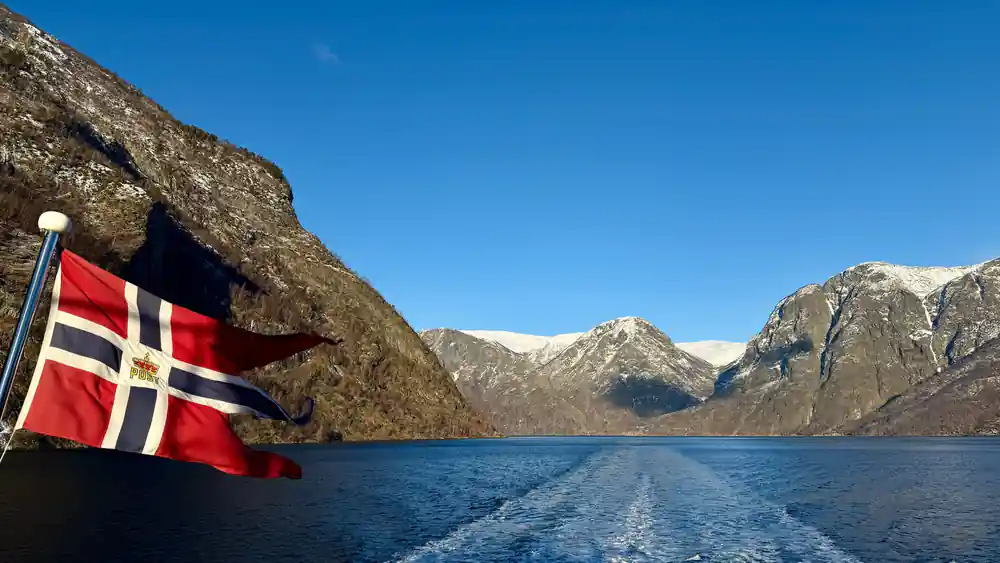
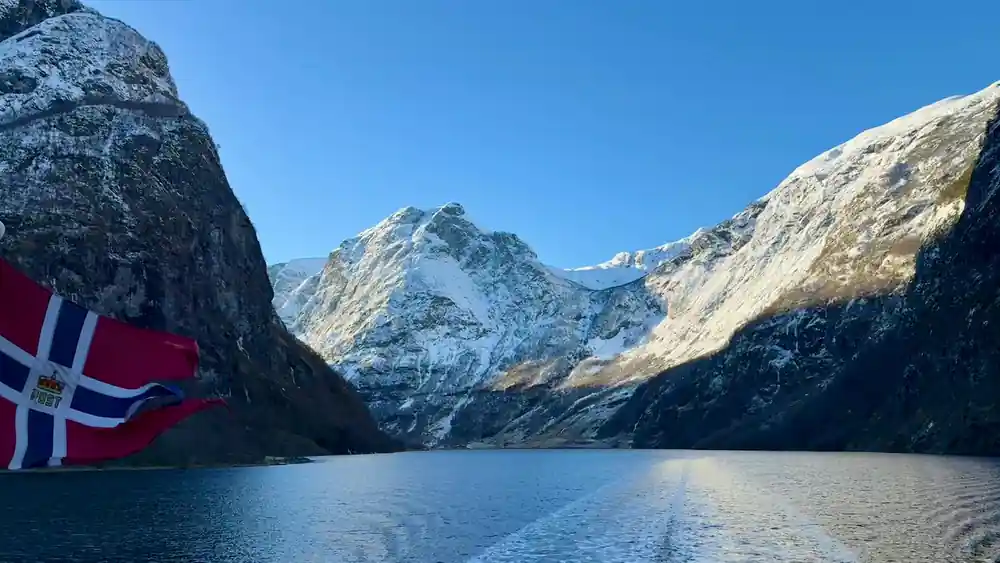
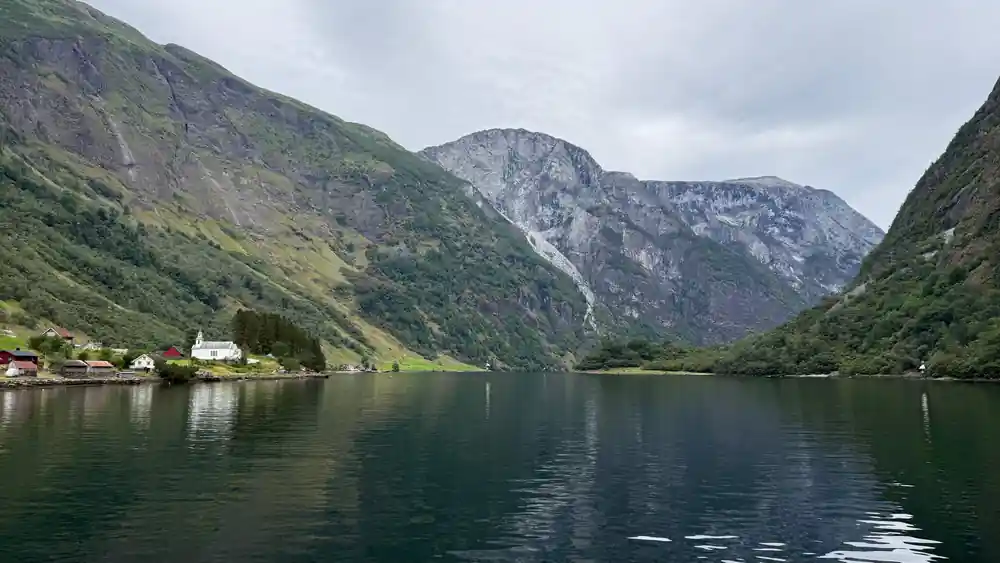
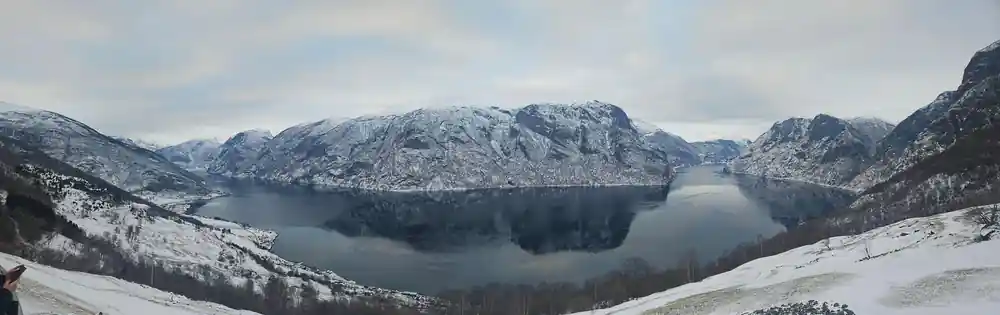
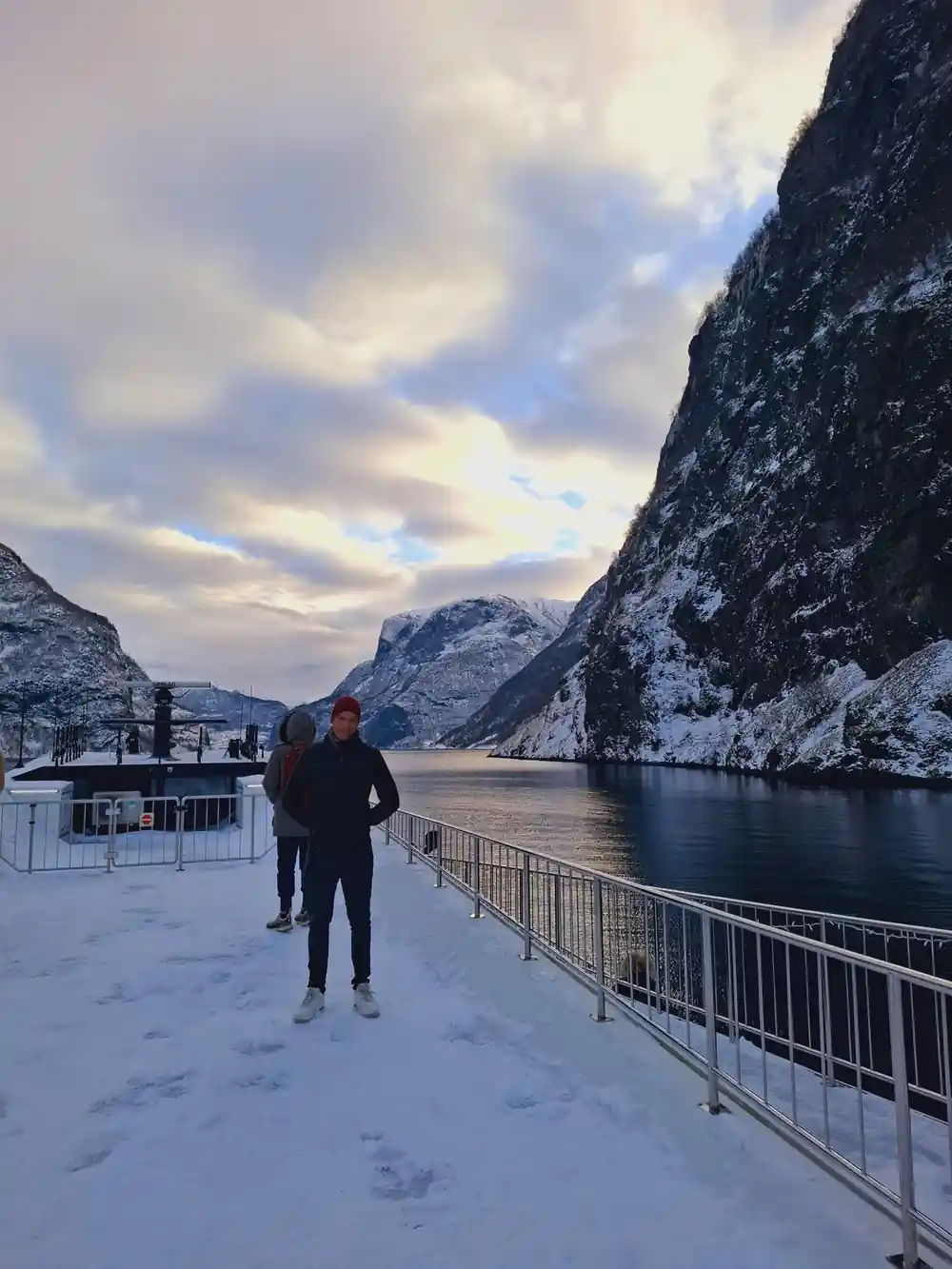
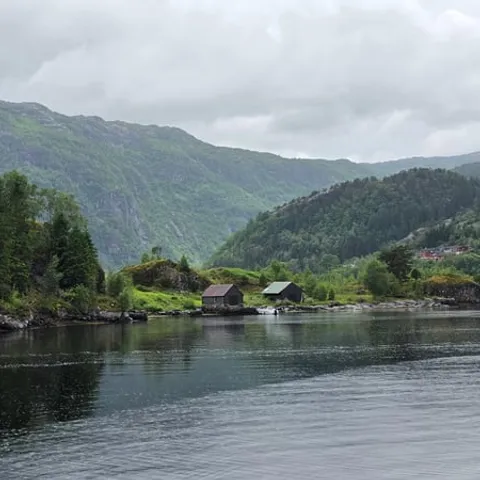
The cruise is the centre of the day and the reason the itinerary is shaped the way it is. You board at Gudvangen, at the head of the Naeroyfjord, and sail out along one of the narrowest navigable fjord arms in the world before arriving at Flam on the Aurlandsfjord.
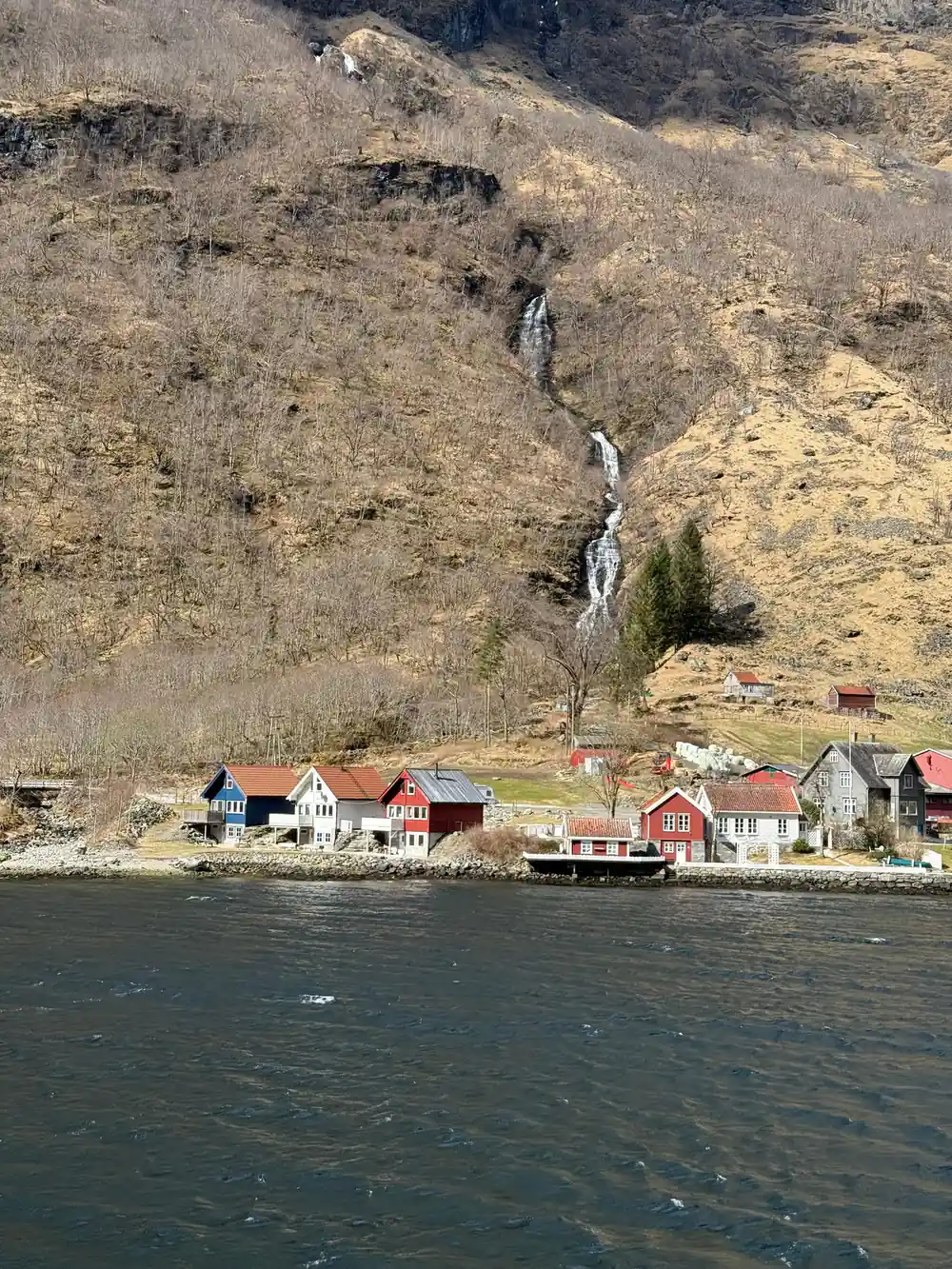
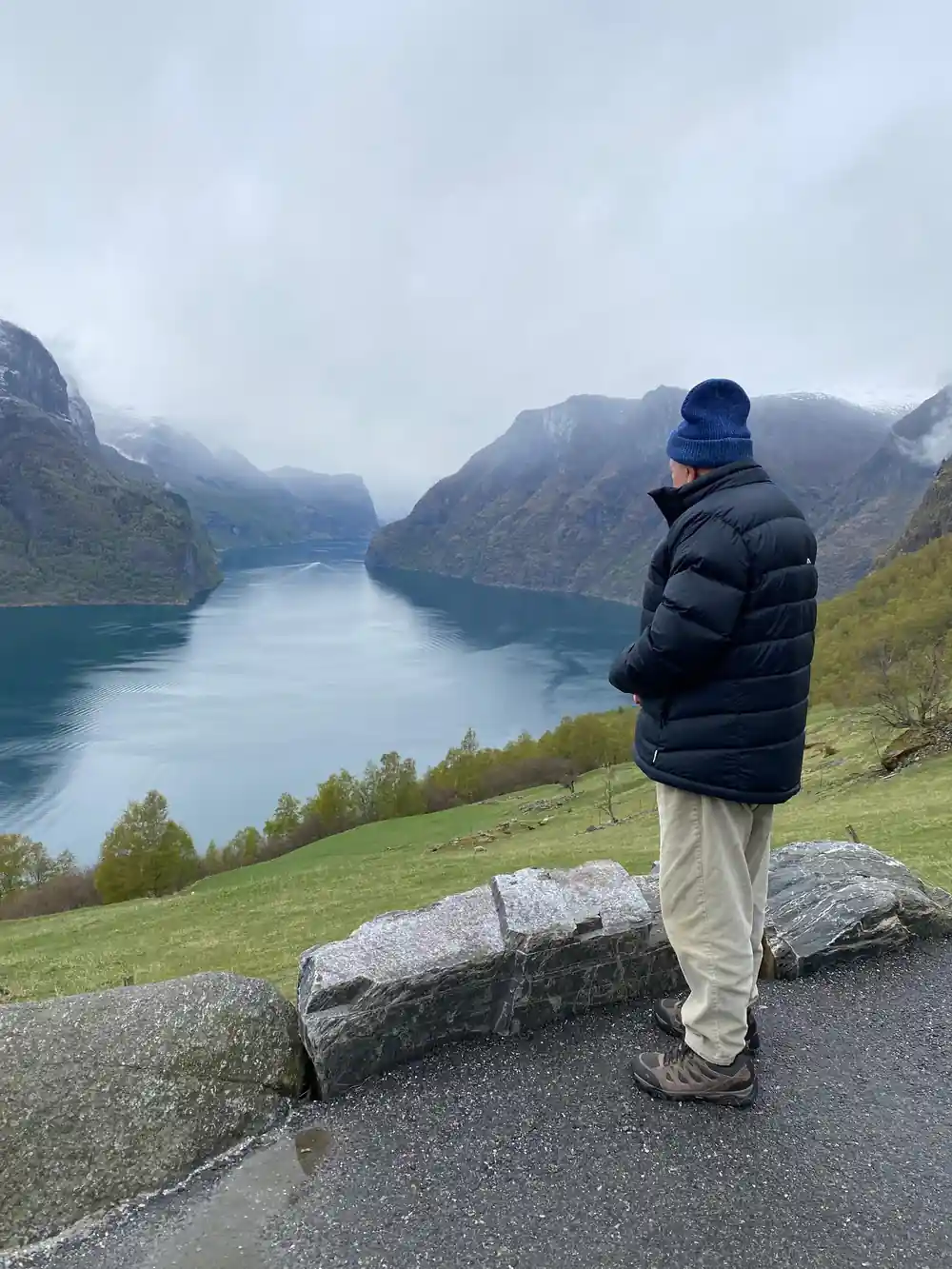
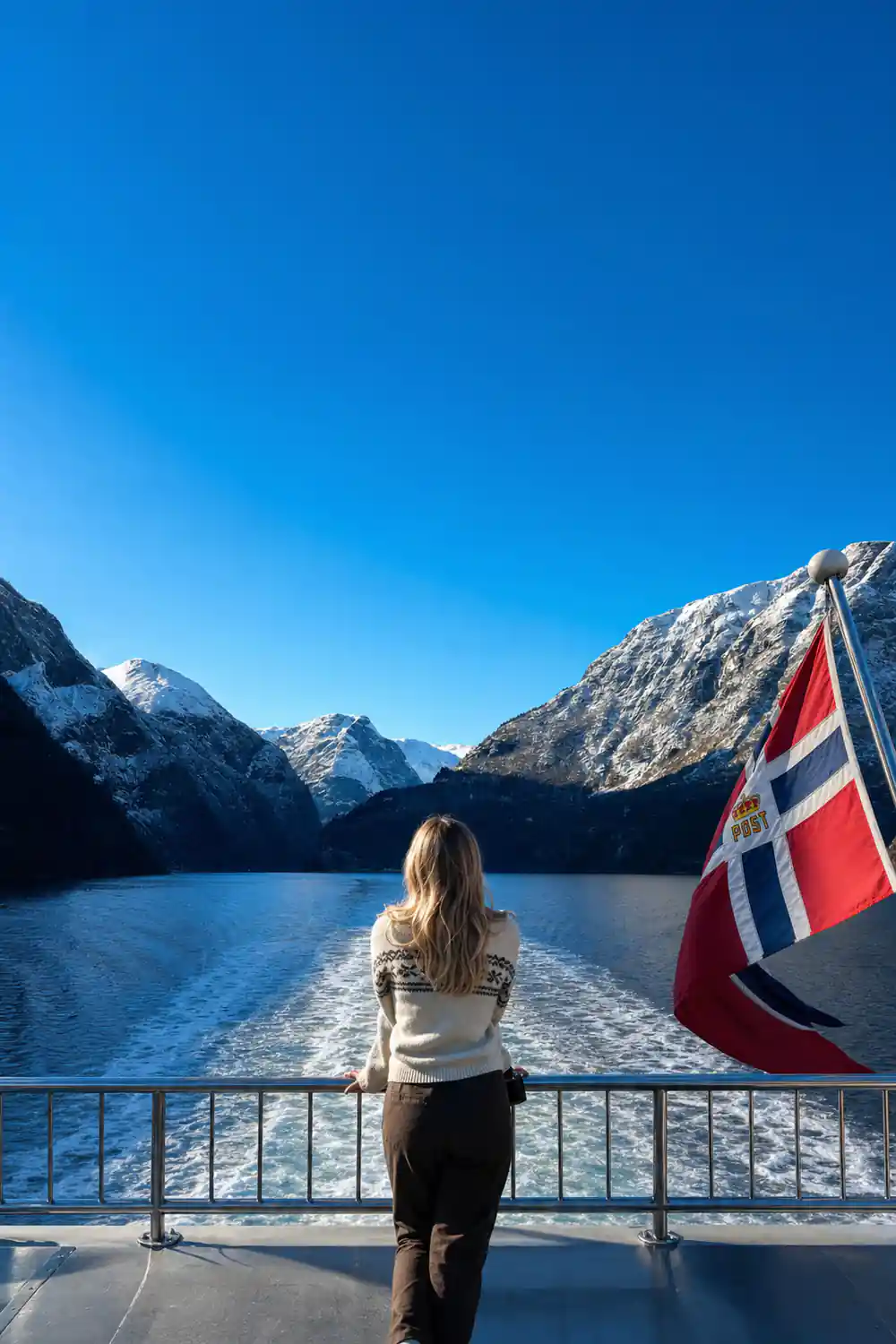
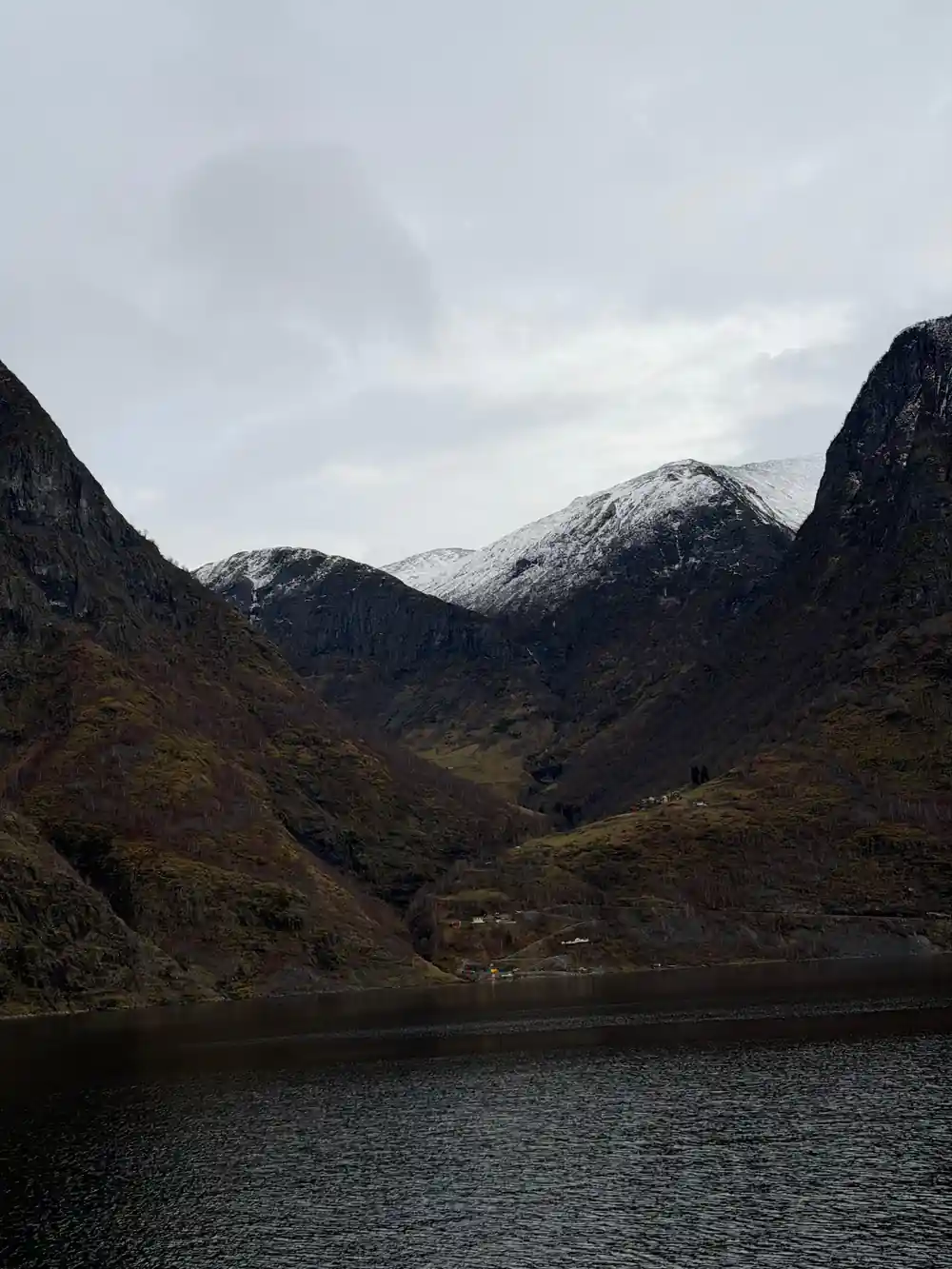
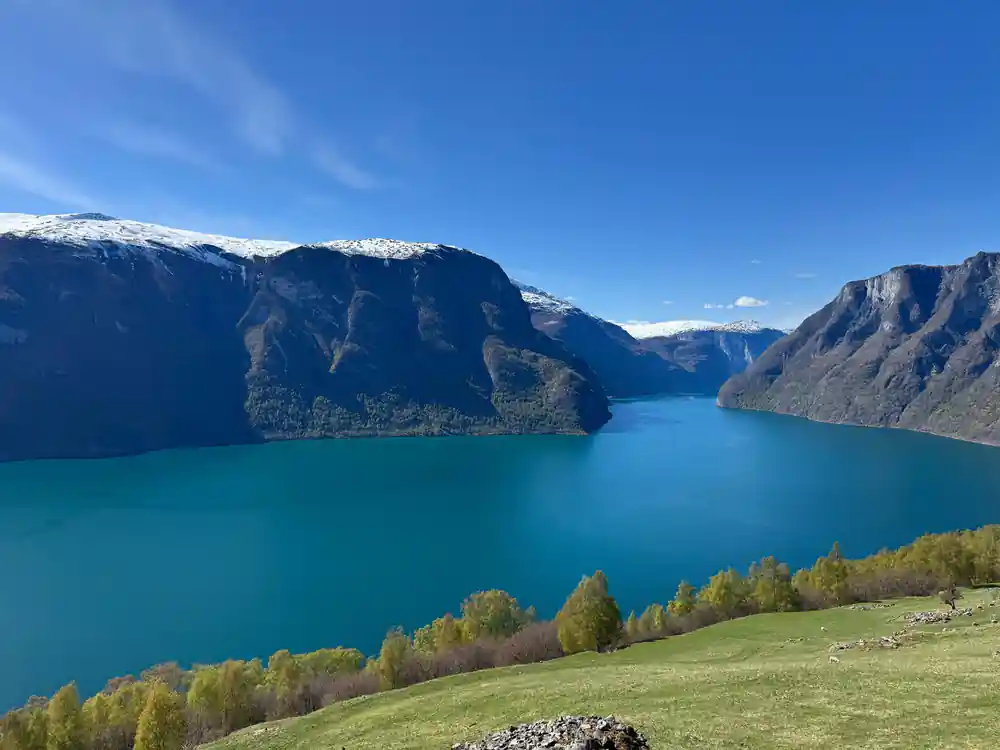
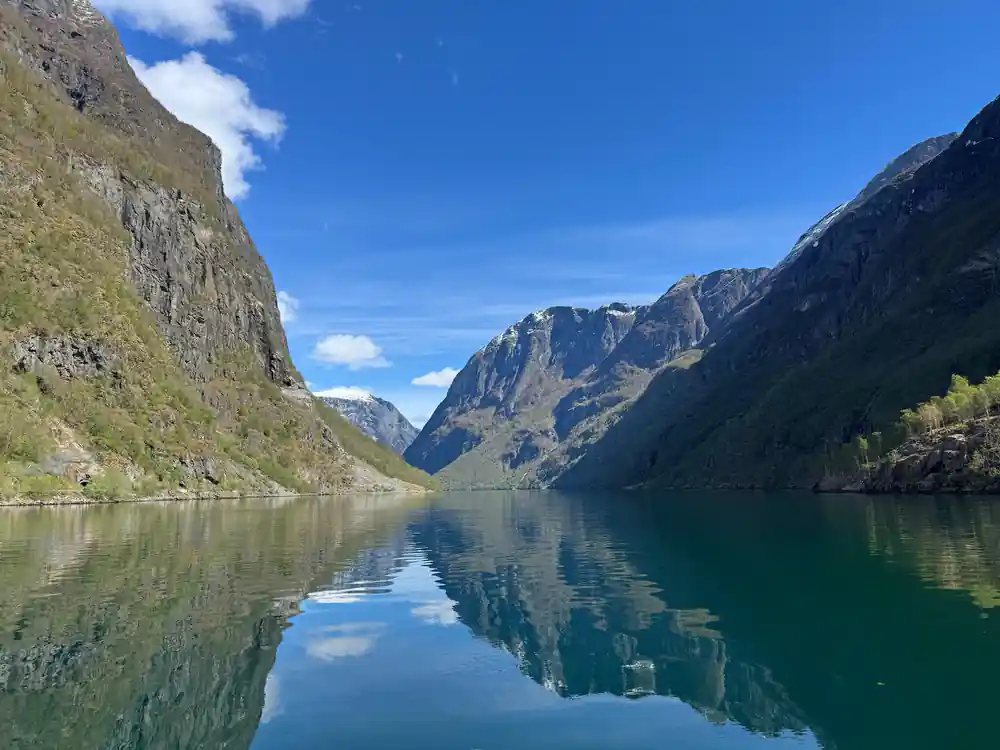
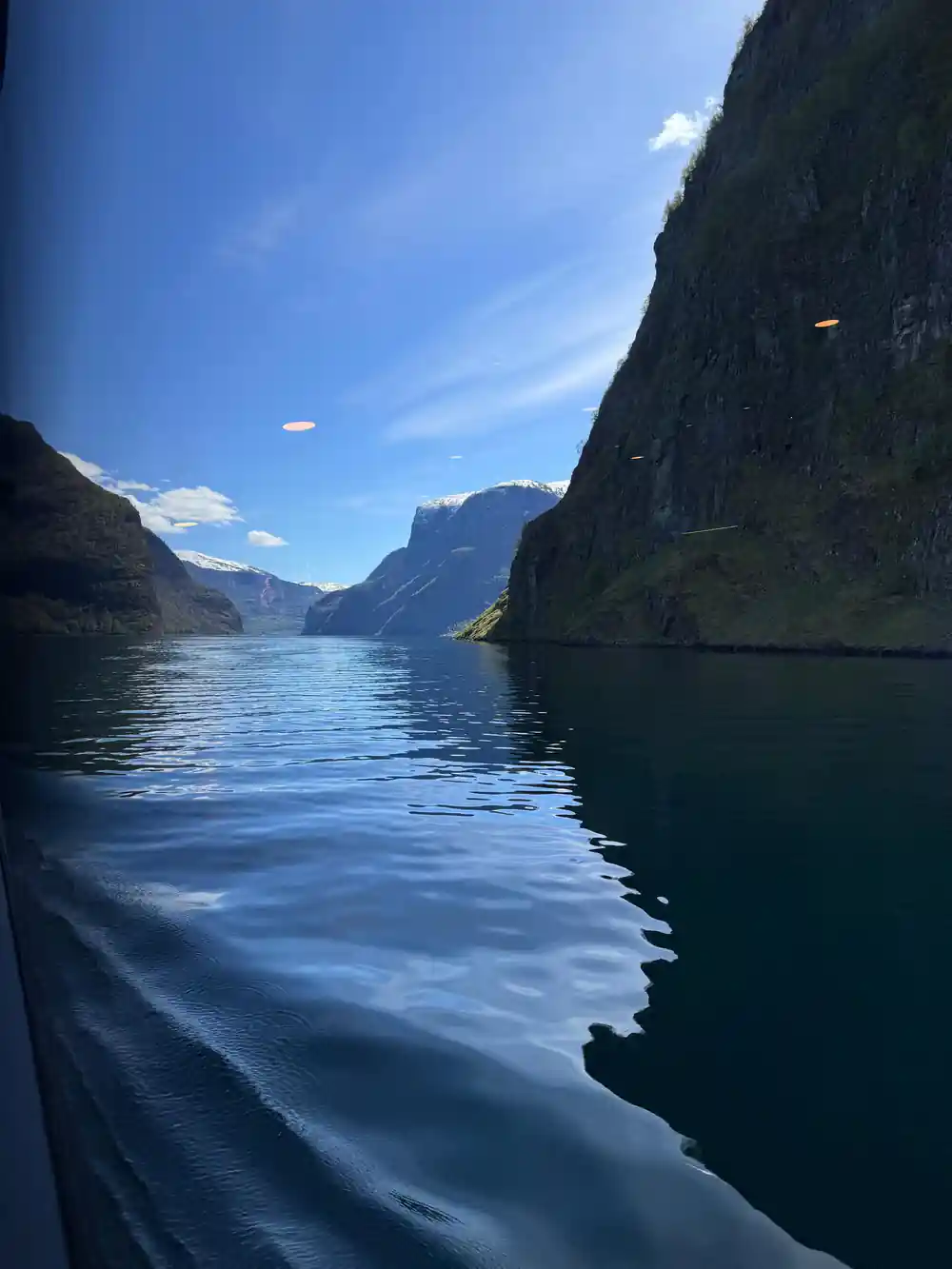
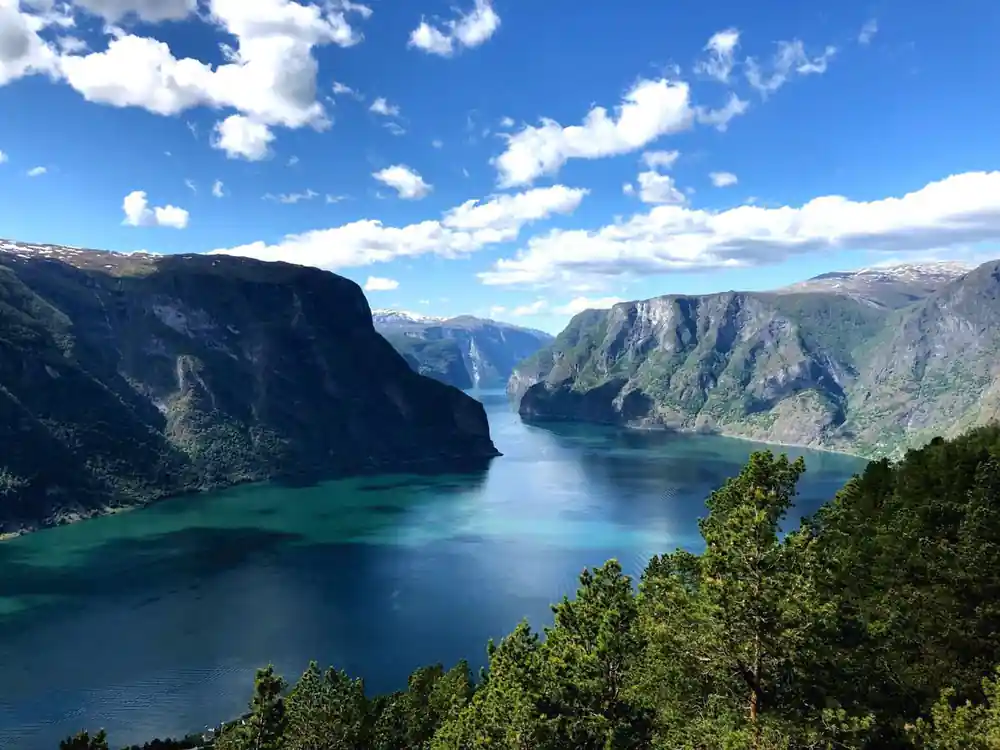
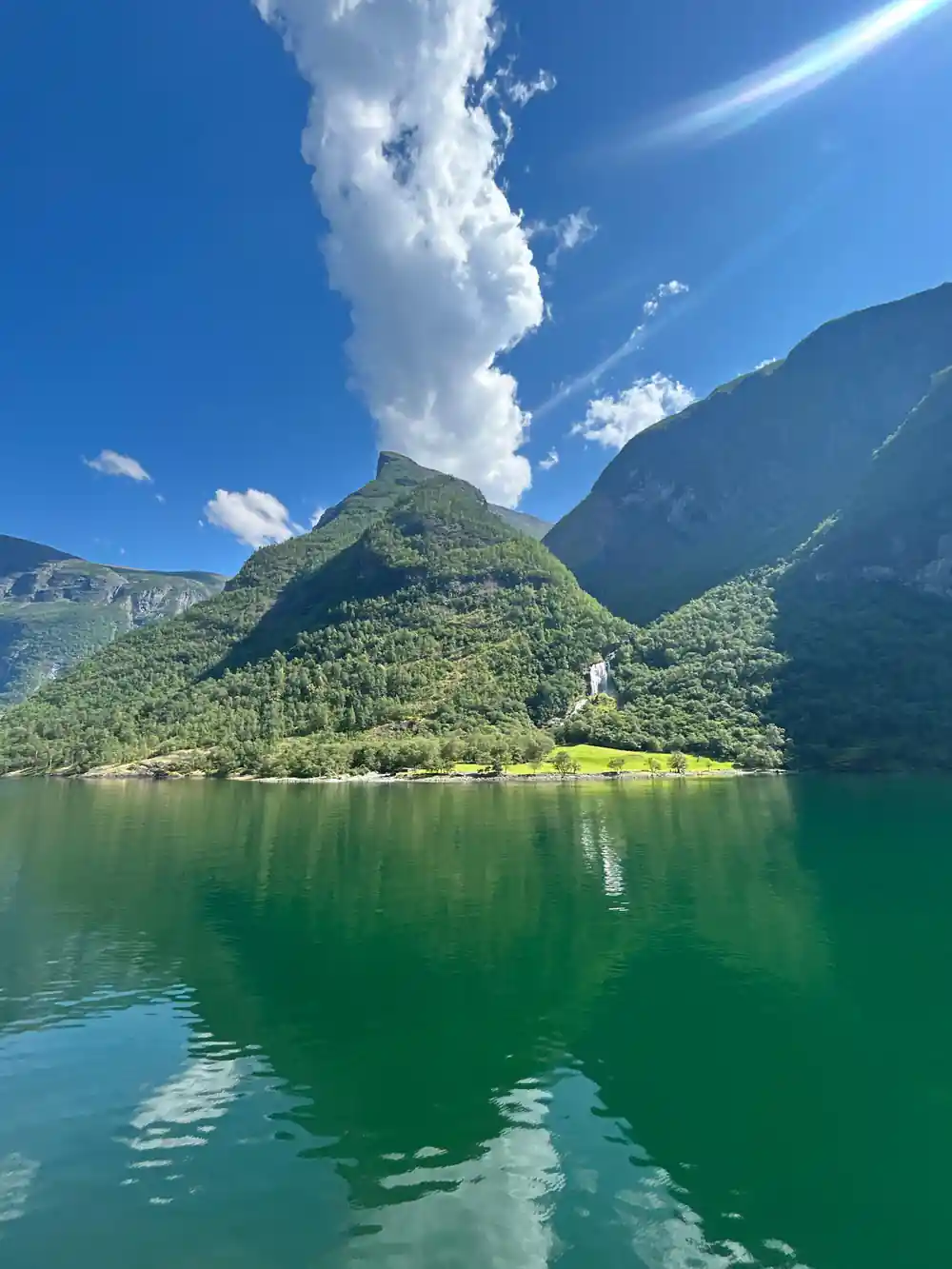
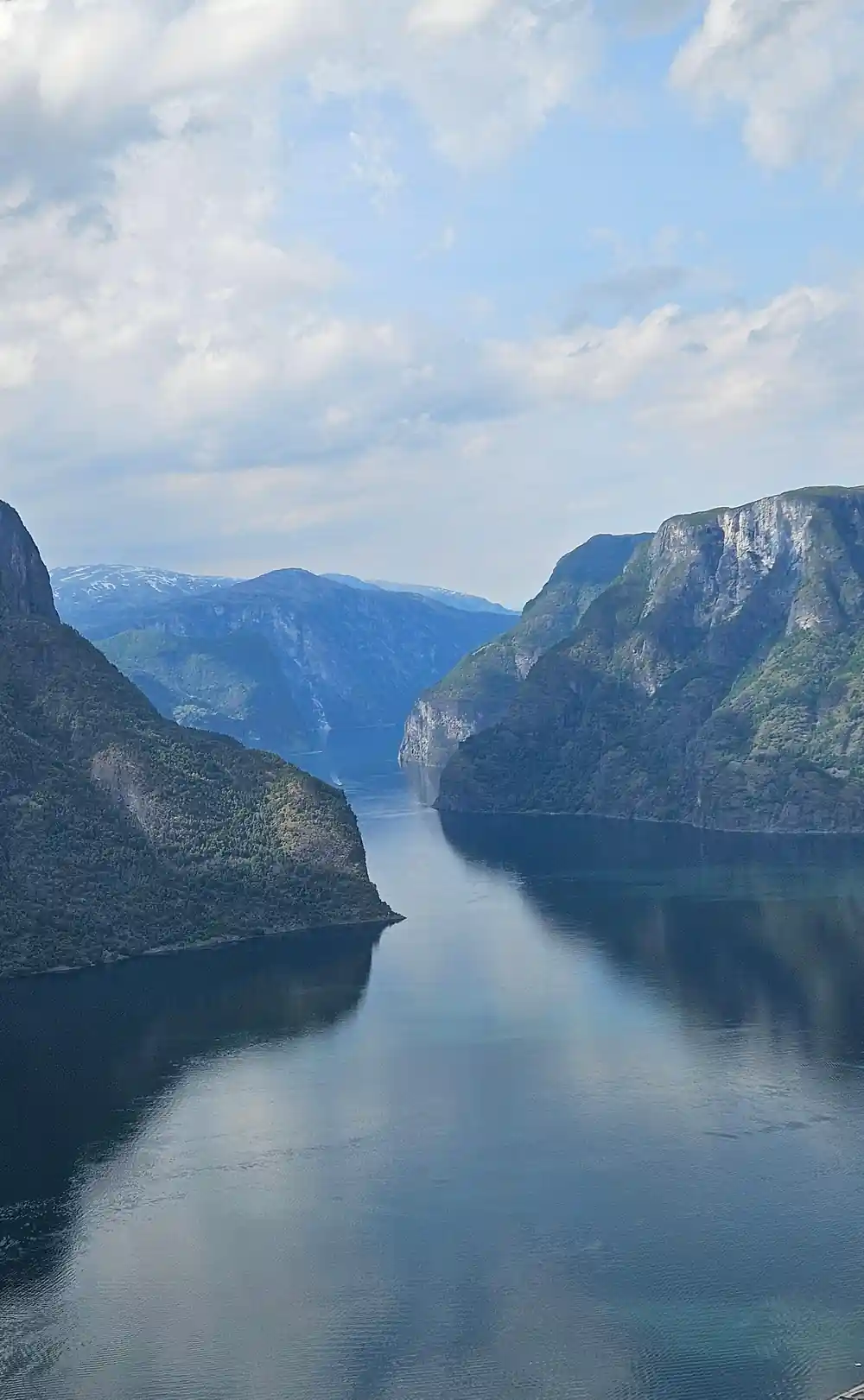
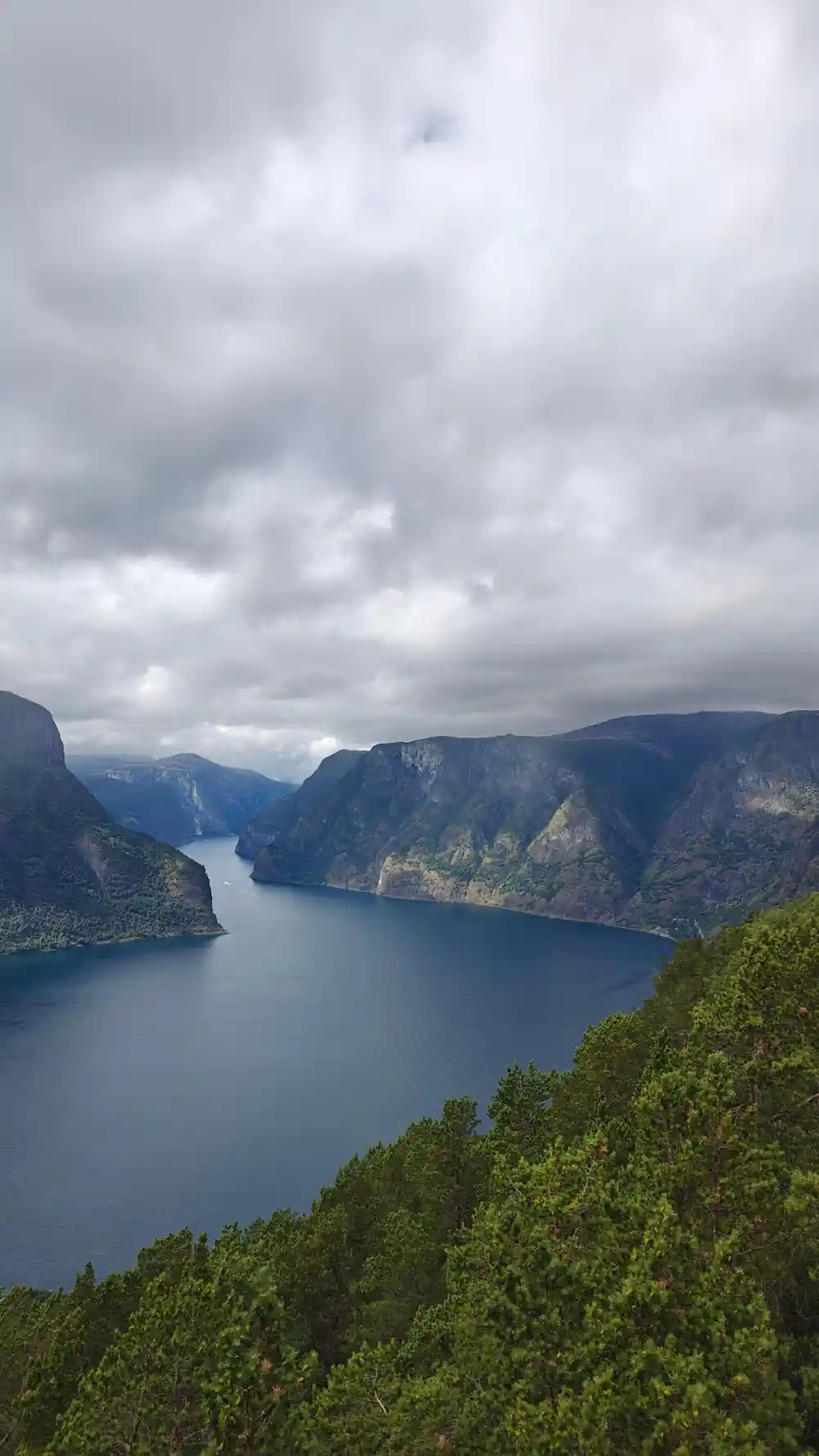
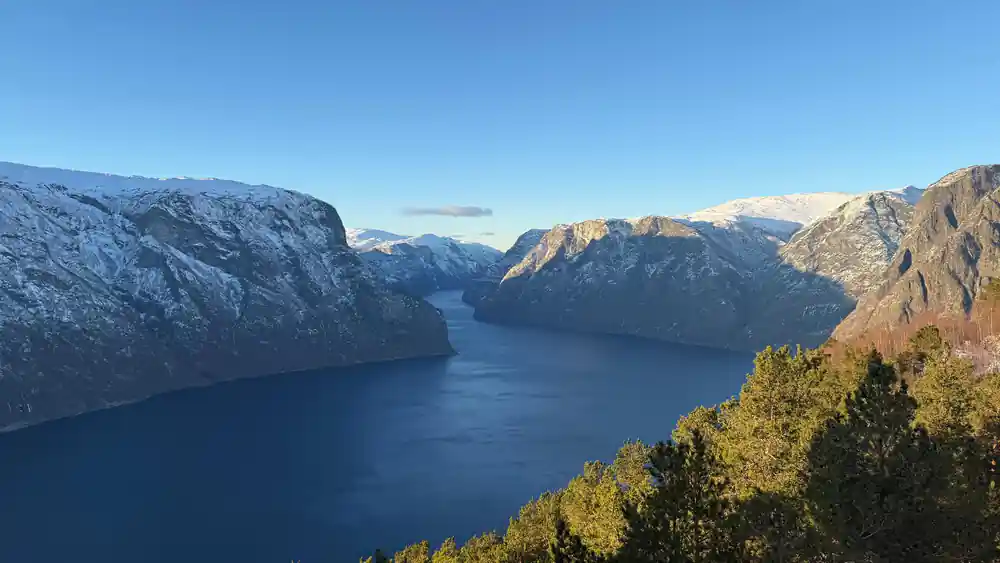
The Naeroyfjord carries a UNESCO World Heritage listing, awarded in 2005 alongside the Geirangerfjord, and the reason is visible from the deck: walls rising well over a kilometre from water that is only a few hundred metres across in places, with waterfalls coming down both sides and farms on ledges that look impossible to reach.
Two hours is enough to stop taking photographs and start looking. Most people spend the first half hour at the rail and the second hour still there, which is the correct response to the landscape and hard on the hands in April.
Stegastein, and the road that gets you there
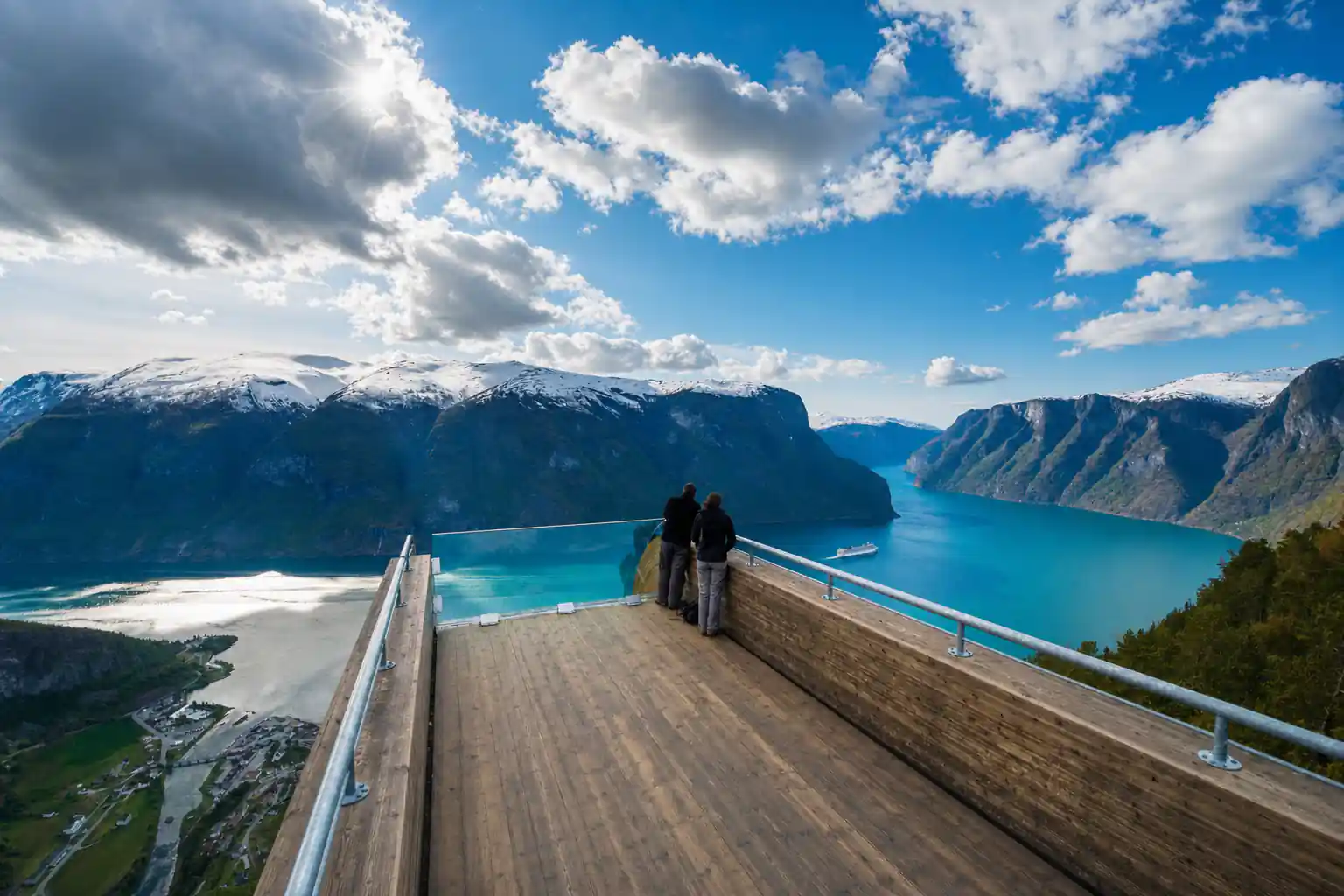
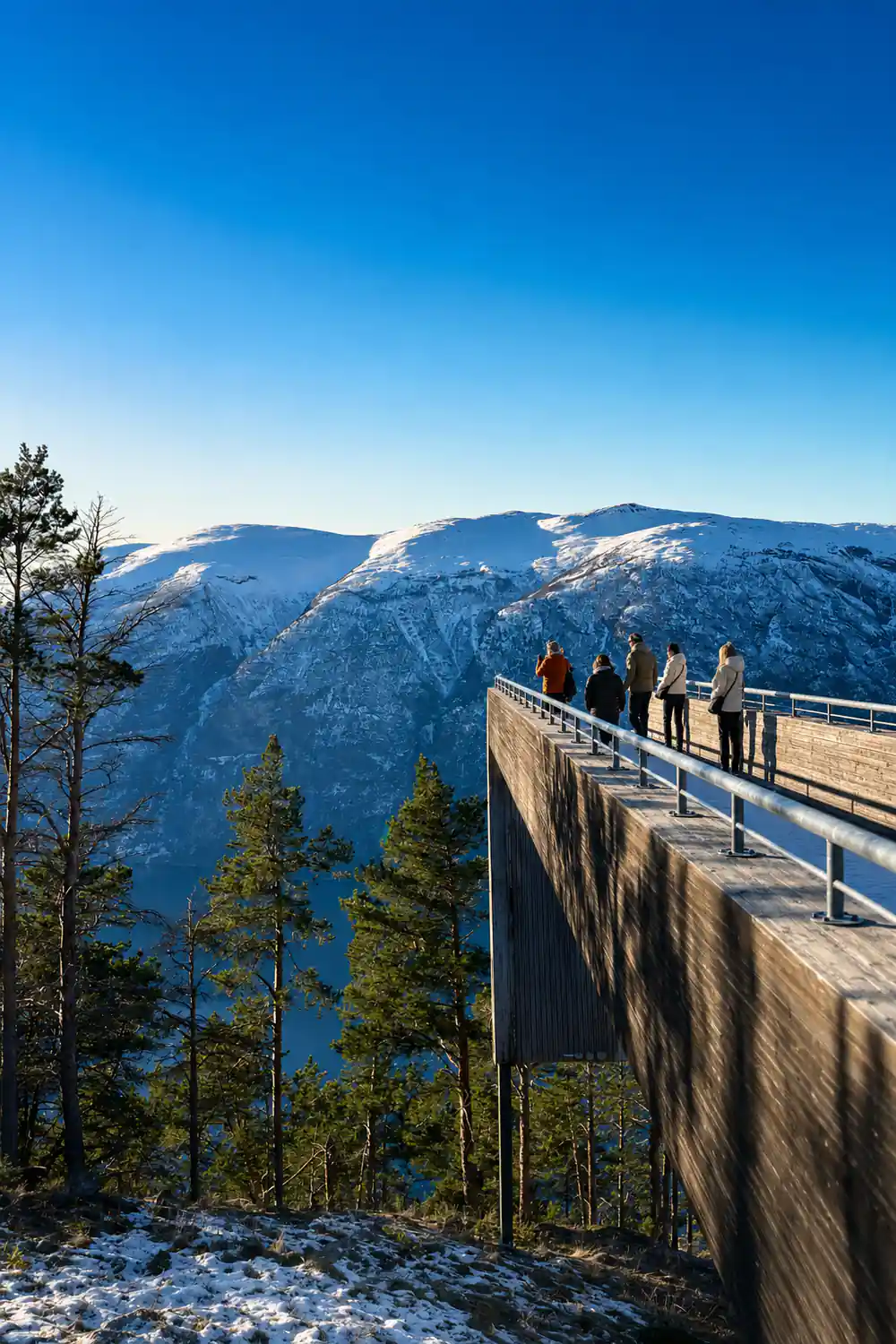
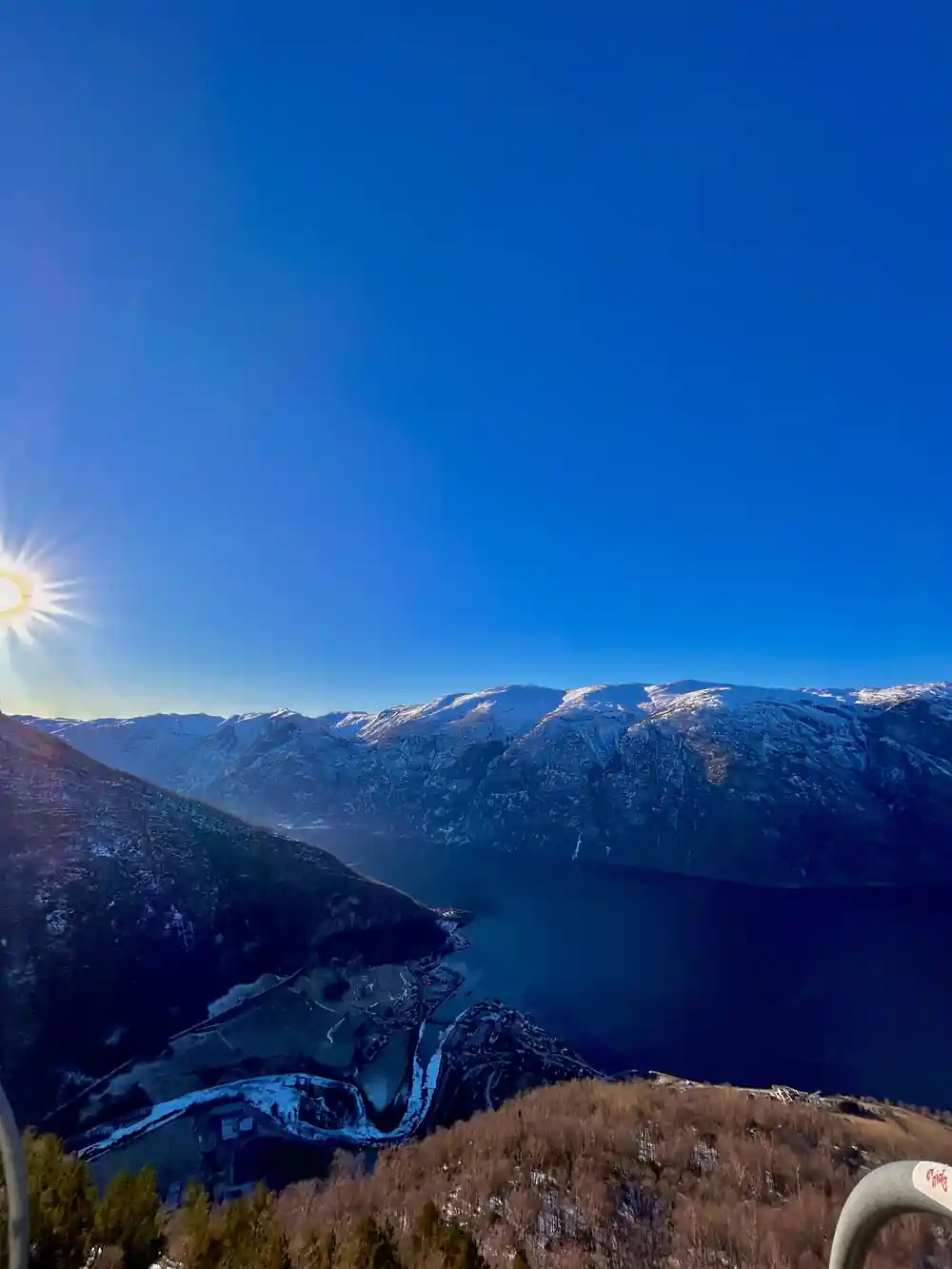
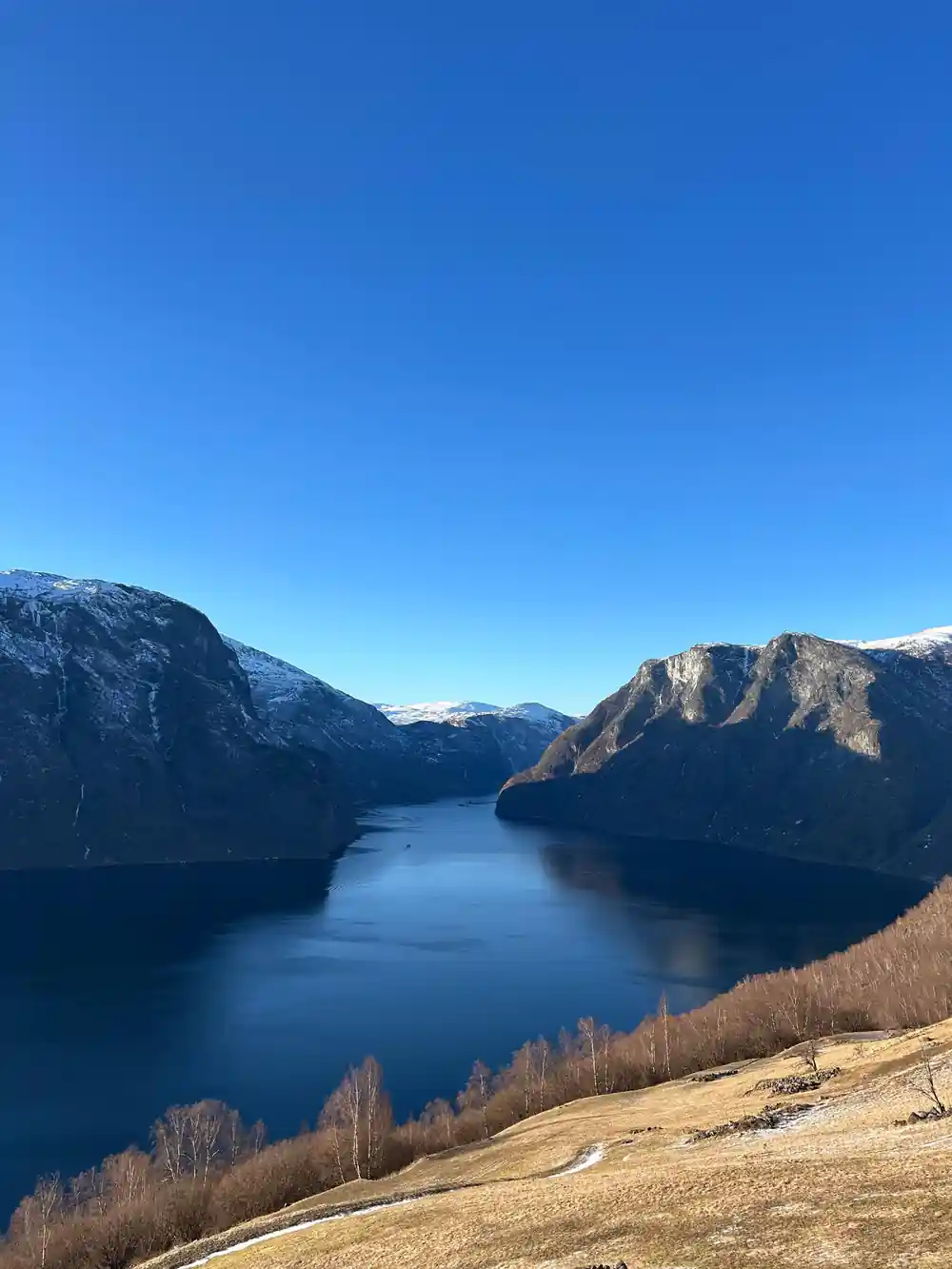
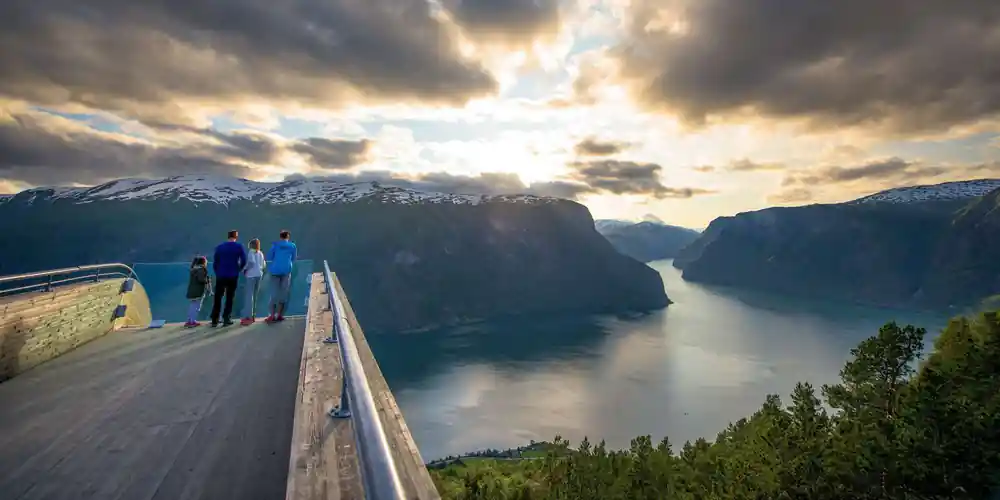
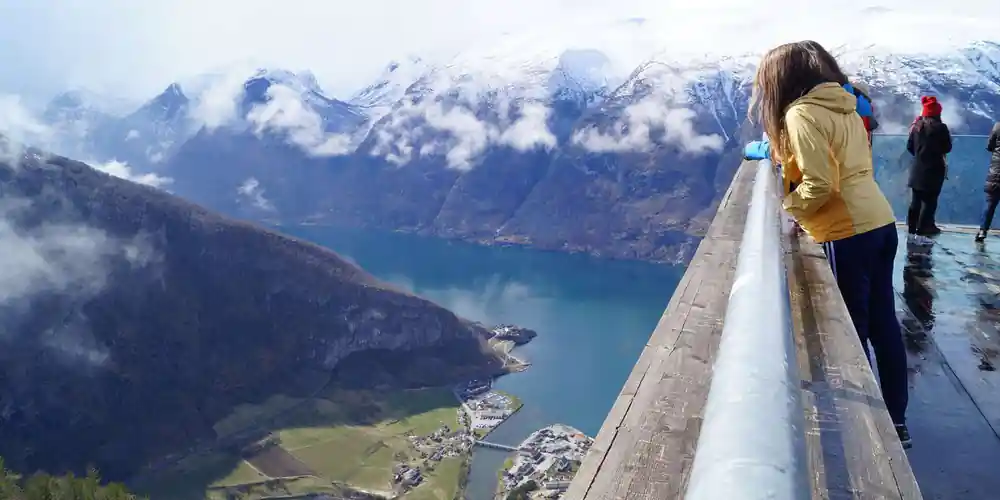
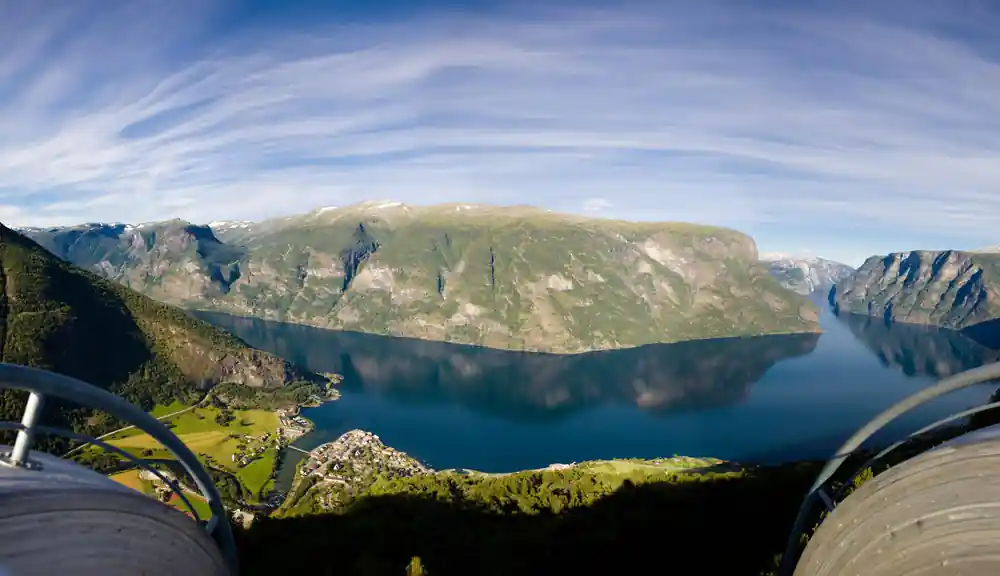
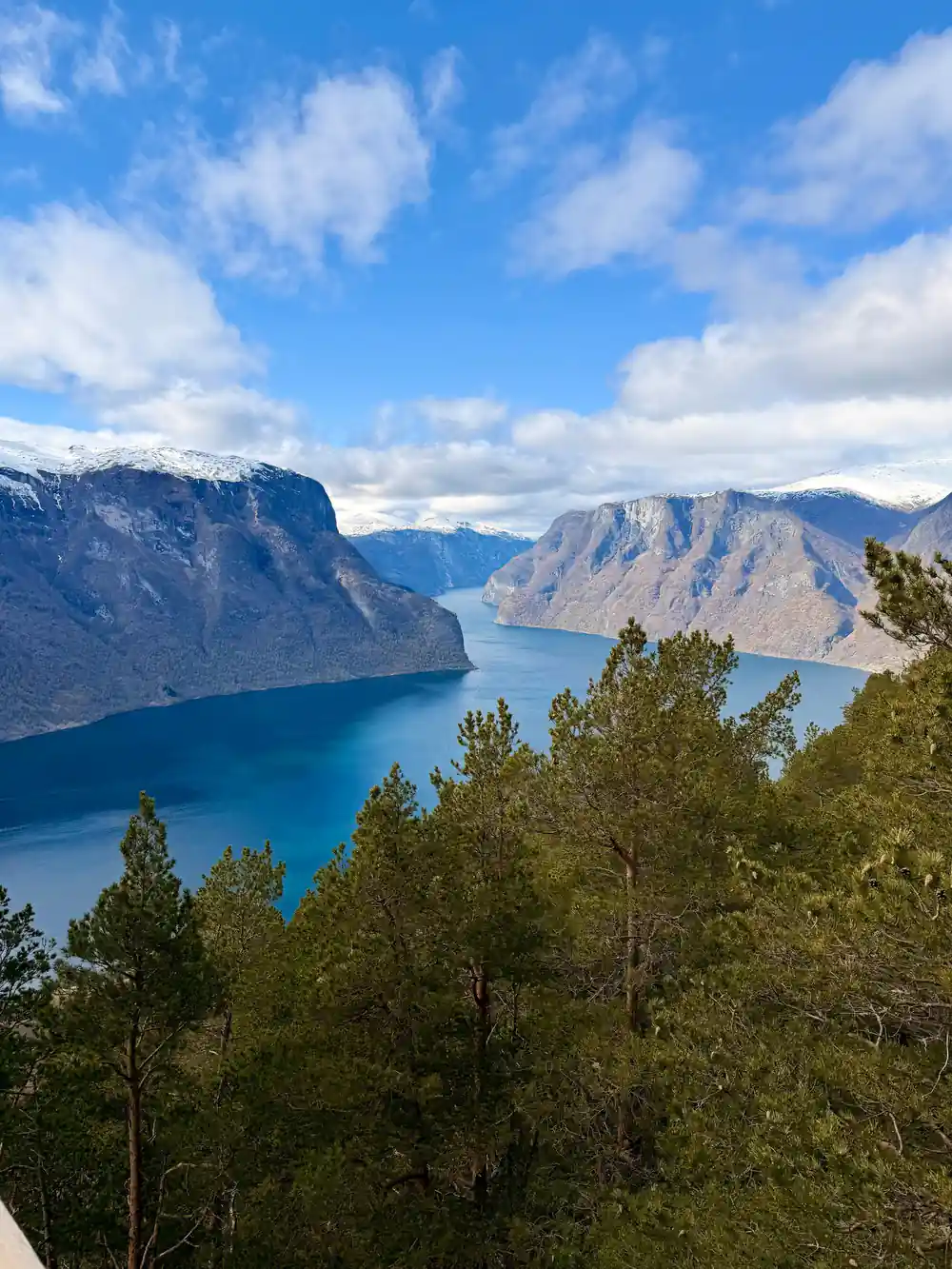
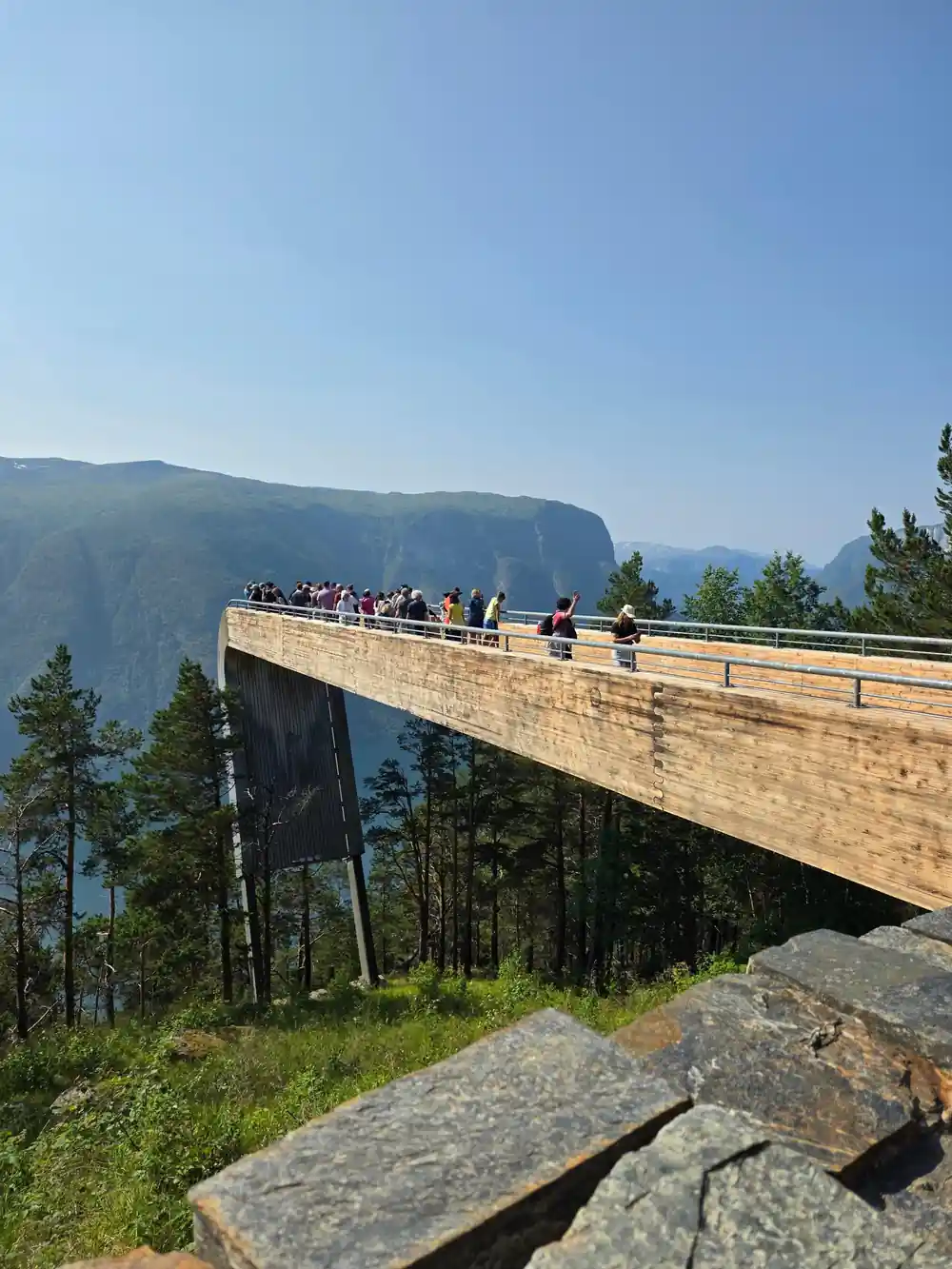
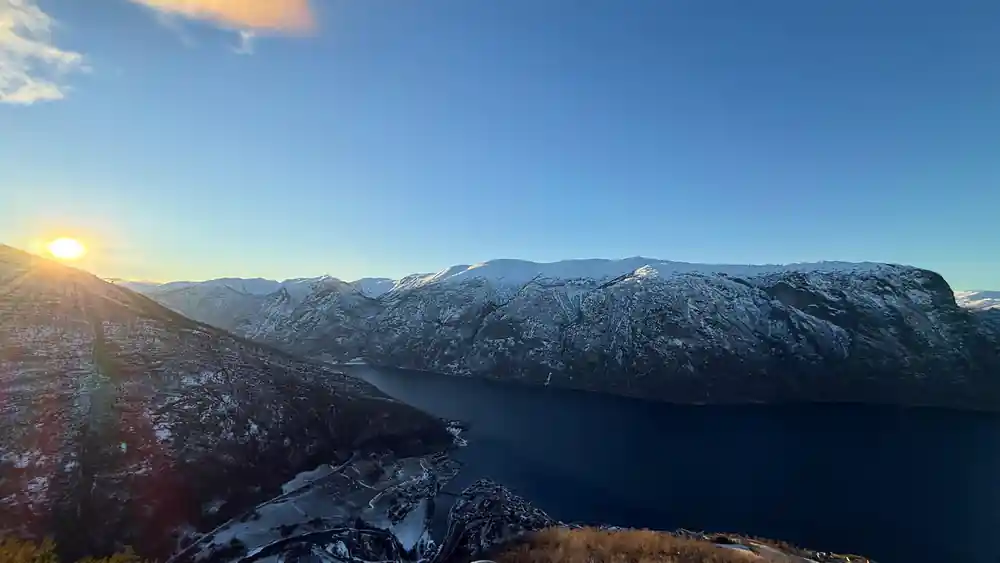
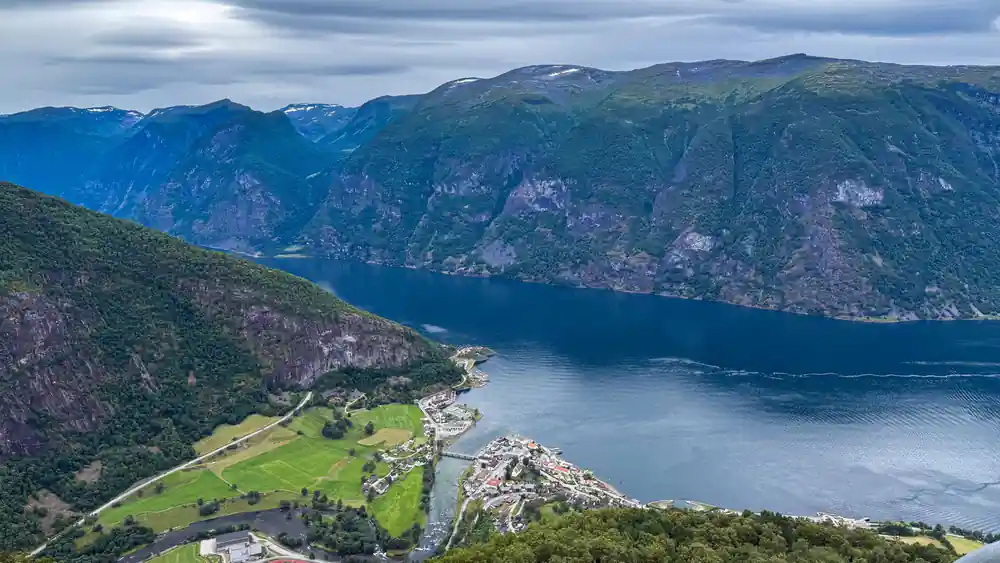
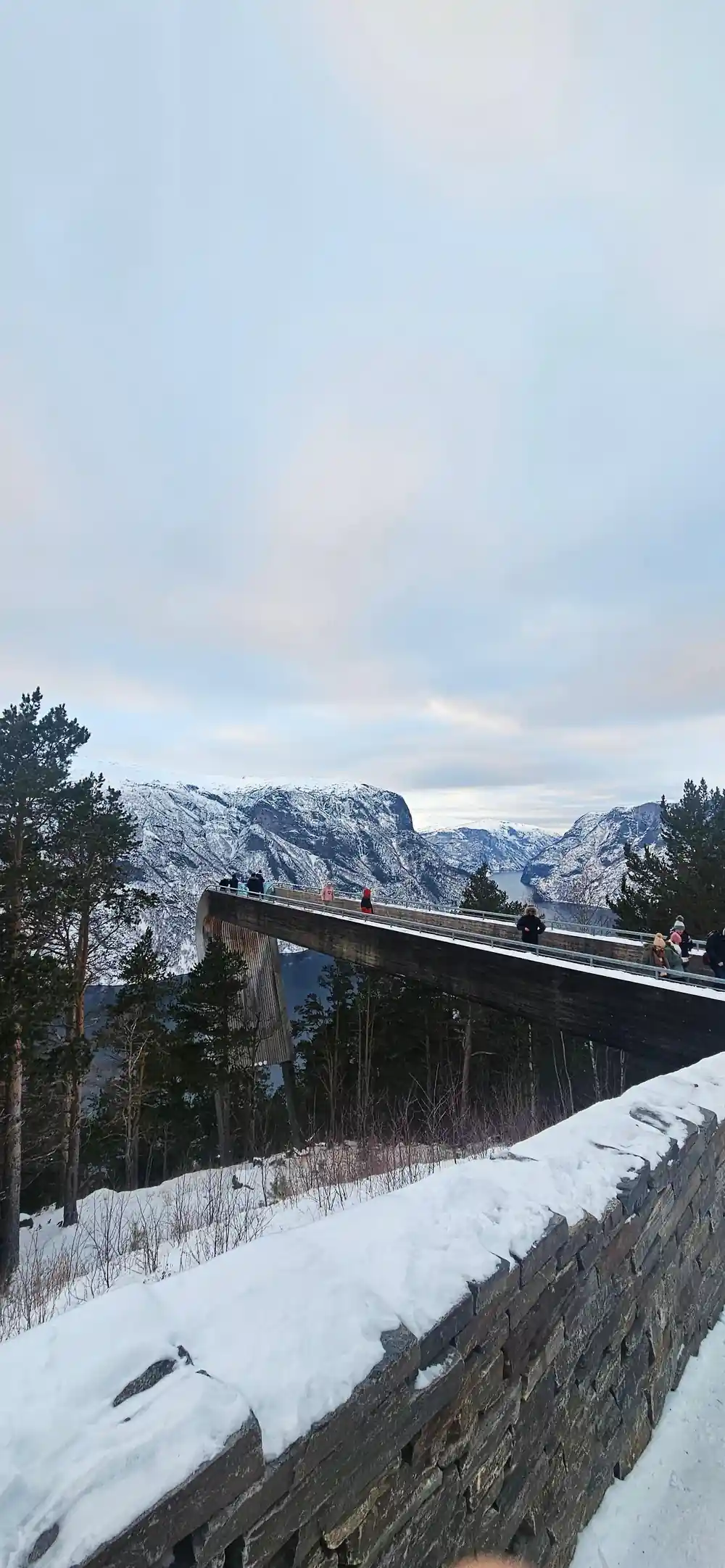
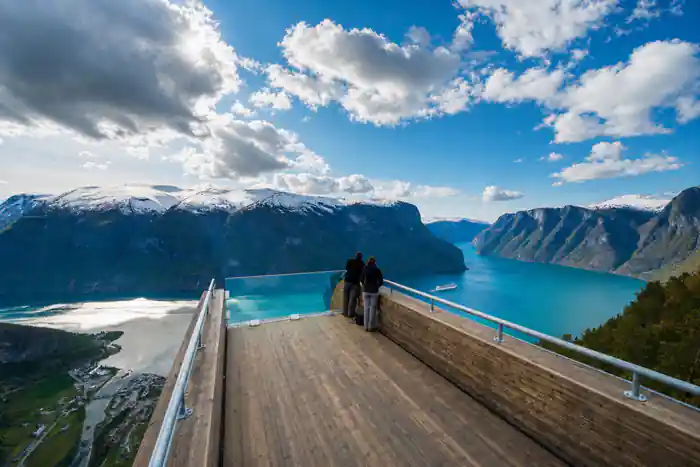
Stegastein is a viewing platform of laminated pine and steel that runs thirty metres straight out from the mountainside and stops with a glass barrier angled down towards the water. It sits six hundred and fifty metres above the Aurlandsfjord and it is part of the Norwegian National Scenic Routes programme, which is the state's long project of commissioning good architecture at the places people stop to look.
It is a genuinely unsettling structure to walk out onto, in the way it was designed to be. The floor runs out, the rail ends, and the fjord is directly below you rather than in front of you.
The road up from Aurland is part of the experience and part of why the vehicle is what it is. Hairpins, a steep gradient and a surface that spends half the year under snow, which is also why this stop is the first one weather takes away.
The two villages
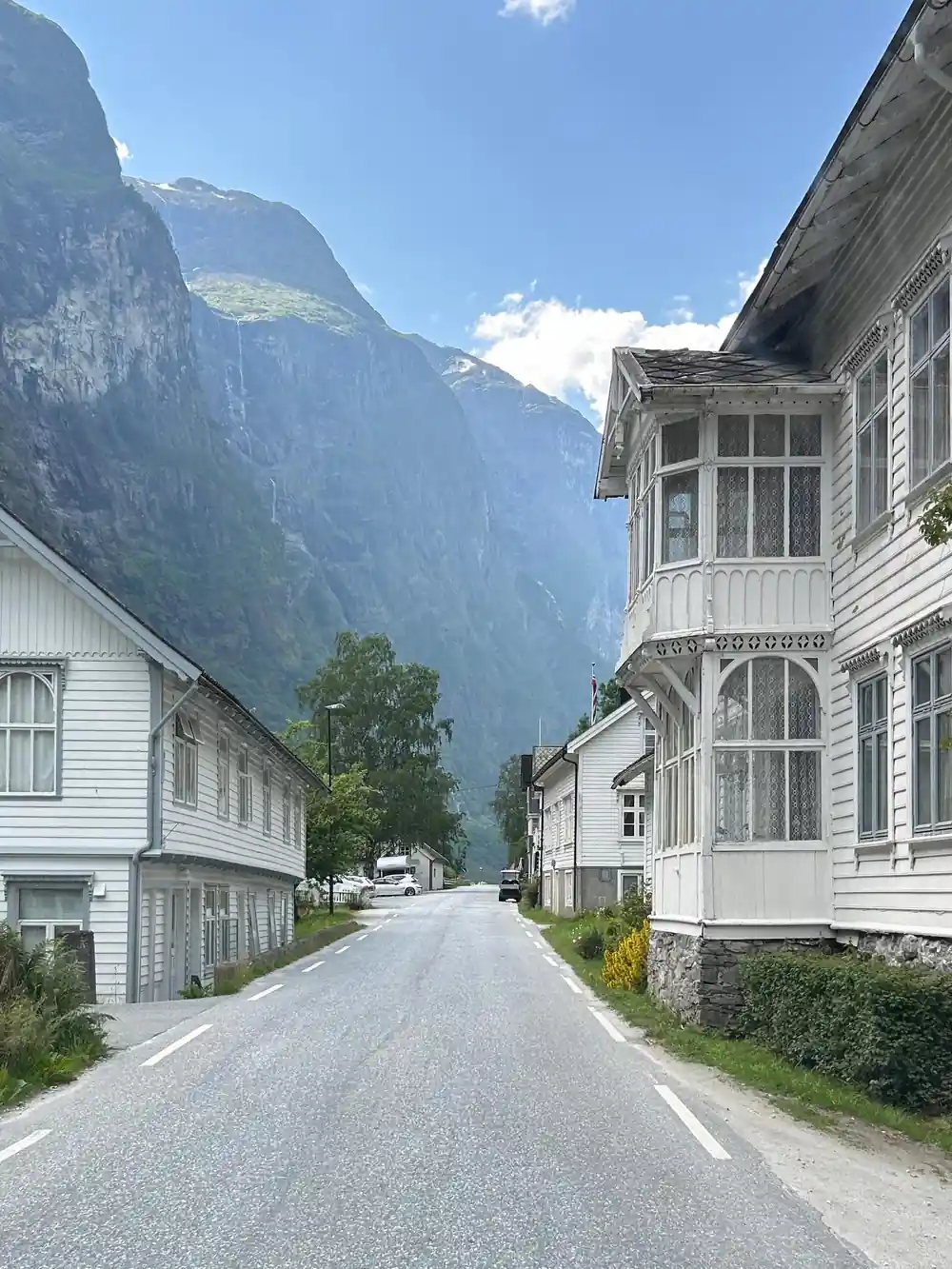
Gudvangen sits at the head of the Naeroyfjord with mountains on three sides and gets forty-five minutes. It is small, it exists mostly because the fjord ends there, and the walk from the bus to the quay is the walk through the village.
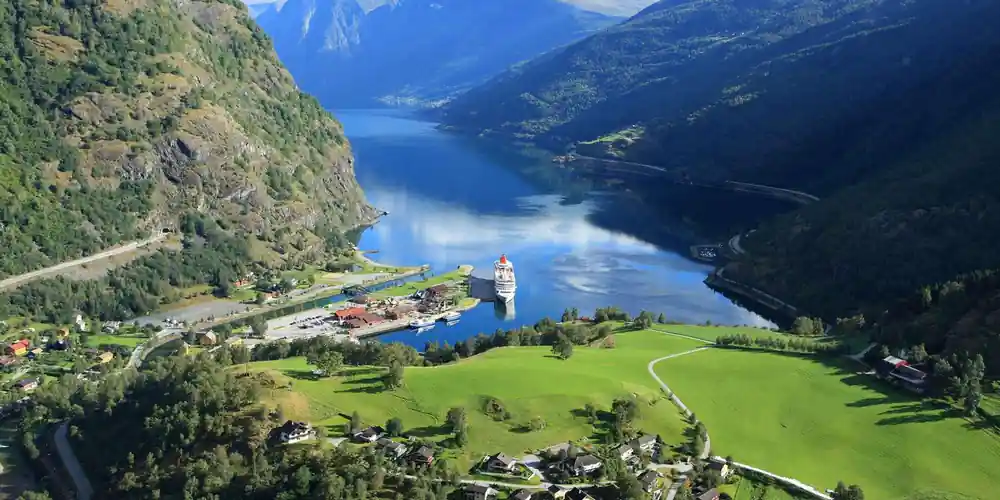
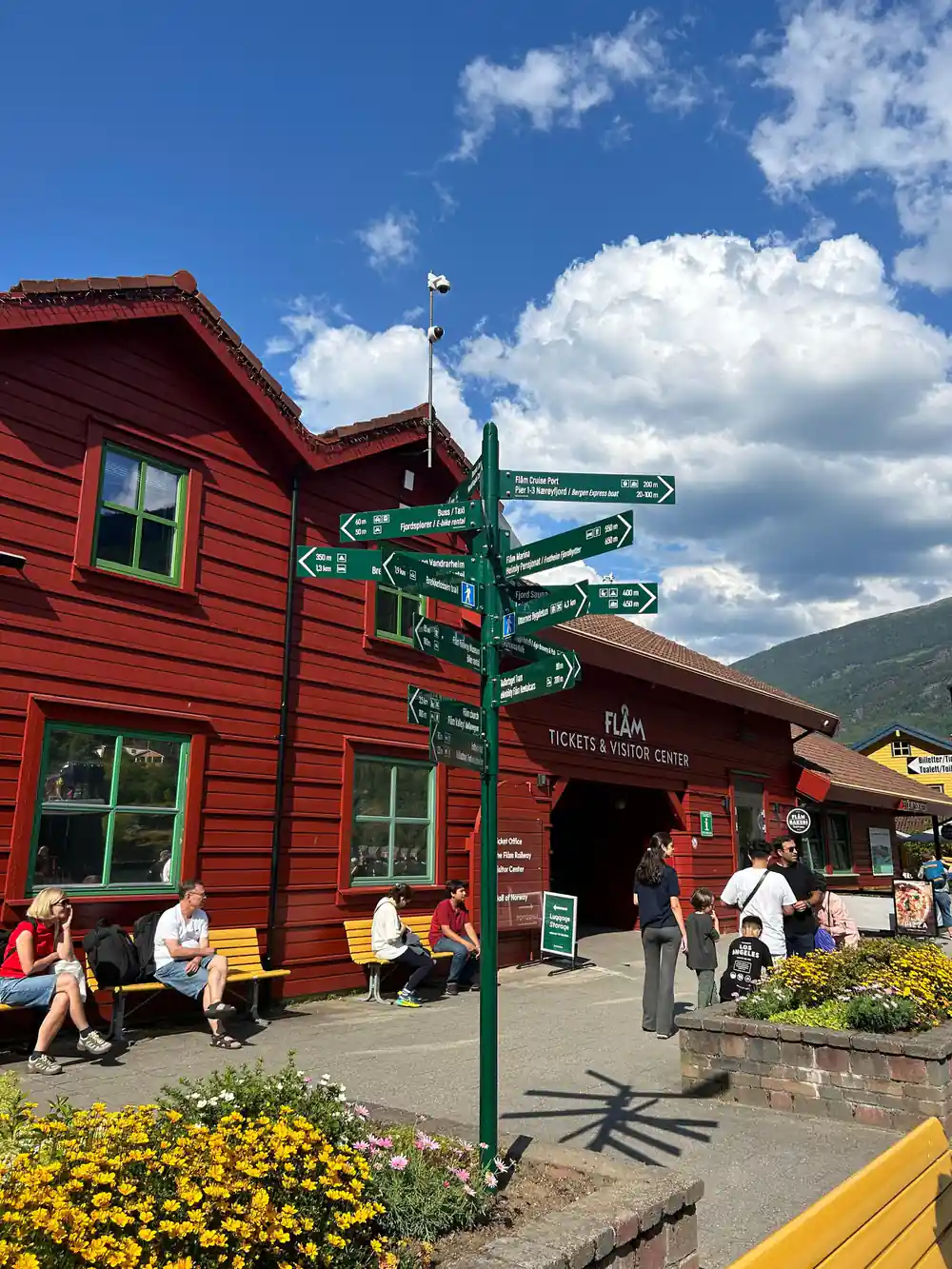
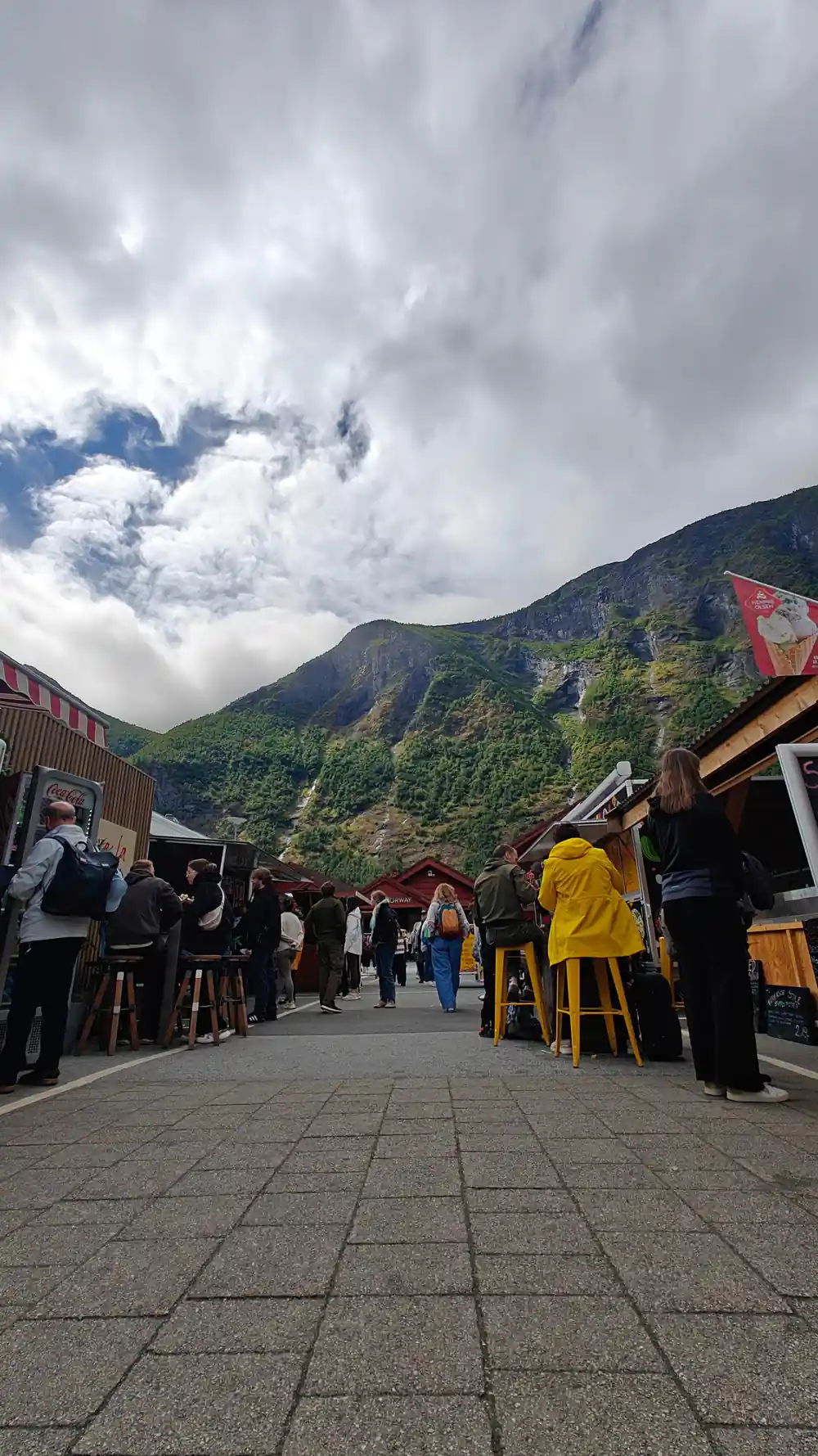
Flam is at the head of the Aurlandsfjord and gets thirty. It is the busier of the two, being the terminus of the Flam Railway and a regular cruise-ship call, and it has more in the way of places to buy lunch. Thirty minutes is enough for one of those things and not two.
Neither stop is long enough to explore properly, and it is worth understanding that going in. This is a day about the fjord and the road, with the villages as the places the boat starts and stops.
Who it suits, and the honest caveats
It suits anybody with one day in Bergen who wants to see the Sognefjord system properly rather than glimpse it, and anybody who would rather not spend an evening working out train, bus and boat timetables. Cruise passengers use it heavily for the same reason.
Children under four are not permitted, and the tour is not suitable for wheelchair users. Alcohol may not be carried in the vehicle. All three are stated in the conditions rather than discovered at the door.
The last caveat is the weather, and it is a real one. This is a mountain road and an open fjord in western Norway. The tour can be cancelled for poor weather, in which case you are offered another date or a full refund, and it can also be cancelled if too few people book. Neither is common and both are worth knowing.