Quick summary
- Meet outside the Tourist Information at Strandkaien 1 at 07:50, for an 08:00 departure and a return to the same address roughly 11 hours later.
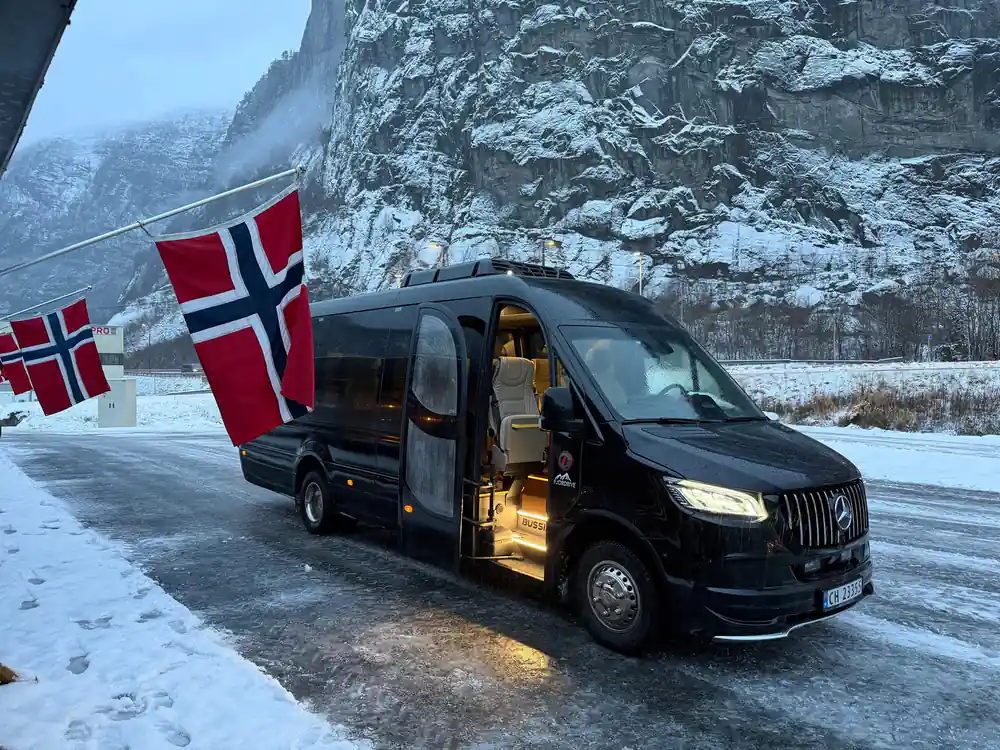
- The bus is air conditioned and stays with you all day, and a live English speaking guide travels on board from the first stop to the last.
- The fare covers the bus, admission to Tvindefossen, admission to the Stegastein Lookout and the Naeroyfjord cruise ticket.
- Food and drink at every stop are extra, and alcohol cannot be carried in the vehicle at any point during the day.
- The tour runs only in good weather and needs a minimum number of travellers, and it is refunded or rescheduled if either condition fails.
- Top choice By guided bus One fare, from 311.47 USD Total door to doorAbout 11 hoursTime actually stoppedFive scheduled stopsTime on the waterThe Naeroyfjord crossingWho drivesThe operator, all dayFjord view qualityNarrow section from the waterPlanning neededNone beyond the meet time Check availability
- By train Separate fares in NOK Total door to doorLonger with connectionsTime actually stoppedDepends on your own planTime on the waterNone on the classic rail legWho drivesThe railwayFjord view qualityValley from the trackPlanning neededTimetables and transfers See this tour
- By express boat Separate fares in NOK Total door to doorFjord only, not the full loopTime actually stoppedPorts and transfer points onlyTime on the waterMost of the day afloatWho drivesThe boat crewFjord view qualityOpen water and narrow armsPlanning neededSailings and season [2] See this tour
From autumn 2026 to autumn 2028 the Laerdal Tunnel is closed to traffic between 18:00 and 06:00.
Is eleven hours the right shape
Included in the fare
- Air conditioned bus for the whole eleven hours
- Admission to Tvindefossen
- Admission to the Stegastein Lookout
- Naeroyfjord cruise ticket
- Live guide on board, English speaking
Not included anywhere
- Food and drink at every stop, on every option
- No alcohol may be carried in the vehicle
- Children under four are not allowed on this tour
- The Flam Railway is a separate product with its own timetable [2]
- Weather and minimum traveller conditions apply before departure
Where the day starts and what the first hour costs you
The day begins on the waterfront at Strandkaien 1, outside the Tourist Information building, at 07:50. That is ten minutes before the wheels turn, and the ten minutes are not padding: this is where the guide checks names, hands out the cruise ticket and explains how the rest of the day will be paced. If you are staying in central Bergen, most hotels are a short walk from Strandkaien, and arriving at 07:45 is realistic without a taxi. Arriving at 07:55 is not, because the bus does not wait past its 08:00 start.
The operator lists the tour as 11 hours long, which puts a clean return to Strandkaien 1 at around 19:00, though the exact minute depends on traffic, ferry timings and how long the group spends at each stop. From the moment the bus pulls away, the first leg is the longest unbroken stretch of sitting in the day. You leave the city, follow the E16 corridor east, and the landscape changes from suburbs to water to valley walls within the first 40 minutes. There is no stop scheduled in this opening stretch, so treat it as the part of the day to settle in, charge a phone, or sleep off an early alarm.
The road out, and how much of the day is spent seated
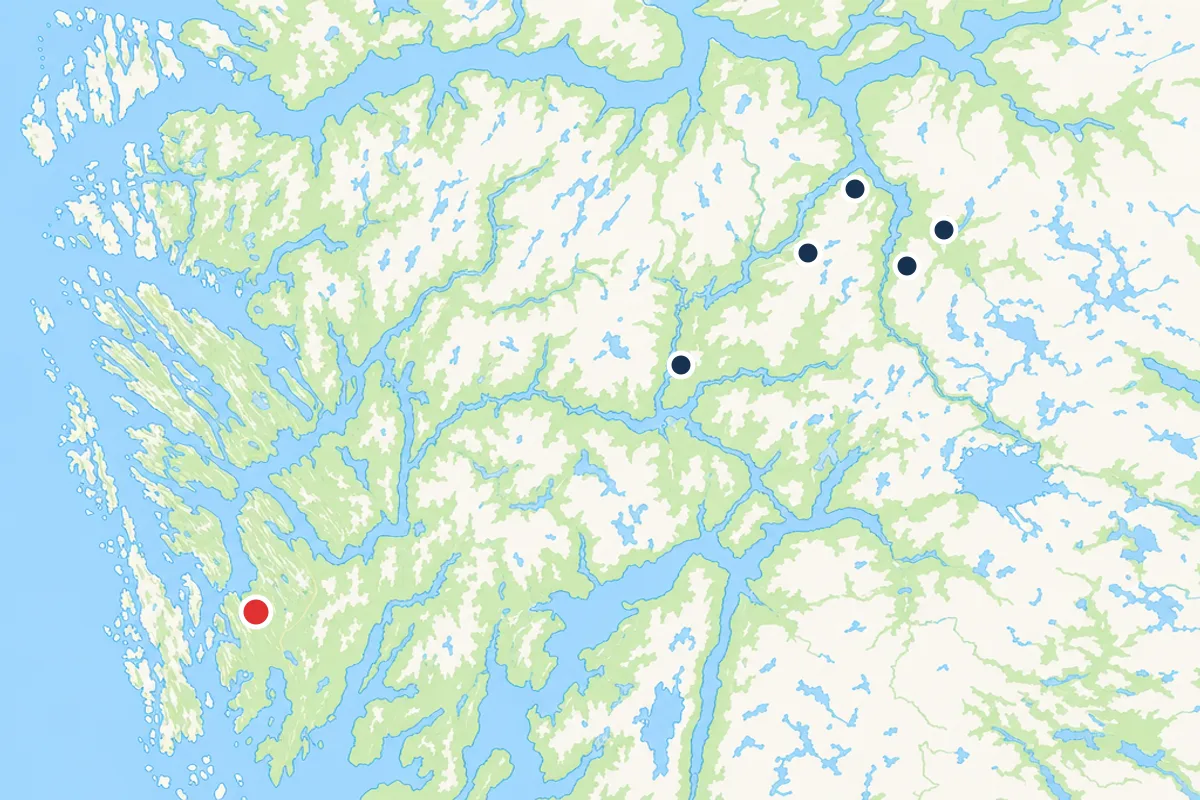
For anyone weighing a bergen to flam day trip against doing the route independently, the honest headline is that the bus option is a sitting day. The route runs on the E16 and road 7 [1], the main corridors between Bergen and the inner Sognefjord, and much of the eleven hours is spent in the seat rather than on your feet. The stops break the driving into chunks: Tvindefossen early, then Gudvangen, then the fjord, then Flam, then Stegastein on the way back. Between those stops the bus keeps moving, and there is no scheduled walking time beyond what you create at each stop.
This matters most for anyone who assumed the fjord cruise would replace the driving. It does not. The cruise covers one specific stretch of water inside the day, and the bus still has to cover the road on both sides of it. If you want a sense of the shape before you book, think of it as three long seated legs, one of them on water, punctuated by five stops, four of them on solid ground and one on the water. The stop at Gudvangen is the handover point between road and water, and it is the moment the day changes character.
Tolls apply on the E16 corridor [1], but they are the operator's cost, not an extra on your booking. What you should budget for instead is legroom tolerance: the bus is air conditioned and comfortable, but it is a bus, and eleven hours in one is a real thing to plan around. Bring a layer, a bottle of water and something for motion sickness if you are prone to it, because the mountain sections on road 7 are winding.
Tvindefossen and Gudvangen: the first two places you stand up
Tvindefossen is the first real stop, a waterfall beside the road where admission is included in the tour price. It is a short stop rather than a hike, the kind of place that rewards ten or fifteen minutes of standing and looking rather than an hour of walking. Because admission is bundled into the fare, there is no separate ticket to buy and no queue to join, which is why it works as an early leg stretcher on the way east. After that, the bus continues toward Gudvangen, and the scenery tightens as the valley narrows.
Gudvangen is where the day splits. It is the village at the head of the Naeroyfjord, and it is the point where you leave the bus and board the fjord cruise that your ticket covers. There is time here to use a toilet or buy a coffee before boarding, though food and drink are not included at any stop on this tour. Once the boat leaves, the eleven hours stop being a road day and become a water day for the next stretch, and the bus meets you again at the other end. This is the natural moment to switch from driving clothes to something warmer, because the fjord air is colder than the valley floor.
11 hours
The full day runs about eleven hours from the 08:00 departure at Strandkaien 1 to the return to the same address in the evening.
Naeroyfjord: the part of the day spent on water
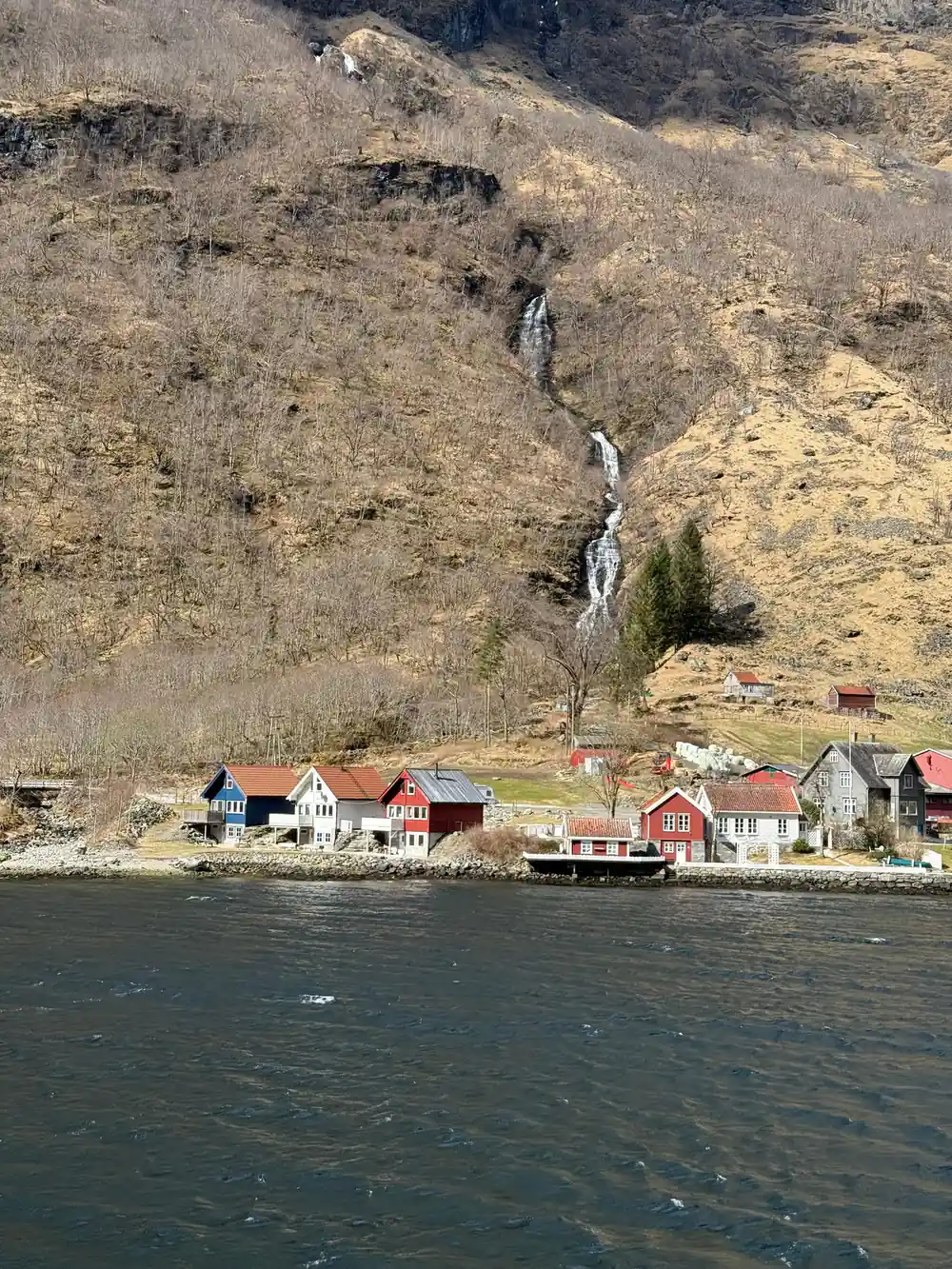
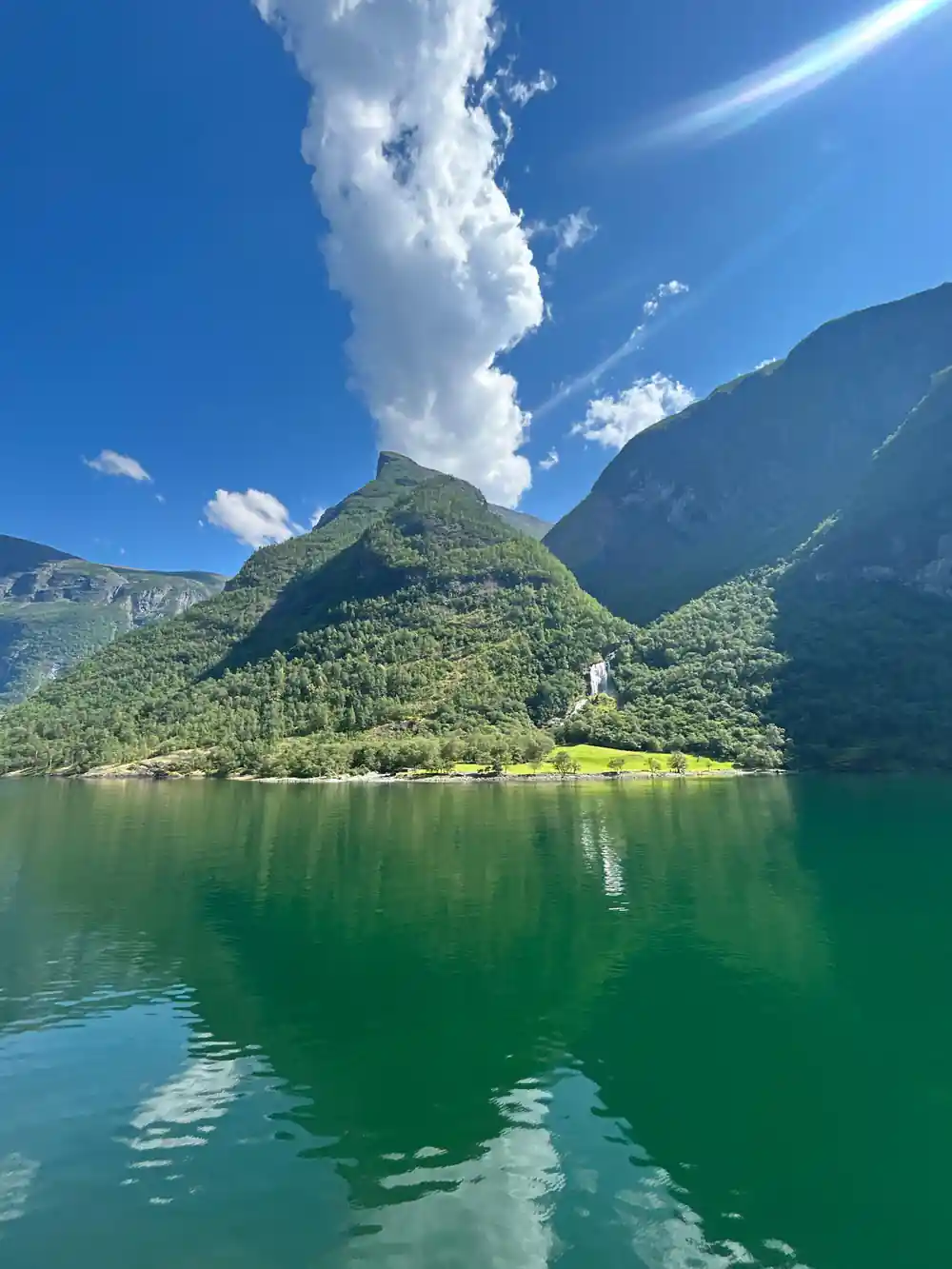
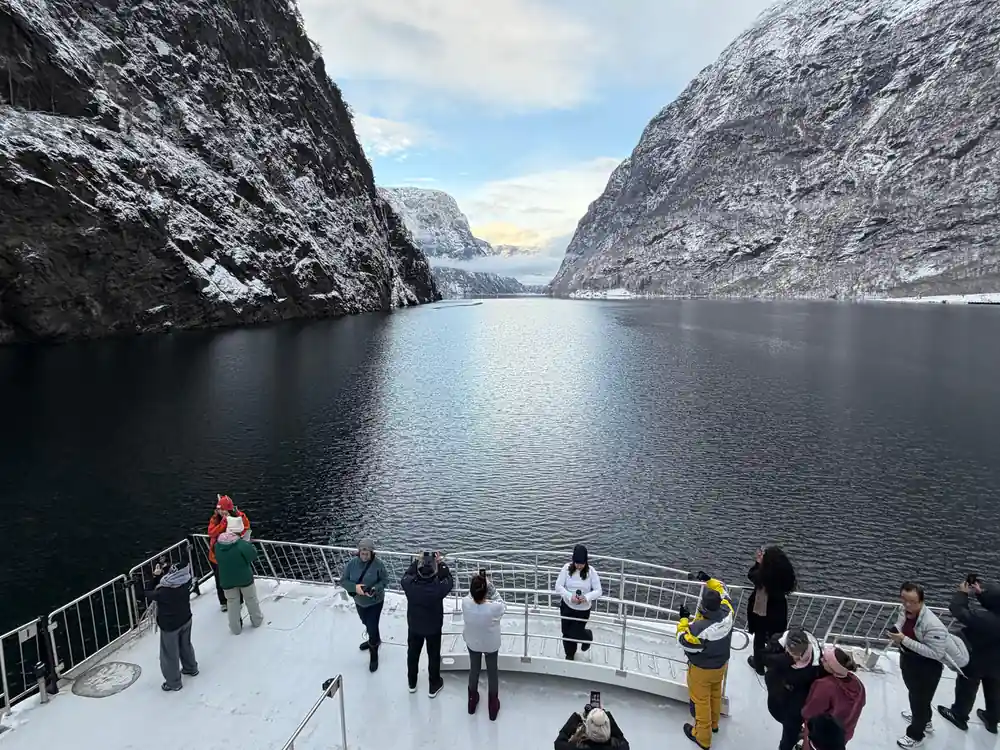
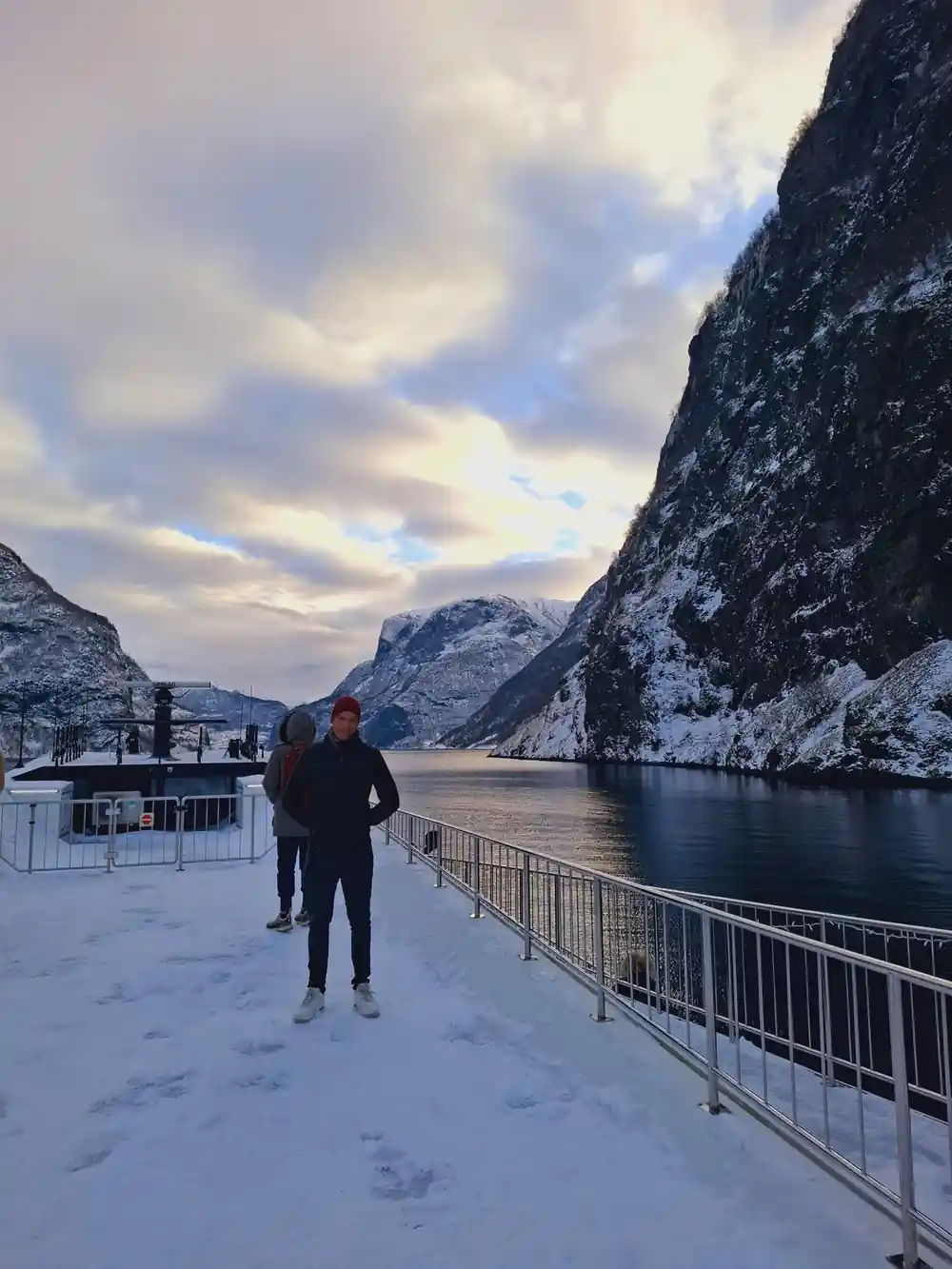
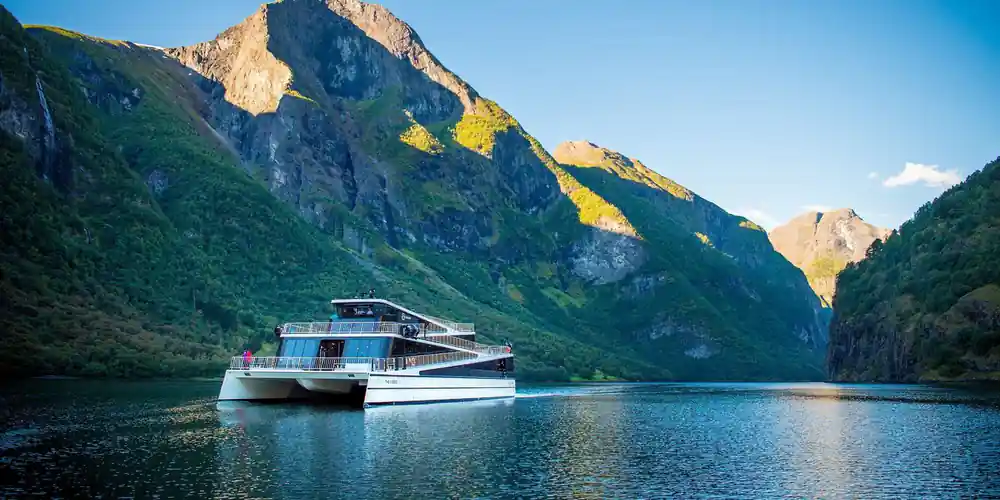
The Naeroyfjord cruise is a ticketed component of the tour, and the ticket is included in the price you pay. The boat replaces the bus for one leg of the route, which means the fjord is not a side trip bolted onto a driving day: it is the middle of the day. For anyone comparing bergen to flam cruise time across different products, the key point is that this cruise is the narrow, steep sided section rather than the open Sognefjord crossing, and it is the reason the day is built around Gudvangen and Flam rather than the other way round.
Because the boat timings set the schedule for everything either side of them [2], the bus cannot simply leave when the group is ready. The departure from Gudvangen and the arrival into Flam are fixed by the sailing, and the guide plans the road legs around them. Practically, this means the cruise is the one part of the day you should not expect to extend, and the one part where being back at the meeting point on time matters most. It also means the sitting continues on water rather than on asphalt, with the same view changing constantly rather than flashing past a window.
If you are weighing the train against the boat, the cruise and the railway cover overlapping but not identical ground, and the cruise is the one that keeps you on the water for this particular crossing. Either way, both the water leg and any rail alternative depend on published timetables [2], and both sit inside a fixed window that the rest of the eleven hours has to fit around.
Flam: the longest time off the bus
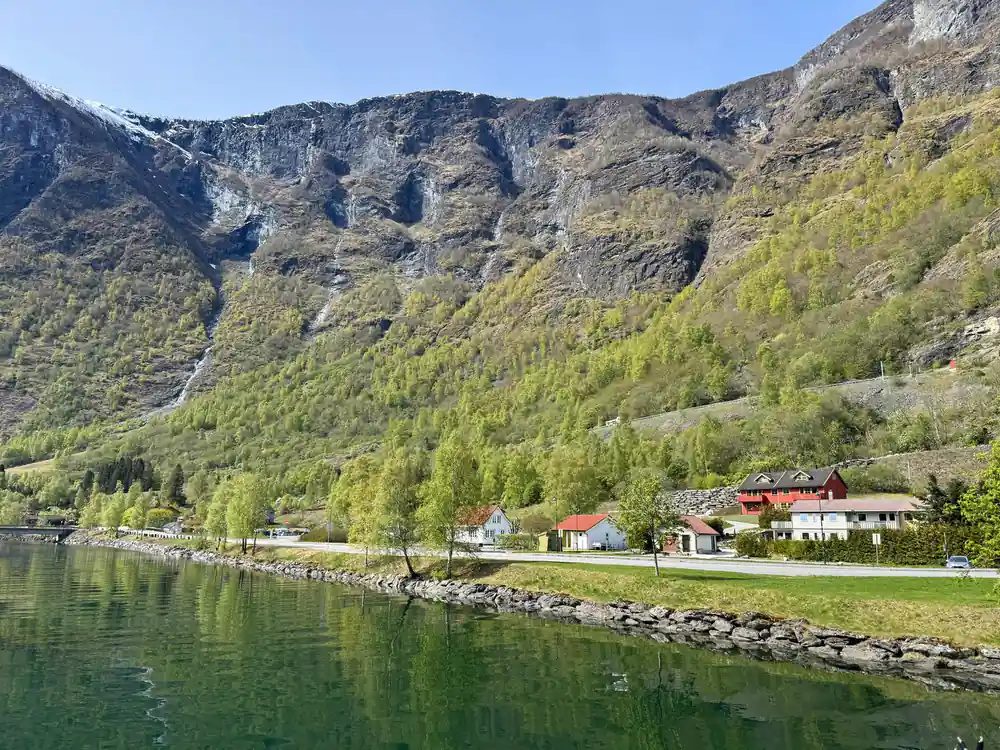
Flam is the stop where the day opens up. The village sits at the inner end of the fjord and is the point where the bergen and flam route finally puts you on land with time to spare rather than time to board. It is also where the tour's food and drink exclusion bites hardest, because Flam has cafes and a bakery and nothing at them is covered by your fare. If you want a proper meal rather than a snack, this is the stop to spend on it, and it is also where you are most likely to find a shop for anything you forgot in Bergen.
The stop lasts long enough to walk the waterfront, look at the railway station and eat, but not long enough to ride the Flam Railway and return before the bus leaves. That is the single most common misunderstanding about this itinerary: the railway is a separate product with its own schedule [2], and the guided bus tour does not include it. If the train is the thing you actually came for, book a product built around it. If you want the fjord, the waterfall, the lookout and the village in one day without arranging any of it yourself, this is the version that does that.
Once the group is back on board, the bus turns around and the bergen to flam and back half of the day begins. From here the road climbs, and the character of the driving changes from valley floor to mountain shelf. This is the leg where the sitting is most scenic per minute, because the switchbacks to Stegastein sit directly above the water you have just crossed.
Stegastein and the road back to Bergen
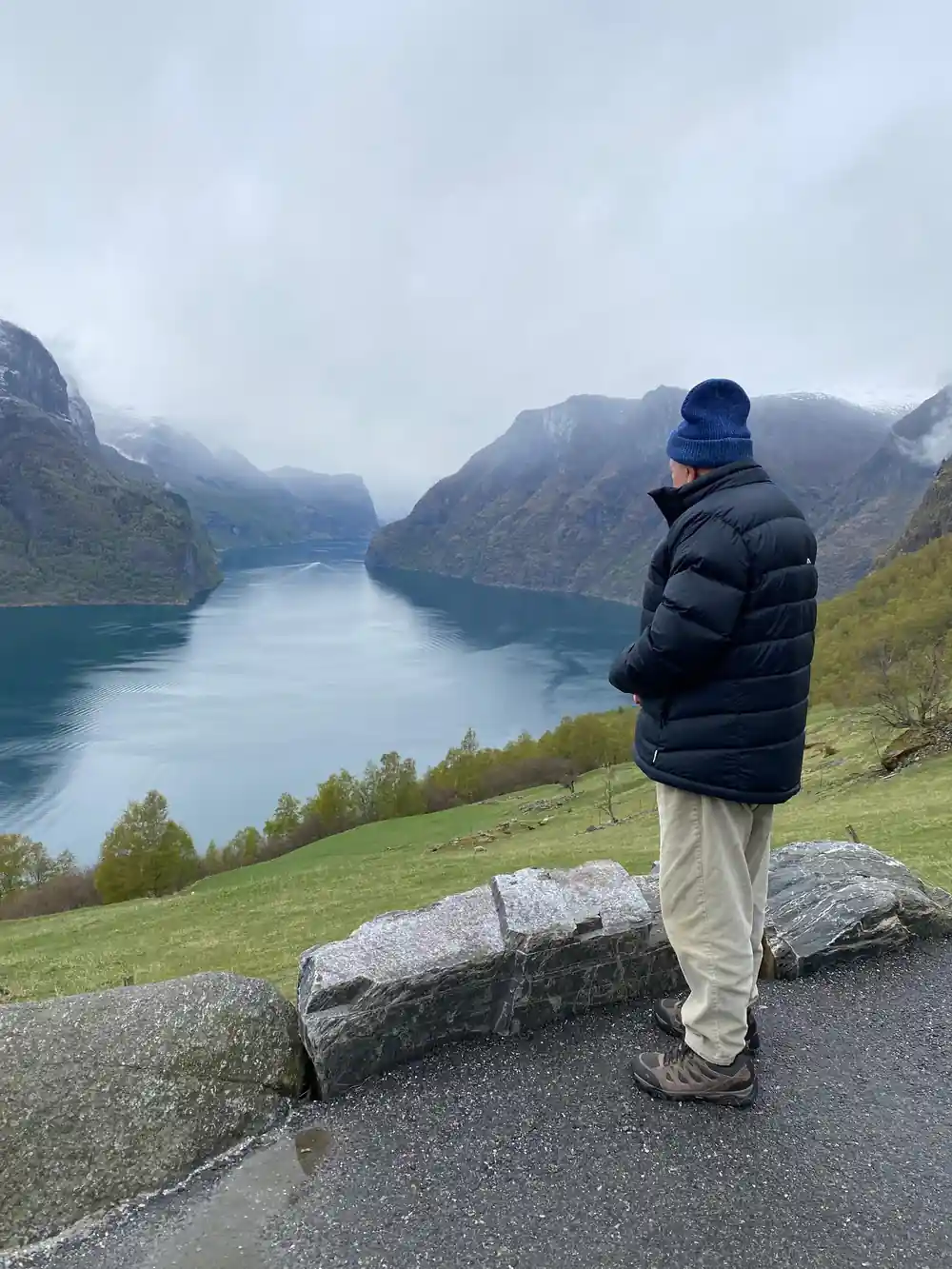
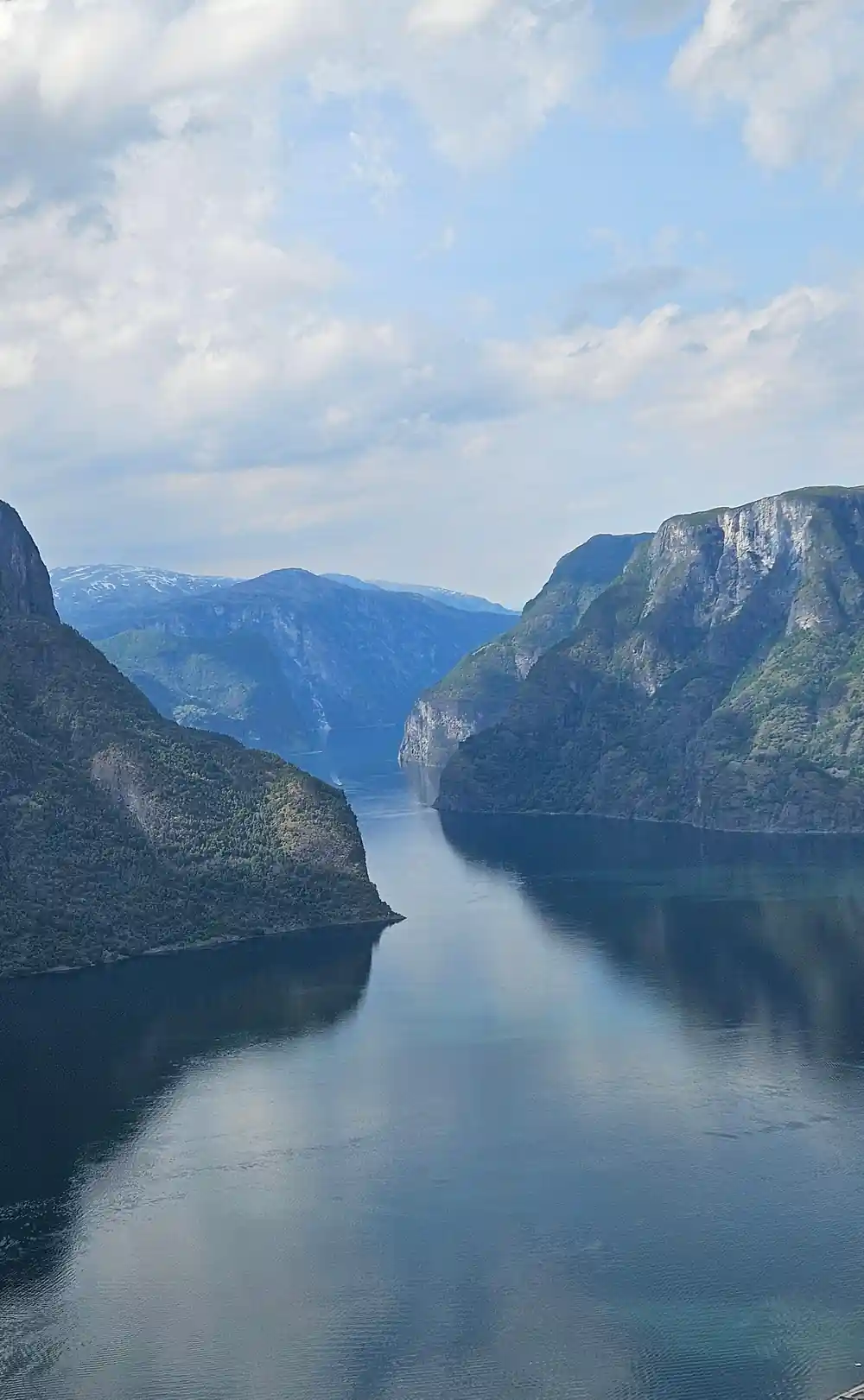
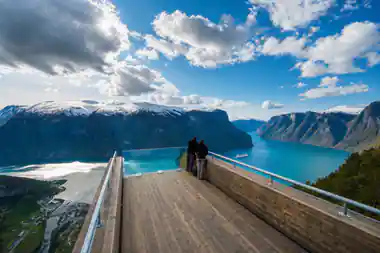
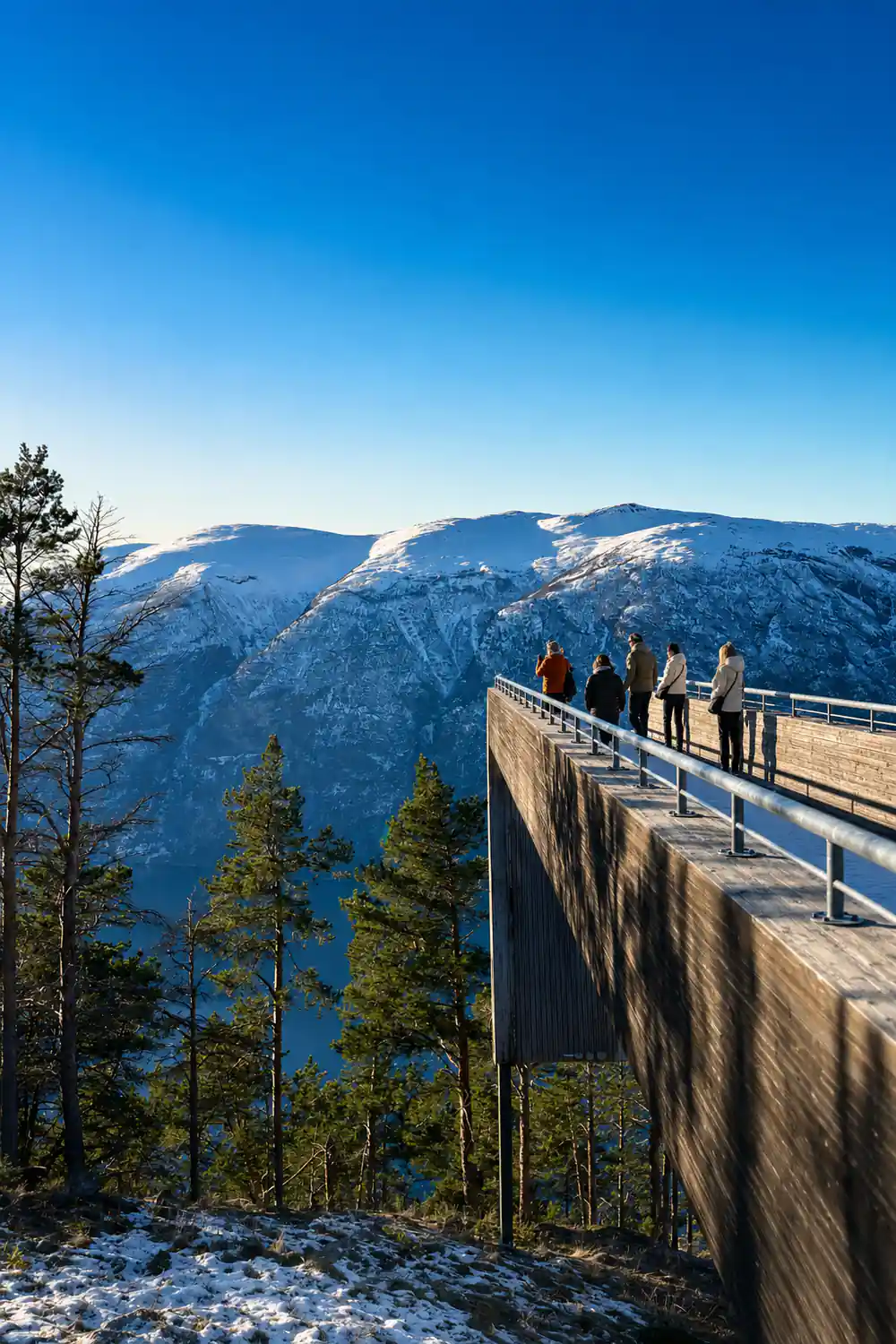
Stegastein Lookout is the last included stop and the one with the biggest payoff per minute spent out of the seat. Admission is covered by the tour price, and the platform juts out from the mountainside high above the Aurlandsfjord, which means the view back down covers water you have already travelled. It is a viewing stop rather than an activity stop, so the time is short and the queue for the platform edge can be the slowest part of it. Go to the far end first and work back, and you will see more in the time available.
The return leg is the longest continuous sitting block of the afternoon. The drive back toward Bergen uses the E16 and road 7 again [1], and it is here that the eleven hour estimate earns its keep: mountain roads, weather and traffic all feed into whether you are back a little before or a little after that. The Laerdal Tunnel closure from autumn 2026 [1] is a reminder that this corridor is subject to real roadworks and diversions, so treat any return time you are quoted as an estimate rather than a promise. Do not book a tight onward connection for the evening.
The bus finishes where it started, at Strandkaien 1. From there, central Bergen hotels, the harbour and the airport bus stops are all within walking distance, which is part of why the meeting point was chosen. By the time you step off you will have spent most of eleven hours either seated or briefly standing across five stops, and the day will have covered a waterfall, a village, a fjord crossing and a mountain viewpoint without you arranging a single leg of it.
Honest limits of the eleven hour format
The tour runs only in good weather, and the operator will refund or reschedule if conditions do not allow it. It also requires a minimum number of travellers to run at all. Both conditions are worth reading before you plan a specific date around it, because a cancelled sailing or a closed mountain road changes the day rather than merely delaying it. Free cancellation up to 24 hours before departure applies, with a full refund, so the risk of booking early is limited as long as you read the conditions rather than skim them.
Children under four are not allowed on this tour, and alcohol may not be carried in the vehicle at any point. Food and drink at every stop come out of your own pocket. Those four lines are the practical shape of the product: family friendly above a certain age, dry on board, and priced so that the transport, the admissions and the cruise ticket are the only things bundled in.
The wider point is that eleven hours is a commitment. You are buying a full day in a seat with four scheduled interruptions, not a half day with optional extras. Bergen to flam and back in one day is possible by train, by express boat or by bus, and the guided bus version trades flexibility for the fact that you never have to plan a connection or carry a timetable. Whether that is worth a day of your trip depends on whether you would rather drive yourself or be driven, and on whether you want a guide explaining what you are looking at.
Where the eleven hours go
An 11 hour day from an 08:00 start. The balance is the transfers between each leg.
What the eleven hours cost
"From" prices. Doing it yourself means three bookings instead of one, and no guide.
The day, and what closes when
The day, hour by hour
07:50 meet at Strandkaien 1
Check in outside the Tourist Information ten minutes before the 08:00 start.
08:00 departure by bus
The first long seated leg begins, heading east on the E16 corridor [1].
Tvindefossen stop
A short waterfall stop with admission already covered by the tour price.
Gudvangen to Flam by water
Board the Naeroyfjord cruise, the one water leg and the fixed point of the day [2].
Flam and Stegastein
The longest stop on land, then the mountain lookout on the road back.
Evening return to Bergen
The bus finishes at Strandkaien 1, roughly eleven hours after it left.
One day, five stops, no connections to plan
from US$312Reserve now & pay later