Quick summary
- Stegastein sits 650 m above the Aurlandsfjord and pushes 30 m out from the mountain wall on laminated pine and a steel frame, completed in 2006.
- The mountain road over Aurlandsfjellet shuts for winter, with recent closing dates of 7 October and 6 November [1].
- Buses on this route are capped at 12.4 m, so not every coach can make the final climb [1].
- The guided bus tour gives you roughly 30 minutes on the platform, plus the Naeroyfjord cruise and Tvindefossen admission [2].
- From 311.47 USD per traveller with a live English speaking guide, 11 hours door to door [2].
- Top choice Guided Bus From 311.47 USD AccessVehicle chosen for the 12.4 m route limit [1]SeasonBound by the winter road closure [1]Time at TopAbout 30 minutesWeather RiskRefunded or rescheduled if weather fails [2]Fjord CruiseIncluded [2]GuideLive English speaking guide [2]EffortLowest, you are driven [2] Check availability
-
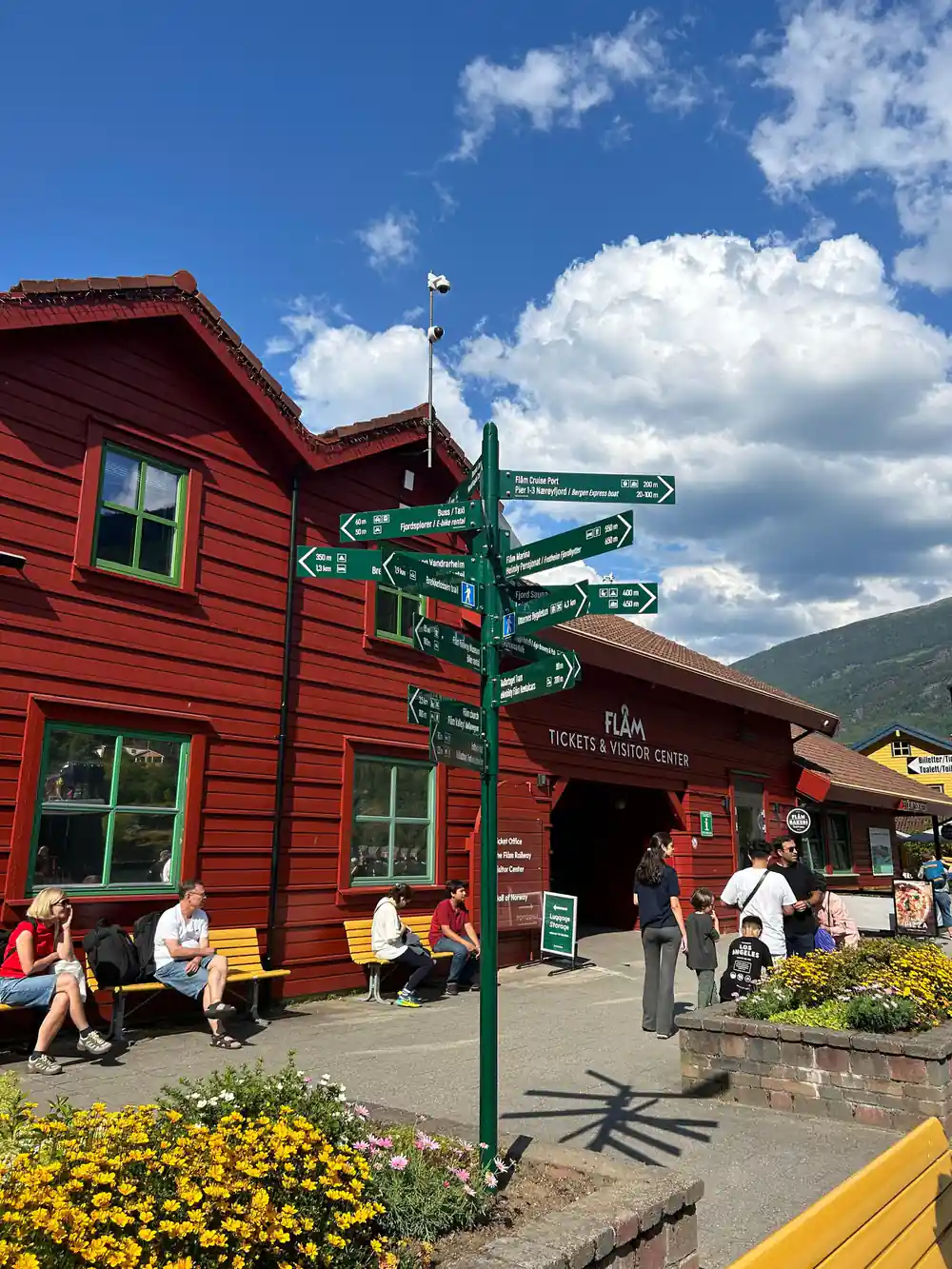 Flam Shuttle
Cheaper, lookout only
AccessSmaller buses on the same mountain roadSeasonBound by the winter road closure [1]Time at TopSet by the shuttle timetableWeather RiskNo weather guaranteeFjord CruiseNot includedGuideNoneEffortLow, single stop
Flam Shuttle
Cheaper, lookout only
AccessSmaller buses on the same mountain roadSeasonBound by the winter road closure [1]Time at TopSet by the shuttle timetableWeather RiskNo weather guaranteeFjord CruiseNot includedGuideNoneEffortLow, single stop
-
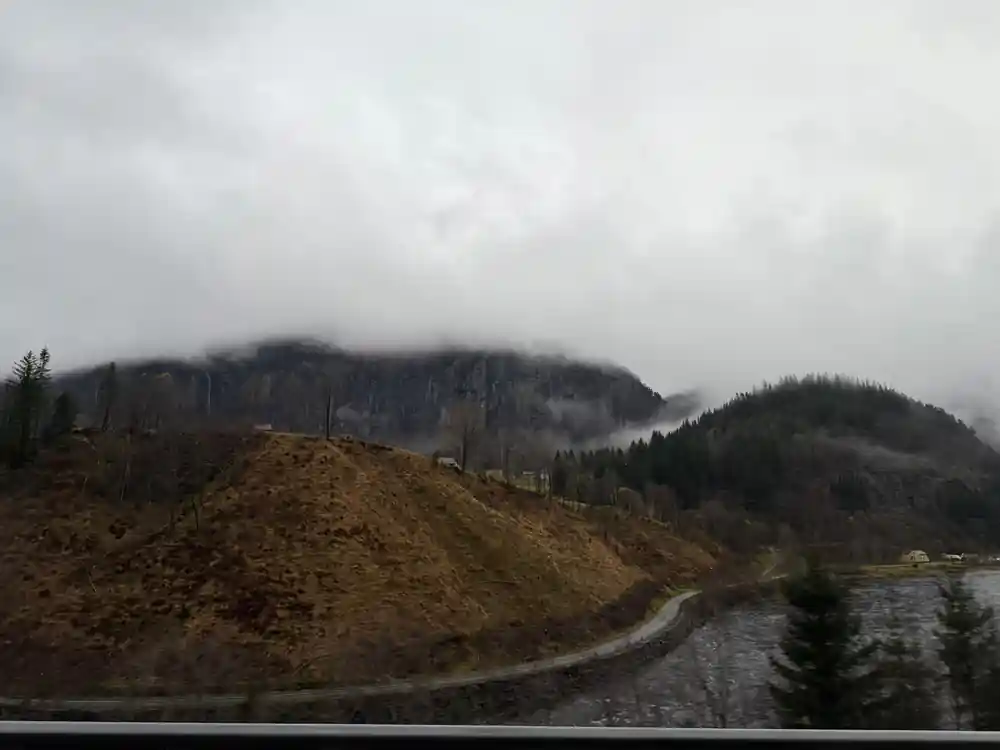 Your Own Car
Cheapest per head in Aurland
AccessYou drive the mountain road yourselfSeasonBound by the winter road closure [1]Time at TopAs long as you likeWeather RiskNo weather guaranteeFjord CruiseBooked separatelyGuideNoneEffortHighest, you drive and park
Your Own Car
Cheapest per head in Aurland
AccessYou drive the mountain road yourselfSeasonBound by the winter road closure [1]Time at TopAs long as you likeWeather RiskNo weather guaranteeFjord CruiseBooked separatelyGuideNoneEffortHighest, you drive and park
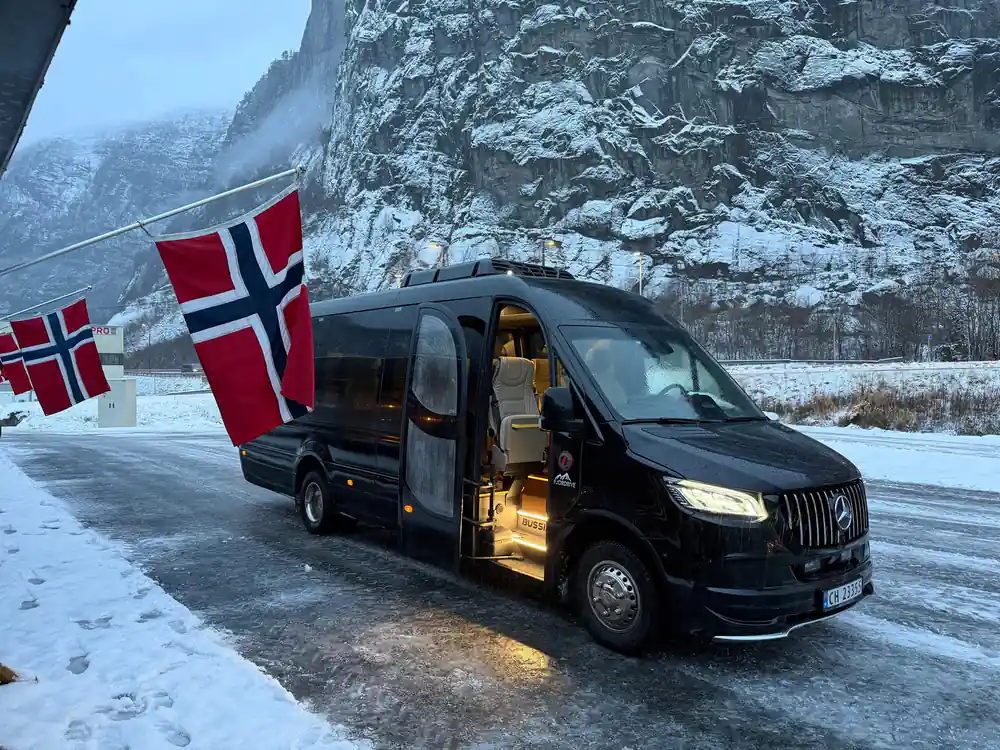
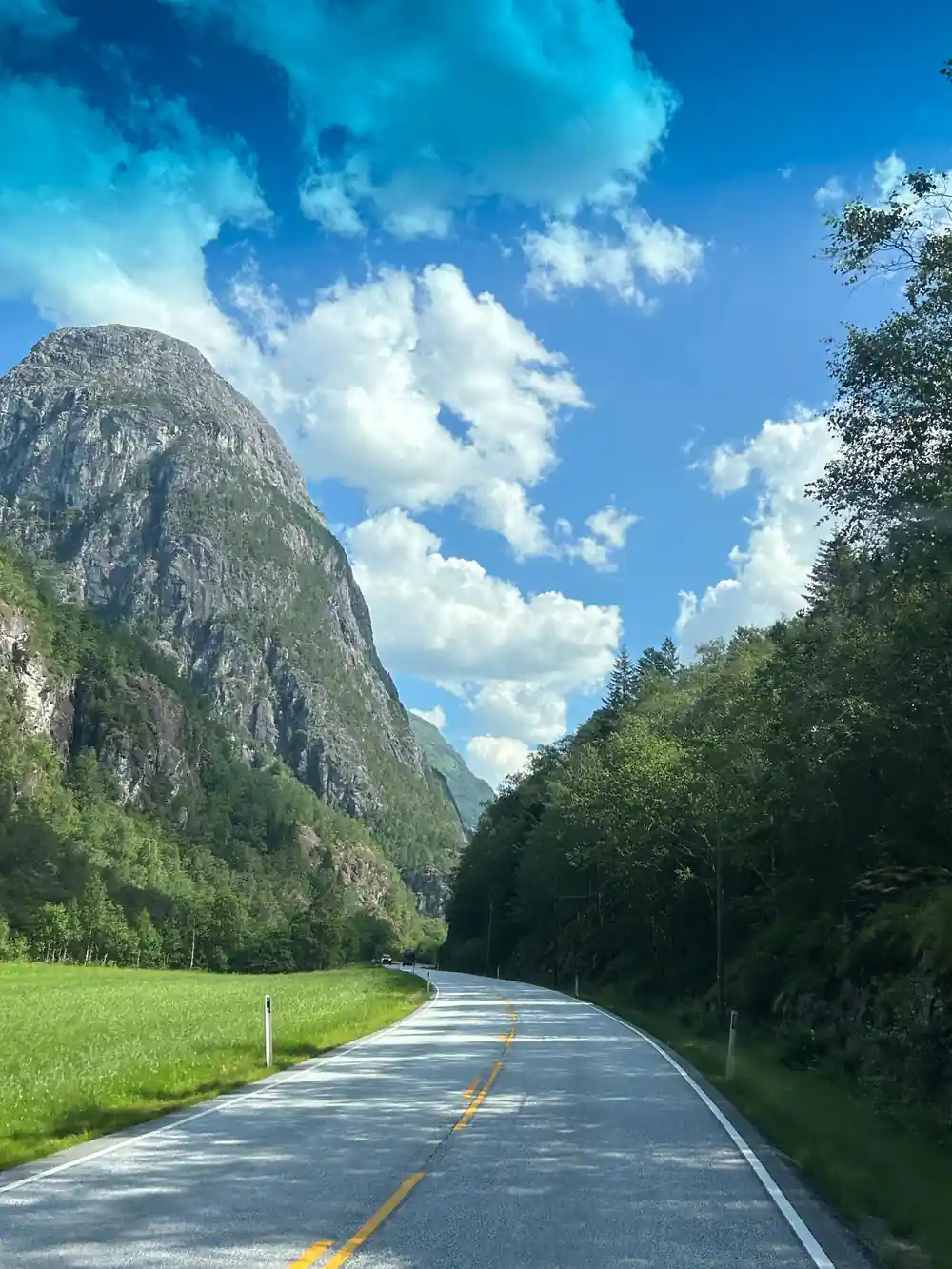
The road over the mountain is closed in winter, and there are restrictions on the length of buses: the maximum length is 12.4 metres.
Which way up to the lookout
What Is Included
What No Option Includes
- Food and drink at every stop [2]
- Alcohol in the vehicle, which is not permitted [2]
- A guaranteed clear view from 650 m, weather dependent [2]
- A longer stay on the platform than the scheduled stop allows [2]
- Entry for children under 4, who are not allowed on the tour [2]
- A place on the mountain road in winter, when it is closed [1]
What Stegastein Actually Is
Stegastein is not a mountain top and it is not a viewing point carved into rock. It is a built object: a platform that reaches 30 m horizontally out from the mountainside, suspended at 650 m above the Aurlandsfjord. The structure was completed in 2006, laminated pine laid over a steel frame, and the design is deliberately plain so that the fjord below does the talking. You walk out along the pine deck and the ground simply stops being under you.
That 30 m projection is the whole point. From the road itself you would be looking at the fjord through a frame of birch and rock. On the deck you are past the edge, above the drop, with the Aurlandsfjord running below and the village of Aurland reduced to roofs. The platform is a fixed piece of architecture rather than a natural ledge, and it behaves like one: a defined space, a defined edge, and a defined amount of time that most visitors spend on it.
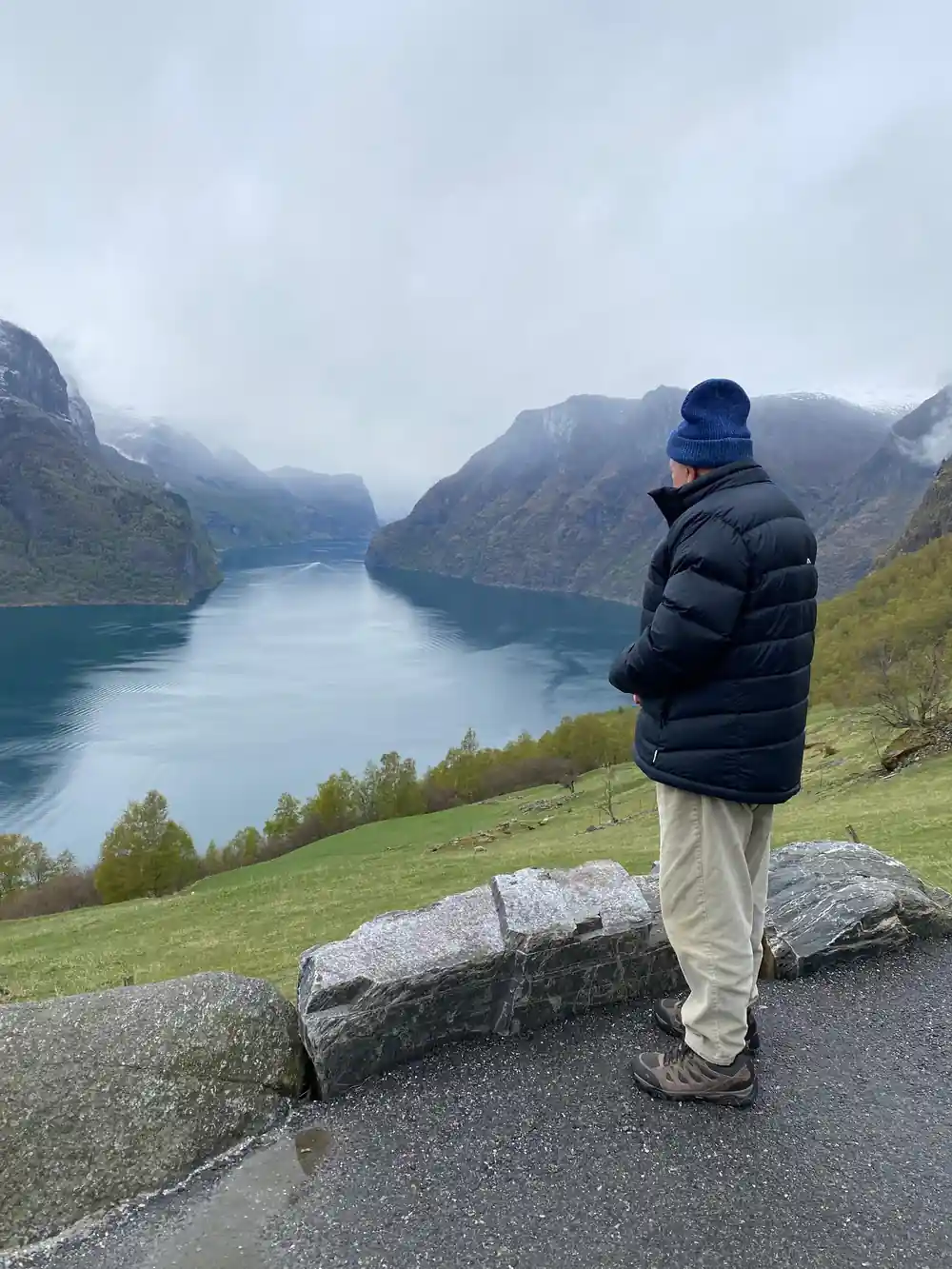
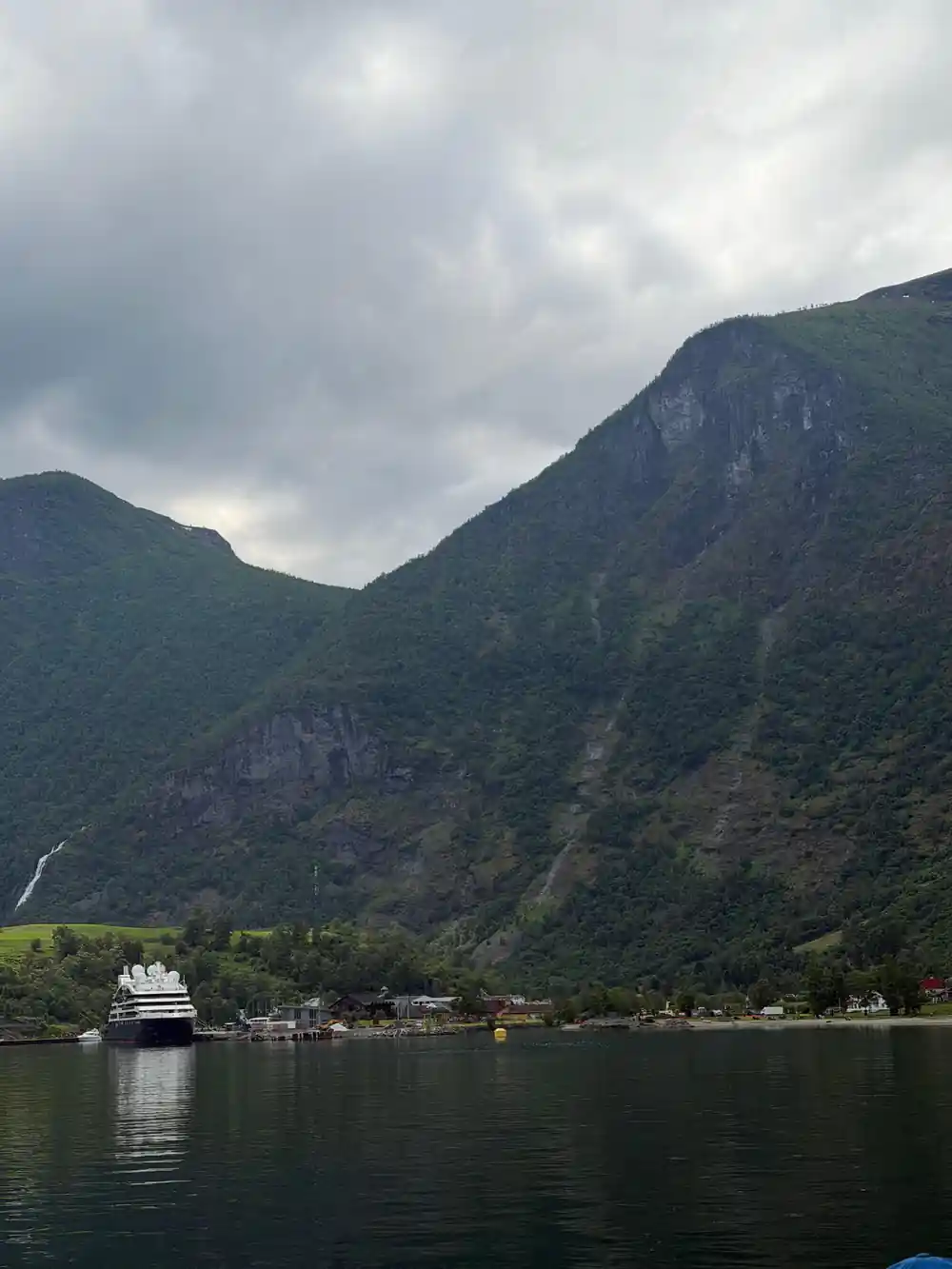
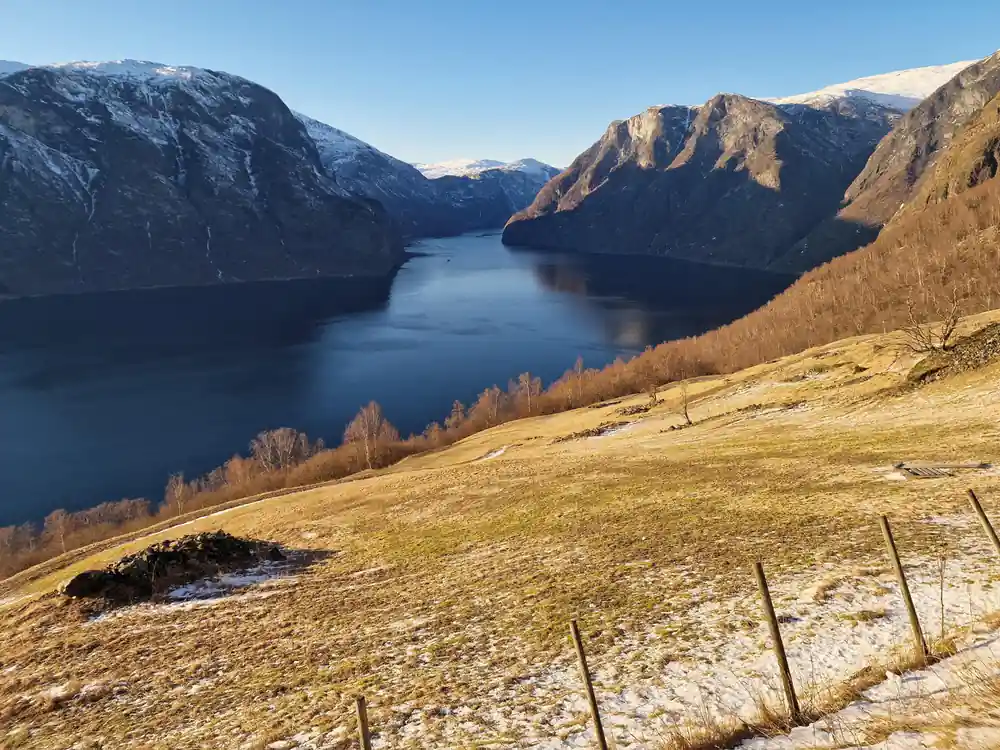
The height figure matters more than it sounds. At 650 m you are above the orchard belt, above most of the road noise, and high enough that cloud can sit between you and the water. The fjord below is the Aurlandsfjord, an arm of the larger Sognefjord system, and the scale only reads properly from this elevation. From sea level the same water is just water. From the platform it becomes a map.
The Road That Gets You There
The platform is reached by the mountain road over Aurlandsfjellet, and that road is seasonal. It closes for winter, and the recent closing dates have landed on 7 October and 6 November [1]. That is not a soft advisory. Once it shuts, the Stegastein platform is not reachable by vehicle until the road reopens the following year. In practice this means the lookout is a summer and early autumn experience, and anyone booking outside that window should expect the mountain road to be off the table.
The second constraint is the vehicle. Buses on this route are limited to a maximum length of 12.4 m [1]. This is the single most practical fact about visiting Stegastein by road, because it decides which coaches can attempt the final stretch and which cannot. A 13 m coach does not get a waiver. It either does not go, or it stops lower down and the day changes shape. Any operator running a bus to Stegastein viewpoint has to work inside that number when they choose their fleet.
For travellers, the two facts combine into a narrow window. The road has to be open, which rules out winter, and the coach has to be short enough, which rules out some of the larger tour buses. That is why the approach on this route is a purpose-chosen vehicle rather than whatever happens to be available that morning [2]. It is also why the stop is worth asking about directly when you compare operators, because not every tour that advertises the lookout can physically deliver the last few kilometres.
Why the Vehicle Decides the Day
The 12.4 m limit is not a piece of trivia, it is the reason the guided tour is structured the way it is [1]. The road up to Aurlandsfjellet and out to the platform rewards a vehicle that can actually take the bends, and the tour is built around a bus that fits the route [2]. Air conditioning matters less at altitude than it does in the valley, but it is on board all day, and the coach is the base you return to between the fjord cruise, the waterfall stop and the climb.
There is a second, quieter advantage to being on a guided bus rather than self-driving the same road. The driver knows the closing pattern and the length rules because they live with them [1]. You do not have to find out at the barrier that the mountain road shut three weeks earlier than you expected. The trade is flexibility: a coach runs to a schedule, and the schedule includes a fixed allotment at the top rather than an open-ended stay.
The alternative for independent travellers is the bus to Stegastein viewpoint from Flam, which uses smaller vehicles on the same road, or driving yourself up from Aurland. Both work, and both put you inside the same 12.4 m and seasonal constraints if you are in anything larger than a car [1]. The bus to Stegastein from Flam is the closest thing to a direct public option, but it is a separate ticket and a separate timetable from the guided day.
650 m
The height of the Stegastein platform above the Aurlandsfjord, with the deck projecting 30 m out from the mountainside on laminated pine and a steel.
Thirty Minutes at 650 Metres
Thirty minutes is the working figure for the stop on this tour, and it is worth understanding what that buys. It is enough to walk the full length of the 30 m projection, take the standard photographs, and still have time to stand at the rail without a queue pressing behind you. It is not enough to hike, to eat a proper meal, or to wait out a cloud bank that refuses to move. Treat it as a viewing window, not a picnic.
What the thirty minutes gives you is the specific combination of height and projection. Stand at the outer end and the Aurlandsfjord opens below at 650 m, with the fjord arms bending away toward Flam and the wider Sognefjord system beyond. The platform's laminated pine deck and steel frame sit behind you; the drop sits in front. On a clear day the water reads almost black-green and the cruise boats below look like toys, which is a strange thing to see from above when you will later be on one of them.
Weather is the honest variable. The tour is sold on the condition of good weather, and if conditions do not cooperate it is refunded or rescheduled [2]. That clause exists precisely because a cloudy thirty minutes at 650 m is a different product from a clear one. If the forecast is marginal, the operator carries the risk rather than you, which is a reasonable arrangement for a stop where the entire value is the view.
Getting Up There: Your Three Options
There are three realistic ways to reach the platform. The first is the guided coach that runs as part of a full day from Bergen, which pairs the lookout with the Naeroyfjord cruise and a stop at Tvindefossen [2]. The second is the shuttle style bus to Stegastein viewpoint that runs from Flam, useful if you are already in the fjord village and want the lookout on its own. The third is your own car, driving up from Aurland on the mountain road and parking at the top.
Each option has a different failure mode. The guided coach is fixed to a schedule and a fixed thirty minutes at the top. The Flam shuttle is tied to its own departure times and sells out in high season. Your own car is the most flexible but puts the winter closure and any local restrictions on you [1], and you are the one who has to read the signs. None of them removes the seasonality; the road closes either way [1].
The aurland stegastein bus is the local form of the same trip, running the short distance from the village below up to the platform. It is the cheapest way to stand on the deck, and the least structured. What it does not give you is the rest of the day: no fjord cruise, no waterfall stop, no guide explaining what you are looking at. The guided tour from Bergen is the opposite trade, more expensive and more complete, with the lookout as one stop among several [2].
What the Day Costs You in Effort
The guided version runs 11 hours with a live guide in English, from 311.47 USD per person, and free cancellation up to 24 hours before departure for a full refund [2]. That is a long day, and most of it is not at Stegastein. The hours go into the drive from Bergen, the Naeroyfjord cruise, the Tvindefossen stop and the return leg. The platform is one thirty minute block inside a much larger itinerary, and it is worth booking with that proportion in mind rather than expecting a dedicated lookout trip.
Effort wise, the bus does the work. You are driven to the platform, you walk out onto the deck, and you walk back. There is no hike, no climb and no navigation. The only physical demand is standing on a cantilevered platform 650 m above water, which some people find harder than it sounds. The 30 m projection is stable and fully built, completed in 2006 on laminated pine and steel, but the sensation of the deck ending in mid air is real and it is not for everyone.
The effort you actually spend is administrative: an early start outside the Tourist Information at 07:50 for an 08:00 departure, and a day that needs a minimum number of travellers to run [2]. Children under 4 are not allowed on the tour [2]. Food and drink are not included at any stop, and alcohol may not be carried in the vehicle [2]. Those are small things, but they shape how you pack for an 11 hour day that peaks at 650 m.
Comparing the Three Ways Up
On access, the guided bus uses a vehicle chosen to fit the 12.4 m route limit and handles the mountain road for you [1]. The Flam shuttle uses smaller buses on the same road, booked separately, with its own timetable. Your own car gives you complete freedom of timing but leaves the seasonal closure entirely in your hands [1]. Only the guided option includes the fjord cruise and Tvindefossen admission in the same ticket [2].
On season, all three are bound by the same mountain road calendar. Recent closures have fallen on 7 October and 6 November [1]. The guided tour carries a good weather condition, refunded or rescheduled if conditions do not hold [2]. A shuttle or your own car has no such protection, which is the practical difference between buying a weather guarantee and buying a seat.
On cost in effort, the guided bus is the least demanding and the most expensive, from 311.47 USD with a guide, cruise and admissions bundled [2]. The Flam shuttle is cheaper but narrower, a single stop. Driving is cheapest per head if you are already in Aurland, and the most work, since you are the driver on a mountain road with a winter closure and you still pay for the cruise separately. None of the three includes food and drink along the way [2].
Stegastein, in metres
Height and reach from Nasjonale turistveger; the bus limit is the restriction on this road.
What the lookout costs to reach
"From" prices. Driving is cheapest until the mountain road closes for the season.
When you can reach the lookout
How the Stop Works
Meet in Bergen
Be outside the Tourist Information at 07:50 for an 08:00 departure [2].
Drive and cruise
The day includes Tvindefossen, the Naeroyfjord cruise and the mountain road up [2].
Fit the vehicle
Your coach is sized to the 12.4 m limit on the Stegastein route [1].
Watch the season
The mountain road closes in winter, recently on 7 October and 6 November [1].
Walk the deck
Step onto the 30 m projection 650 m above the Aurlandsfjord.
Thirty minutes
Use the stop for the view, then return to the coach for the ride back [2].
Book the guided bus to Stegastein and stand 650 m above the fjord
from US$312Reserve now & pay later