Quick summary
- Gudvangen comes first at sea level, a small valley village where the bus pauses before the fjord crossing.
- The Naeroyfjord cruise ticket is part of the tour, so the boat between Gudvangen and Flam is already covered.
- Flam village sits at the head of Aurlandsfjord, and its railway terminus, harbour and shops are all walkable from the quay [1].
- The day runs about 11 hours with a live English speaking guide and an air conditioned bus for the whole route.
- Cars are on the road: the fjord is covered by boat, and the driving happens before and after the water.
-
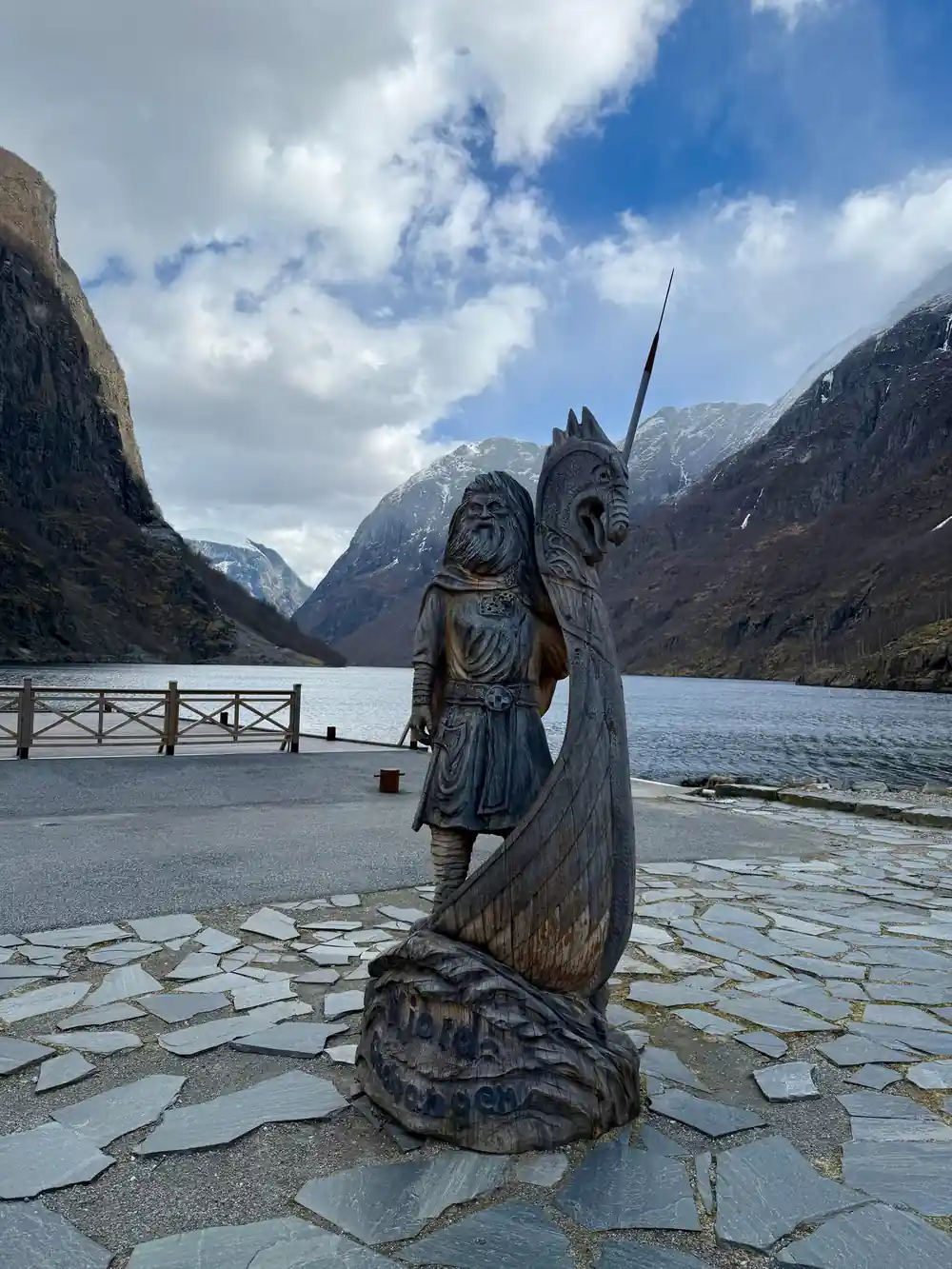 Gudvangen
A valley village at sea level
Position in the dayFirst stop on the waterArrive byBus from BergenWalkable from the quayThe quay and the valley viewBest use of short timeLook up the valleyFood and drinkBuy locally, not includedTicket on this tourBus leg included
Gudvangen
A valley village at sea level
Position in the dayFirst stop on the waterArrive byBus from BergenWalkable from the quayThe quay and the valley viewBest use of short timeLook up the valleyFood and drinkBuy locally, not includedTicket on this tourBus leg included
-
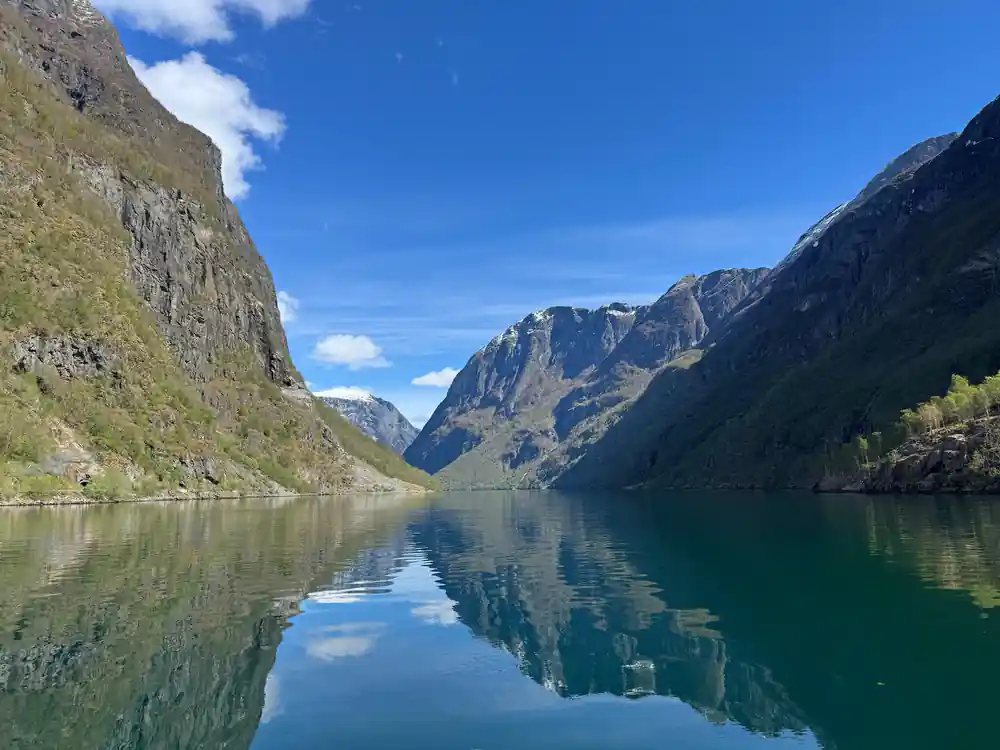 The fjord crossing
The Naeroyfjord boat leg
Position in the dayMiddle of the dayArrive byBoatWalkable from the quayThe deck and the railsBest use of short timeStay on deckFood and drinkNot included on boardTicket on this tourCruise ticket included
The fjord crossing
The Naeroyfjord boat leg
Position in the dayMiddle of the dayArrive byBoatWalkable from the quayThe deck and the railsBest use of short timeStay on deckFood and drinkNot included on boardTicket on this tourCruise ticket included
-
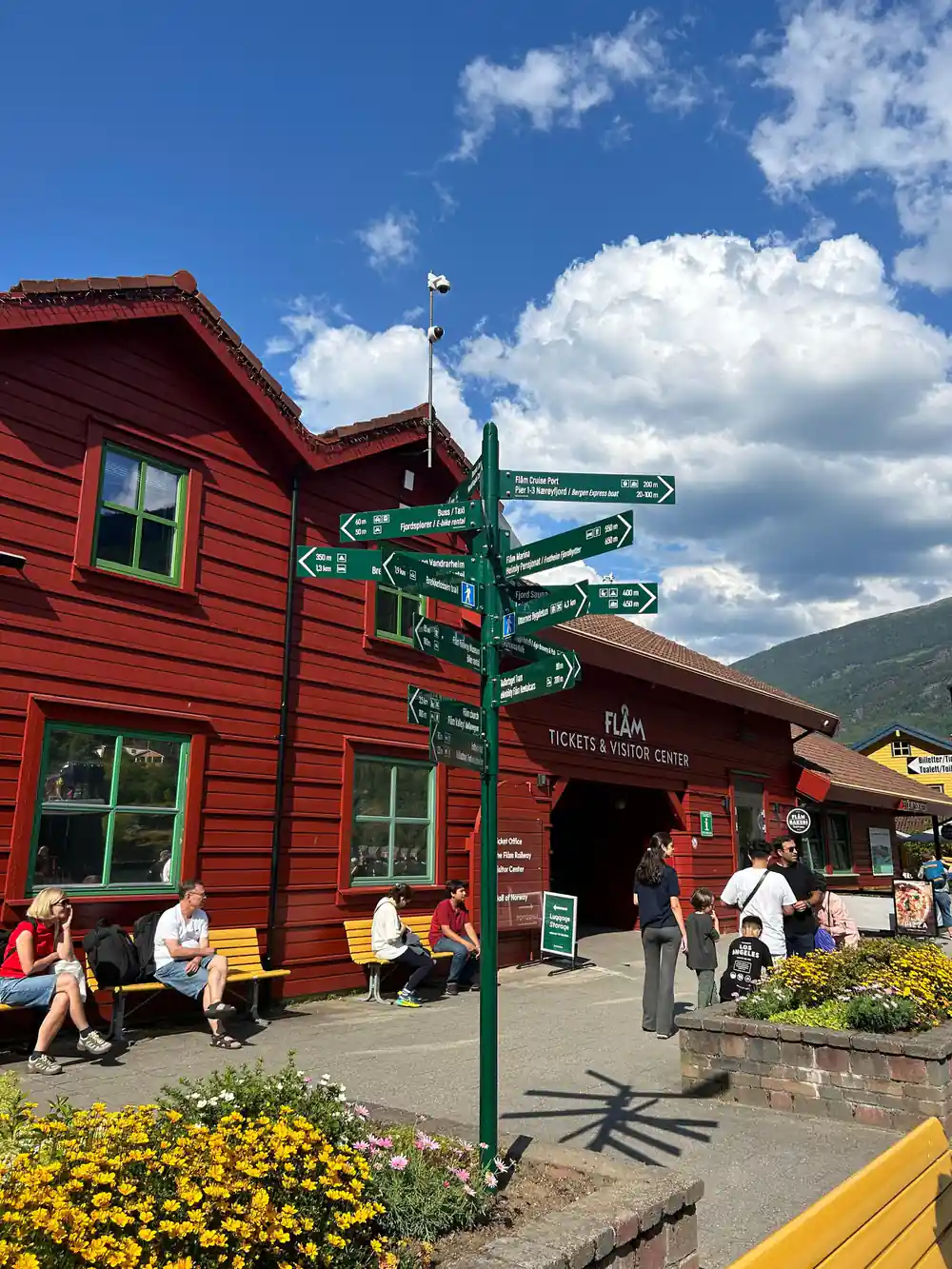 Flam
Village at the head of the fjord
Position in the dayLast stop before the returnArrive byBoat, then bus on the returnWalkable from the quayTerminus, harbour and village [1]Best use of short timeWalk the compact centre [1]Food and drinkBuy locally, not includedTicket on this tourBus return included
Flam
Village at the head of the fjord
Position in the dayLast stop before the returnArrive byBoat, then bus on the returnWalkable from the quayTerminus, harbour and village [1]Best use of short timeWalk the compact centre [1]Food and drinkBuy locally, not includedTicket on this tourBus return included

The zero-emission requirement will contribute to technological development and lower emissions, while also ensuring that the spectacular World Heritage fjords remain attractive tourist destinations.
Which village actually suits you
Included in the price
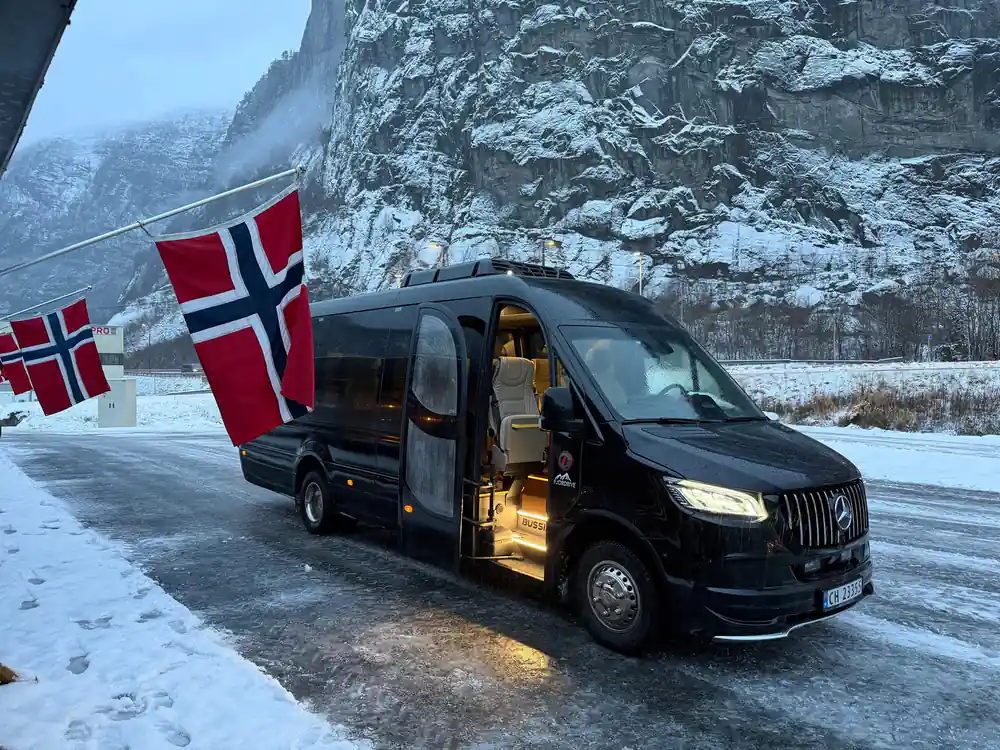
- Air conditioned bus for the whole day, Bergen out and back
- Admission to Tvindefossen on the climb out of the city
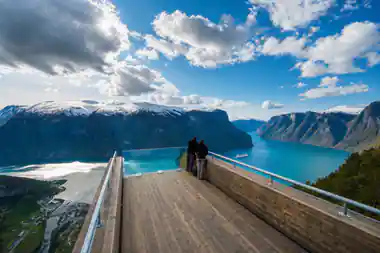
- Admission to the Stegastein Lookout
- Naeroyfjord cruise ticket between Gudvangen and Flam
- Live guide in English for the duration of the tour
- About 11 hours in total, meeting at 07:50 for an 08:00 start
Not included at all
- Food and drink at every stop, including the two village quays
- Alcohol, which may not be carried in the vehicle
- Nothing beyond the listed admissions and the cruise ticket
- Children under 4, who are not permitted on this tour
Gudvangen: the first village, at the waterline
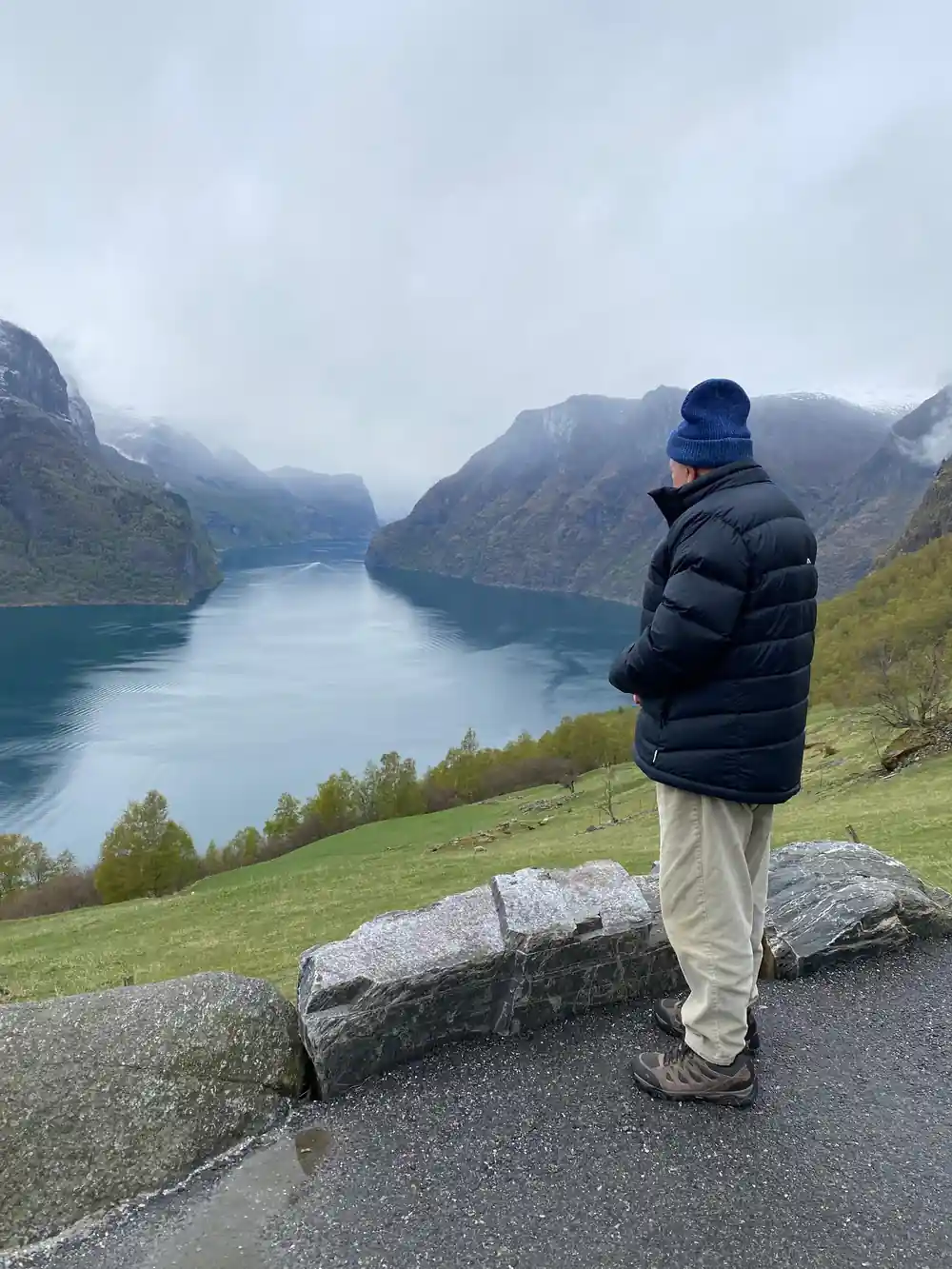
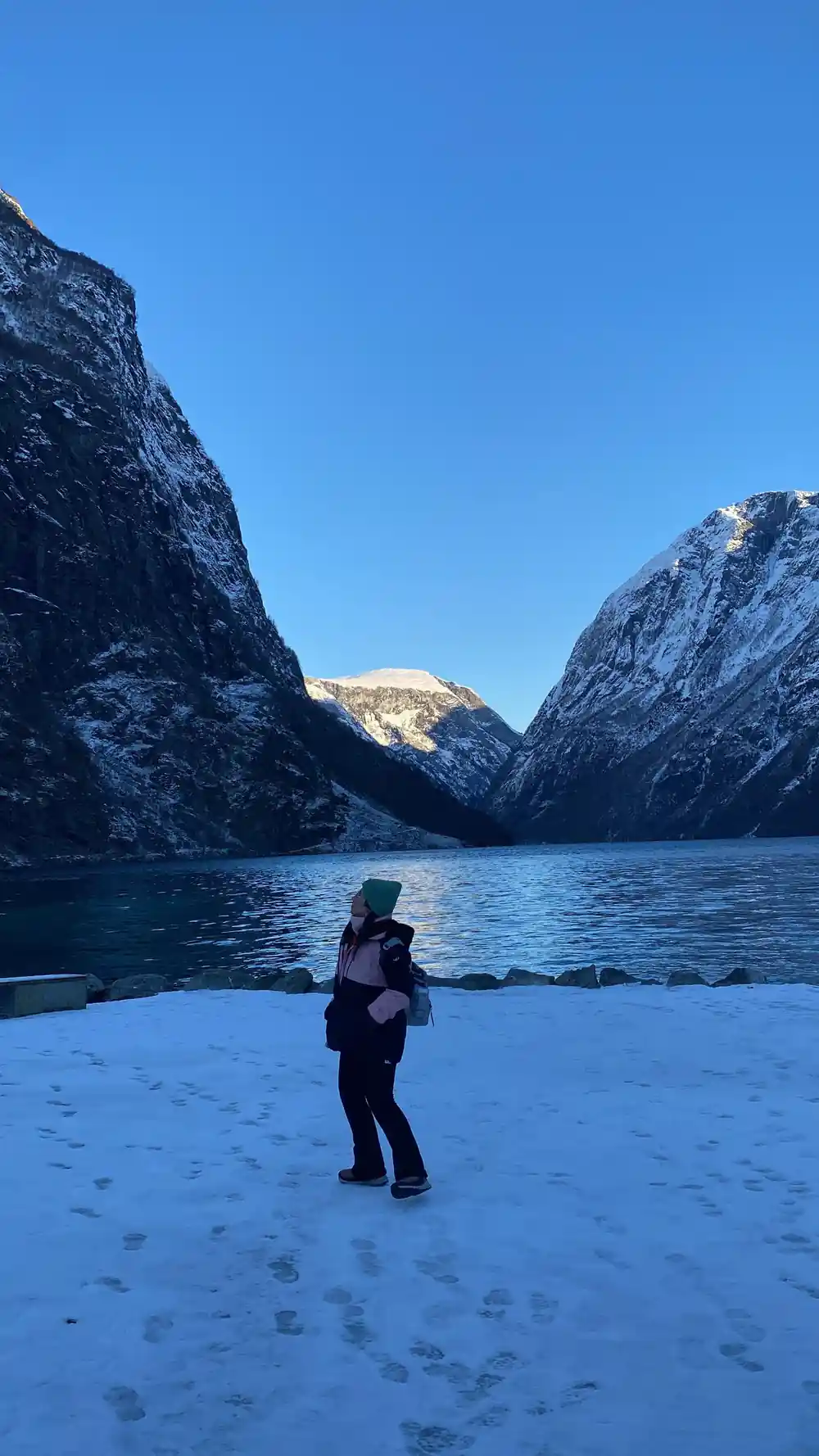
Gudvangen is where the bus drops height and the valley opens onto the fjord. It sits at sea level at the inner end of the Naeroyfjord, a compact place of a few streets, a quay and steep sides rising on both hands. The stop is short and plainly practical: you arrive by road, you walk to the water, and you board. There is no long transfer inside the village and no need to plan a loop.
What the stop buys is position rather than shopping. You stand where the fjord begins, look up the valley you just drove down, and get your bearings before the crossing. Because the Naeroyfjord cruise ticket is part of the tour, boarding is not a separate transaction. The village is the hinge of the day: everything before it is road, everything after it is water, and the stop itself is the handover.
The fjord crossing between Gudvangen and Flam
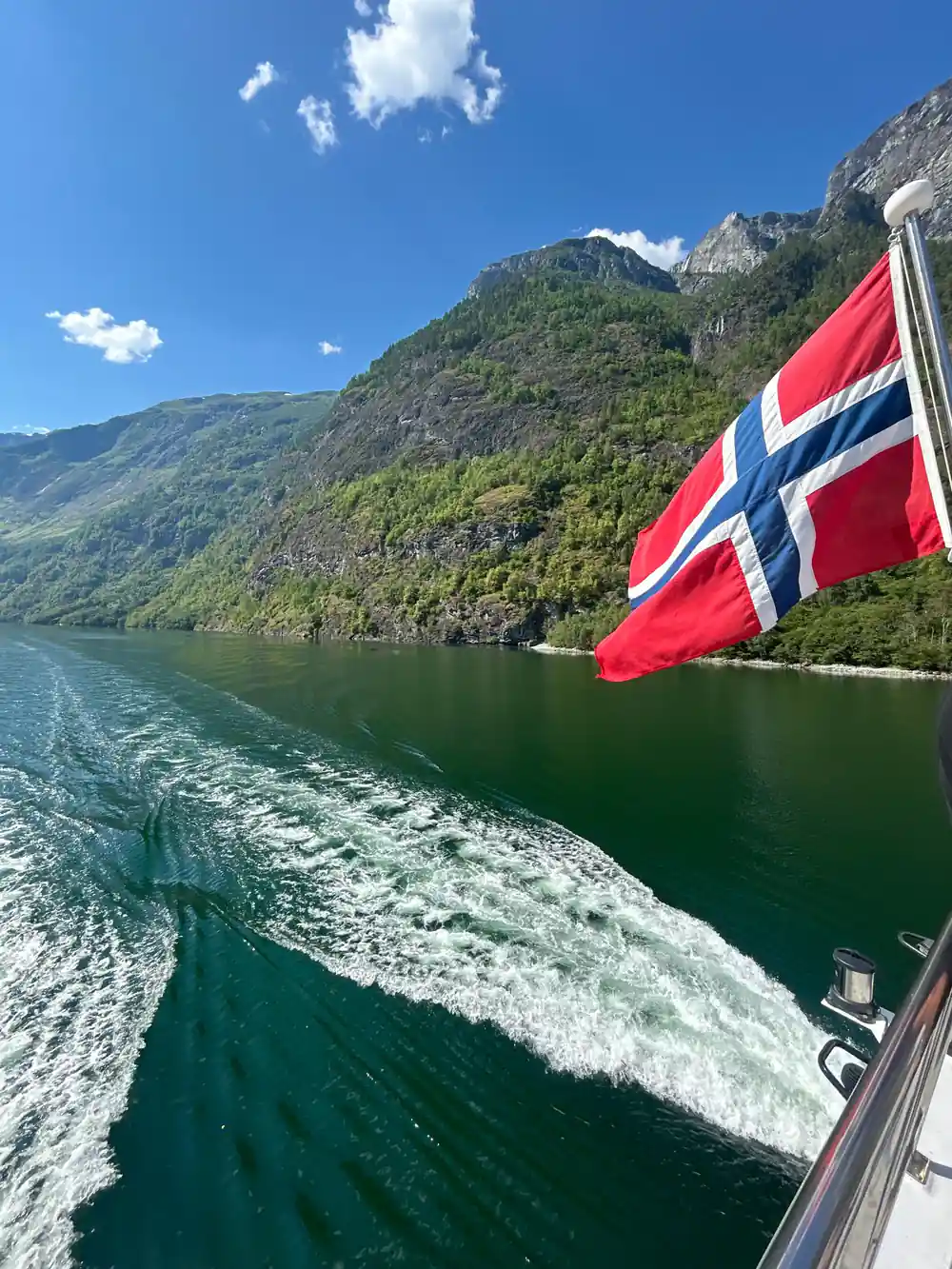
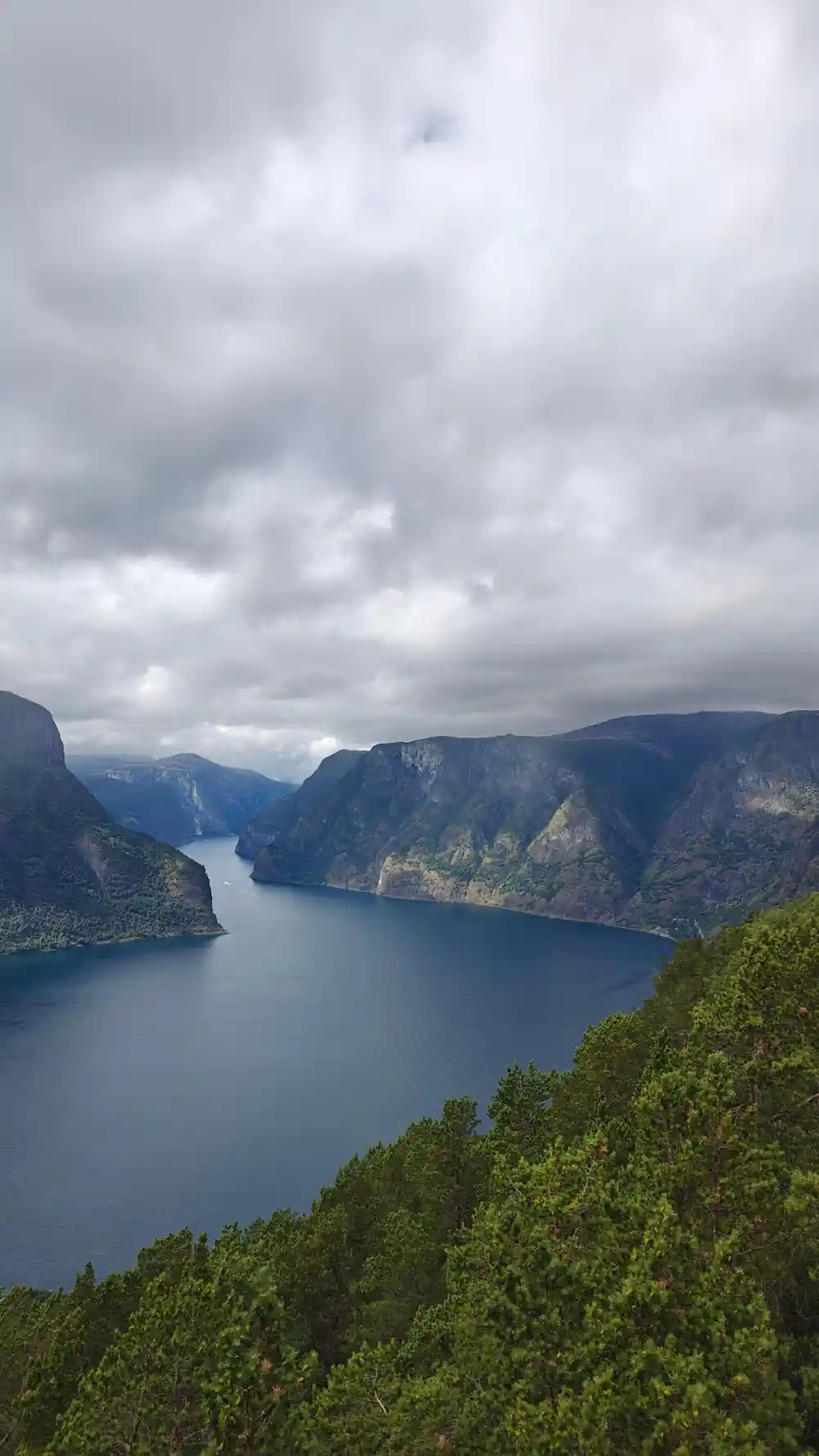
The boat leg is the middle of the day and the reason the route is ordered the way it is. You cross from Gudvangen to Flam [2] on the Naeroyfjord, a narrow arm with walls close enough on both sides that the scale reads differently from the deck than it does from a road. This is the part of the itinerary that a coach on its own cannot give you, because the same ground covered by wheels is a different piece of country.
The crossing replaces driving with a deck, seats and a view that keeps moving while you stay still. There is nothing to arrange on board beyond finding a rail: the ticket is already in the day. Arrive in Flam and the boat puts you at the quay, which is also the middle of the village, so the second stop starts the moment the gangway goes down.
Flam: what stands within walking distance of the quay
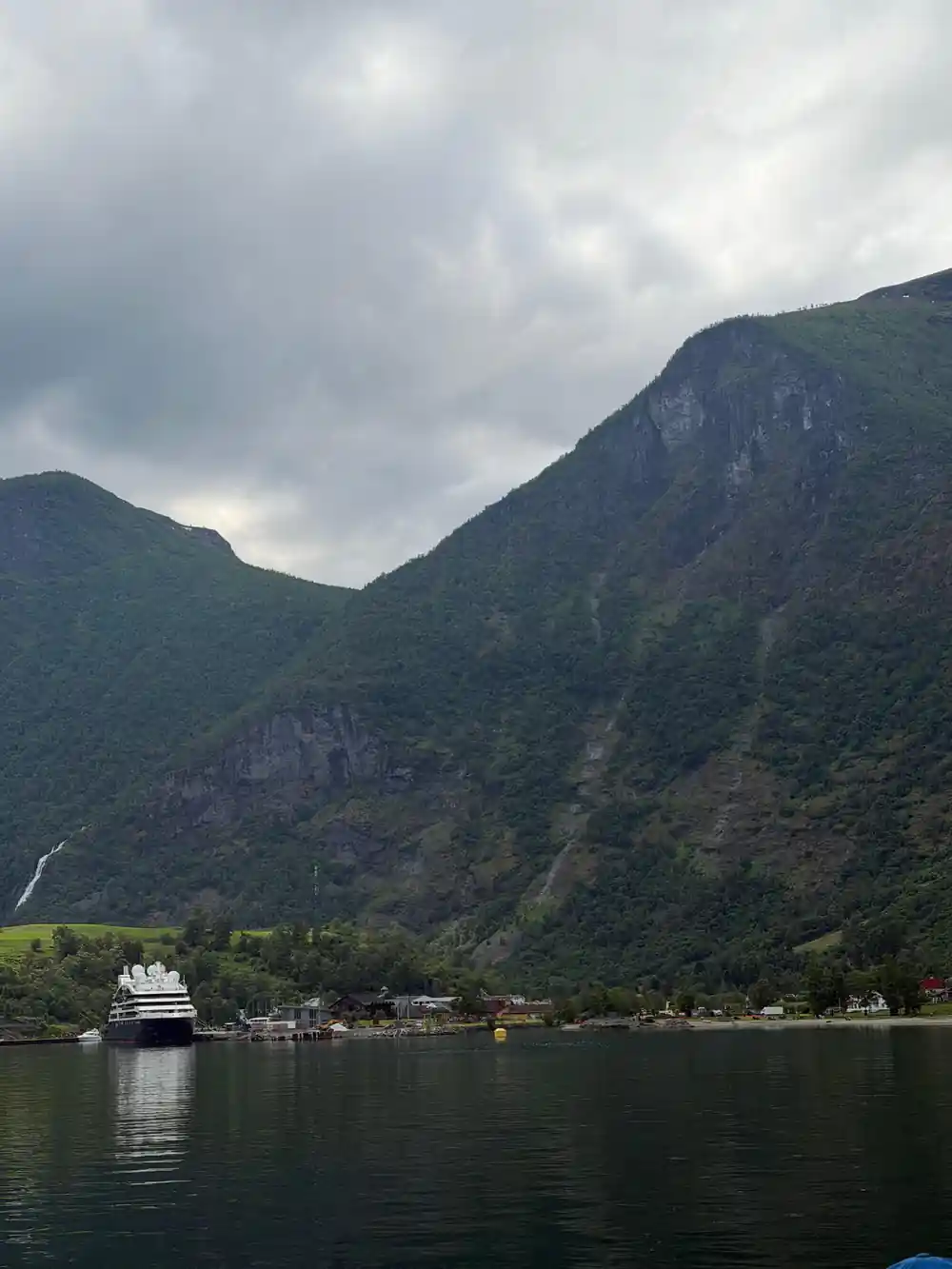
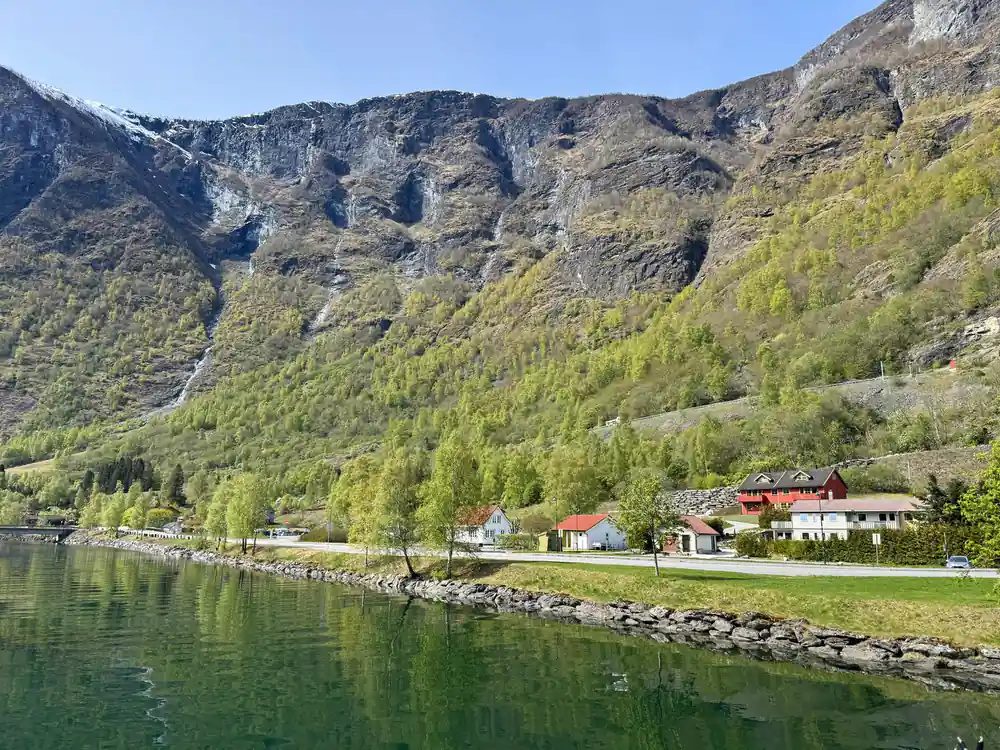
Flam is the settlement at the head of Aurlandsfjord, small enough that the word village is accurate rather than decorative. The railway terminus, the harbour and the village stand within walking distance of the quay [1], so you do not need a plan or a taxi to reach the things Flam is known for. Step off the boat and the centre is in front of you.
That matters because Flam is usually a place people arrive in by train and leave by boat, or the reverse, and the walk between modes is the whole town. For anyone weighing flam norway things to do against time, the honest answer at this stop is that the list is short and close: a platform, a waterfront, a handful of buildings and the water itself. A ferry in from Bergen is one way to arrive; the quay you land on is the same compact ground.
11 hours
The full day from the Bergen meeting point, including the drive out, the Naeroyfjord crossing and the return over the mountain road.
What the time in each village actually buys
At Gudvangen the clock is spent standing up and looking, not sitting down and eating. You get the valley view from the waterline, the walk to the boat and the boarding itself. Anything more assumes a slower day than this one, and the tour does not sell it as more.
At Flam the time is a stroll, not an excursion. The quay puts you among the village buildings, the railway terminus and the harbour [1], so the minutes go on covering ground on foot and seeing what a fjord village looks like when it is also a working transport junction. Neither stop is long enough for a museum, a sit down meal and a walk; pick one and do it properly.
Read together, the two villages are a pair rather than rivals. Gudvangen is arrival and departure by water at the narrow end. Flam is the head of the fjord, the railhead and the busier quay. The day gives you one of each, and the fjord between them is the part you cannot do by road.
Getting there and back: road, water and the order of the day
The route runs Gudvangen first at sea level, then the fjord crossing, then Flam, with the road doing the work at either end of the water. From Bergen the bus climbs, stops at Tvindefossen, and comes down into Gudvangen. The Naeroyfjord cruise ticket carries you across. After Flam the bus returns over the mountain road, with the Stegastein Lookout stop on the way, before the run back to the city.
A ferry in from Bergen is the other classic way to make the same water leg independently, with fares, sailings and season set by the operator [2]. On this tour that leg is bundled, which is the practical difference: one booking covers road and boat, and the guide handles the timing. Driving, in this itinerary, is a means of reaching the water and returning from it, not a sight in itself.
Flam in context: a transport village, not a resort
Flam village is best understood as a junction that grew a settlement around it [1]. The railway made it a destination, the fjord made it a port, and the two together explain why the place is small but busy. It is not a town with districts, and the walkable core is the point.
That shape is useful for planning the stop. The harbour, the terminus and the village sit within walking distance of the quay [1], so you can set a meeting point in your head and trust it. Compare that with Gudvangen, where the useful ground is the quay and the view from it. Neither rewards a sprint; both reward two minutes of looking before you reach for a camera.
Practical notes for the two village stops
Food and drink are not included at any stop, so the villages are where you buy them if you want them. Alcohol may not be carried in the vehicle, which makes the bus a dry space for the day. Toilets, snacks and a coffee are the realistic purchases at a quay stop, and the time is sized for exactly that.
Meet outside the Tourist Information in Bergen at 07:50 for an 08:00 start, and expect roughly 11 hours door to door. The tour needs good weather or it is refunded or rescheduled, and it needs a minimum number of travellers to run. Children under 4 are not allowed on this one. Fares vary by season and operator: the tour is priced in USD, and any independent boat fare you look up is quoted in NOK, so compare like with like before deciding to split the journey yourself.
The two villages and the water between
The crossing between the two villages is the shortest leg of the day and the reason for it.
Reaching the two villages
"From" prices. The guided day is the only one that puts both villages and the crossing in one ticket.
What opens when in the two villages
The day, step by step
Meet in Bergen
Outside the Tourist Information at 07:50 for an 08:00 departure.
Tvindefossen
A waterfall stop on the road out of the city, admission included.
Gudvangen
Down to sea level and the first village, where the water leg begins.
Naeroyfjord cruise
The boat crossing from Gudvangen to Flam, ticket already included [2].
Flam and Stegastein
Walk the quay and village [1], then climb to the lookout on the return.
Two villages, one fjord crossing, and the road back over the mountain
from US$312Reserve now & pay later