Quick summary
- The train runs Bergen to Myrdal on the Bergen Line, then the Flam Railway drops you into Flam, about 2h48 to 4h30 depending on the connection.
- Norled's Sognefjord express boat takes 5.5 hours one way from Strandkaiterminalen, with one departure a day in each direction from April to October.
- Express coaches from Vy Buss and Nor-Way Bussekspress from 21 EUR, and Skyss city tickets are not valid on them.
- Driving is about 166 km and 2h32 via the E16 to Voss and road 7, with tolls under 100 NOK for the route.
- The guided bus day runs 11 hours at from 311.47 USD, with a live English guide and the Naeroyfjord cruise ticket included.
- Train via Myrdal from 779 NOK Journey time2h48 to 4h30Departuresabout 4 a daySeasonyear roundChild fare6 to 17 reducedBooking windowLowfare 90 days [2]Ticket termsfixed, no refund [2]Great forthe railway itself See this tour
-
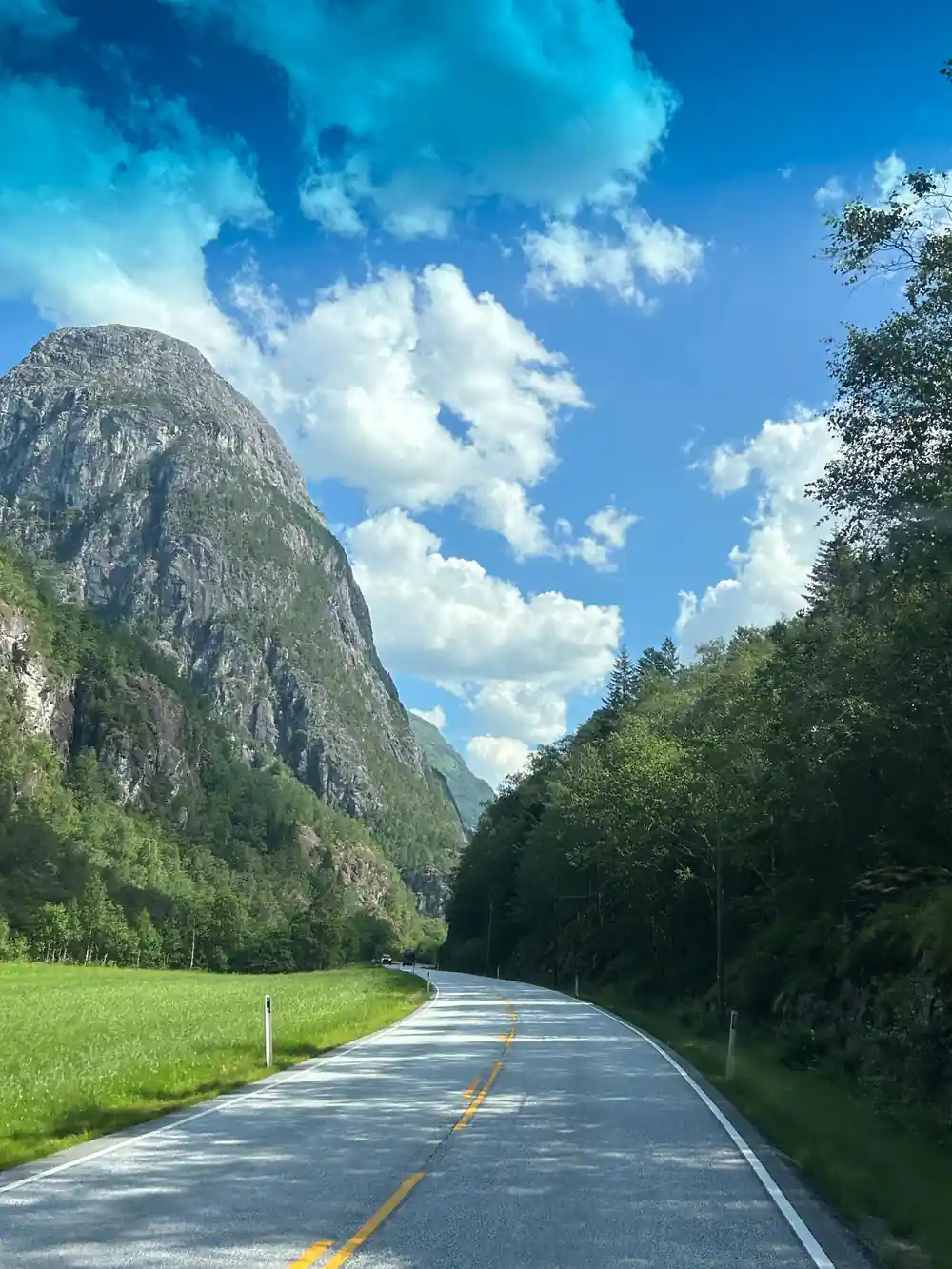 Express coach
from 21 EUR
Journey timevaries by serviceDeparturesscheduled coachesSeasonyear roundChild farereduced fares applyBooking windowvaries by operatorTicket termssingle journeyGreat forlowest fare
Express coach
from 21 EUR
Journey timevaries by serviceDeparturesscheduled coachesSeasonyear roundChild farereduced fares applyBooking windowvaries by operatorTicket termssingle journeyGreat forlowest fare
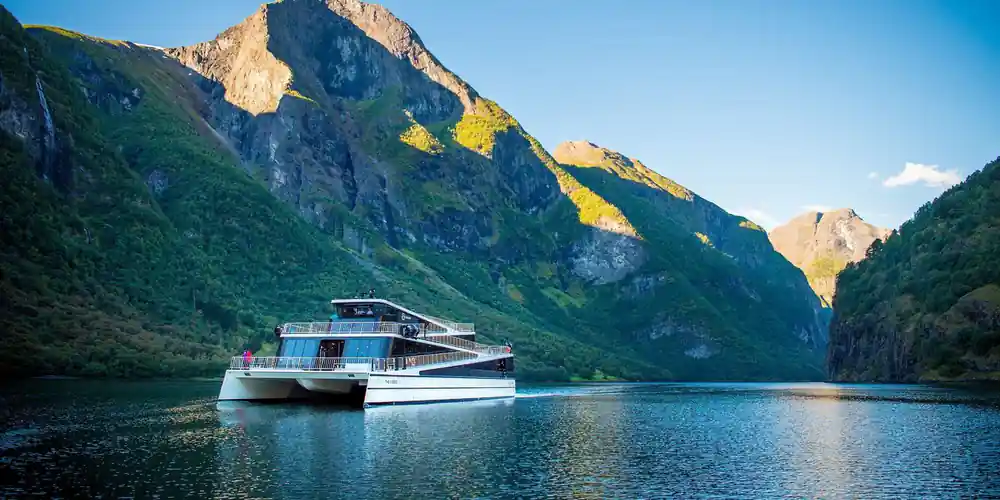
- Norled boat from 1,295 NOK Journey time5.5 hours [1]Departuresone a day each way [1]SeasonApril to October [1]Child farefrom 648 NOK, 6 to 17 [1]Booking windowseasonal timetable [1]Ticket termssingle journey [1]Great forfjord water all day See this tour
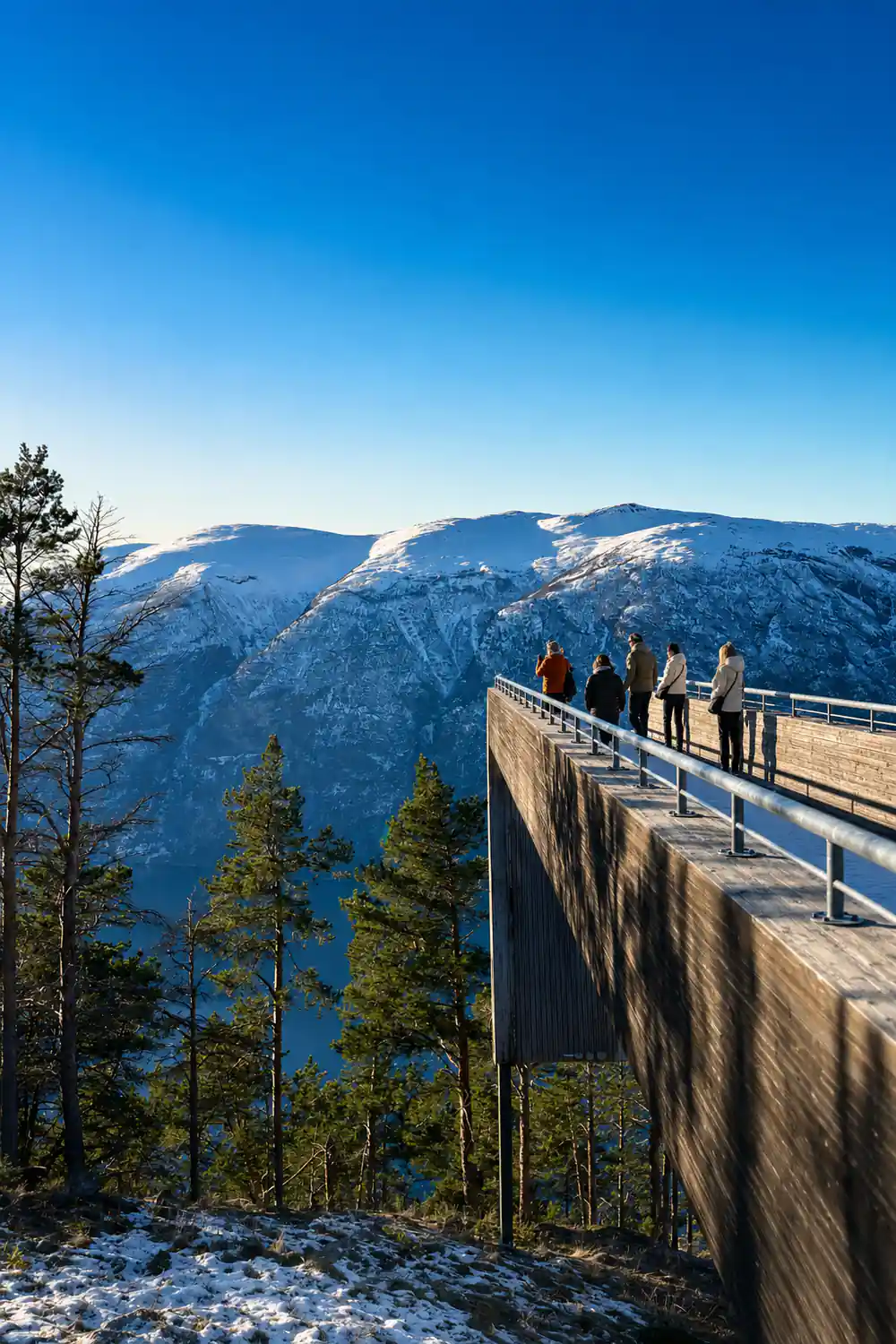
Lowfare tickets are released in advance, are tied to one departure, and are neither refundable nor changeable.
Which way to Flam suits you
In the tour price
- Air-conditioned bus for the full 11-hour day
- Naeroyfjord cruise ticket included
- Admission to Tvindefossen and to Stegastein Lookout
- Live guide, English, with the group all day
- Free cancellation up to 24 hours before, full refund
In no option
- Food and drink at every stop are your own cost
- Alcohol may not be carried in the vehicle
- No flex on Lowfare rail seats: one departure, no refund, no change [2]
- Self-booked transport quotes exclude the fjord cruise and admissions
- Skyss city tickets are not valid on express coaches
The train: two legs and one through ticket
The rail route is not a single train. Vy runs you from Bergen to Myrdal on the Bergen Line, and you change there onto the Flam Railway for the descent to Flam. If you book a through ticket to Flam on vy.no, the Flam Railway leg is included, so you are not buying two separate journeys by accident. Roughly four departures a day make the run, and the total time sits between about 2h48 and 4h30 depending on how long you wait at Myrdal.
Fares are where it gets slippery. Vy's cheap advance product is called Lowfare: released up to 90 days ahead, tied to one departure, and neither refundable nor changeable [2]. It rises as seats sell, climbing toward a walk-up fare several times higher [2]. Secondary sources quote the Bergen to Flam trip at from 779 NOK and from 810 NOK each way, but those figures measure different tickets, so treat them as a signal rather than a promise [2].
The Flam Railway itself, Myrdal to Flam, runs from 430 NOK one way in low season to from 510 NOK in high season, with returns from 620 NOK to from 730 NOK. High season is mainly June to August, spilling into May and September. Children aged 6 to 17 pay reduced fares and under 6 travel free, while Interrail and Eurail holders get 30 percent off single tickets when buying at a staffed station [2]. Round trips open for booking 120 days ahead [2].
Coach, boat and the shape of a self-booked day
For bergen to flam by bus, express coaches run under Vy Buss and Nor-Way Bussekspress from 21 EUR. The catch is local ticketing: Skyss city tickets are not valid on these express services, and a Skyss single inside Bergen starts from 51 NOK and lasts 60 minutes. Buy the right product or you are paying twice. The coach is the cheapest seat on the corridor and the least scenic, since the interesting water and the switchback railway are not part of the ride.
For bergen to flam by ferry, Norled sails the Sognefjord express boat from Strandkaiterminalen. One way is from 1,295 NOK for adults [1]. Children aged 6 to 17 and seniors 67 and over pay from 648 NOK, students aged 18 to 29 pay from 777 NOK, and under 6s travel free [1]. It is a long single hop at 5.5 hours, with one sailing a day each way, 08:00 out of Bergen and 15:30 out of Flam, and the season runs April to October [1].
The self-booked day is where the arithmetic bites. A morning boat lands you in Flam with the return already fixed for the next afternoon, so you either stay overnight or fly back to Bergen by another mode. If bergen to flam by train is your return leg, you are stitching a rail booking onto a boat booking and hoping the Lowfare seats you wanted have not gone [2]. The pieces work, but they work on the operators' clocks, not yours.
The road east, where a railway and a boat cannot follow
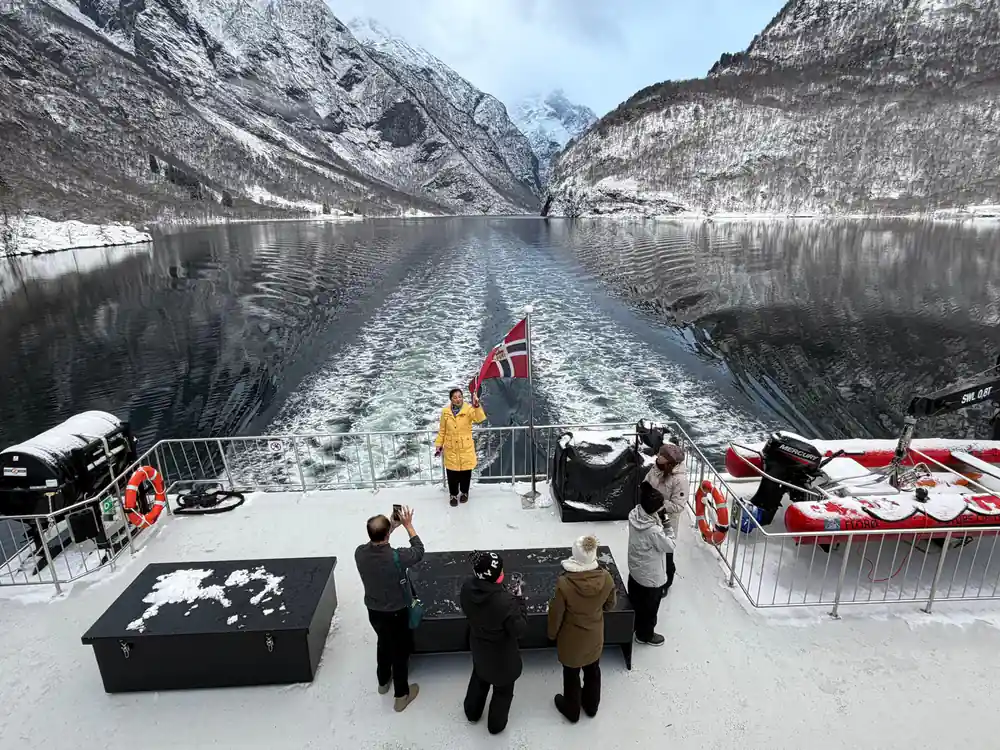
Driving the E16 and road 7
By car it is about 166 km and roughly 2h32 from Bergen, following the E16 to Voss and then road 7 into Flam [3]. Tolls for the route come in under 100 NOK [3]. That is the fastest wheeled option and the only one where you decide when to stop for photographs, which matters on a road this photogenic. You also carry your own luggage rather than handing it to a crew.
The Laerdal Tunnel is on the wider E16 corridor, free to use, 24.5 km long and the longest road tunnel in the world, with an 80 km/h limit and no overtaking [3]. It also has a maintenance window you must plan around: from autumn 2026 to autumn 2028 it closes to traffic between 18:00 and 06:00 [3]. Drive it in daylight or adjust the day.
Driving gets you to Flam, but it does not get you onto the water. The Naeroyfjord cruise and the Stegastein platform are separate purchases, and parking in a village that fills up in high season is its own negotiation. The car is freedom with admin attached.
The guided day, and what it removes
The guided option is Bergen: Naeroyfjorden, Flam, and Stegastein Guided Bus Tour at from 311.47 USD per person. It runs 11 hours with a live English-speaking guide and free cancellation up to 24 hours before departure for a full refund. You meet outside the Tourist Information at 07:50 for an 08:00 start. Air-conditioned bus all day, admission to Tvindefossen and to Stegastein Lookout, and the Naeroyfjord cruise ticket are all in the price.
What it removes is the sequencing problem. One booking covers the waterfall stop, the fjord water and the viewpoint, and nobody hands you a timetable and wishes you luck. The exclusions are honest ones: food and drink at every stop are on you, and alcohol may not be carried in the vehicle. It needs good weather or it is refunded or rescheduled, and it needs a minimum number of travellers, so a small group can be moved. Children under 4 are not allowed.
Compare it on the same terms as the rest. The 12-hour Bergen: UNESCO Fjord Cruise, Flam & Stegastein starts from 309 USD and carries a 4.74 rating from 1,127 reviews. The 11-hour Bergen: Flam Railway, Stegastein Viewpoint and fjord cruise starts from 519 USD with a 4.67 rating from 28 reviews. A private day tour with the railway and fjord cruise starts from 1,036 USD and runs 10 hours. Those are USD figures from a marketplace; the Norwegian fares above are in NOK.
166 km
Driving distance from Bergen to Flam via the E16 and road 7, about 2h32, with tolls under 100 NOK for the route.
Which route fits which traveller
If the railway is the point, book the bergen to flam railway leg as early as the calendar allows and accept that the cheapest seats are rigid [2]. If the water is the point, Norled's single daily sailing forces an overnight in Flam during the April to October season [1]. If the budget is the point, the coach from 21 EUR wins on price and loses on almost everything else.
The bergen to flam by train question people actually ask is not which mode is best but how long from bergen to flam by train it takes, and the honest answer is that it depends on the Myrdal connection rather than on the trains themselves: about 2h48 at the good end and about 4h30 when the connection stretches. Build slack into anything you plan to catch at the other end [2].
Only two options hand you the whole day as one product: the guided bus and the private tour. Everything else is a set of tickets you assemble, price separately and defend against delays yourself. That is not a criticism of the operators. It is just what independent travel costs in attention.
Fares side by side, in their own currencies
Rail: through ticket Bergen to Flam quoted at from 779 NOK and from 810 NOK each way by secondary sources, with Lowfare terms applying and a Flam Railway single from 430 NOK to from 510 NOK depending on season [2]. Coach: from 21 EUR, Skyss invalid. Boat: from 1,295 NOK adult one way, from 648 NOK child and senior, from 777 NOK student, under 6 free, 5.5 hours [1].
Car: 166 km, about 2h32, tolls under 100 NOK, Laerdal Tunnel free but night-closed from autumn 2026 to autumn 2028 [3]. Guided day: from 311.47 USD, 11 hours, guide, cruise ticket, Tvindefossen and Stegastein admissions included. Keep the currencies apart when you compare, because a NOK fare and a USD fare are not the same kind of number.
One practical note that saves arguments: the guided day and the private tour cover admissions and the cruise in one figure, while the train, coach, boat and car quotes cover transport only. Add the cruise ticket and the Stegastein entry to any self-booked plan before declaring it cheaper.
Booking order that actually works
Lock the rigid things first. Lowfare rail seats are released up to 90 days ahead, tied to one departure, and not refundable or changeable, so they are the least forgiving item on the list [2]. Flam Railway round trips open 120 days ahead, which is a longer horizon than most people expect [2]. Norled has one sailing a day in each direction, so its date is effectively fixed too [1].
Then book the flexible layer: the guided day with free cancellation up to 24 hours before, which can sit behind a rail booking as your plan B if the weather turns, since it is refunded or rescheduled when conditions do not cooperate. Meeting time is 07:50 outside the Tourist Information for an 08:00 start, so the night before matters more than the booking confirmation.
Finally, check the tunnel window if you are driving between autumn 2026 and autumn 2028, because an 18:00 to 06:00 closure turns a 2h32 drive into a much longer night [3]. Everything else on this corridor rewards booking early and travelling light.
Time each option takes, one way
The guided day is a return trip; the other three are one way.
The four options, side by side
"From" prices, transport only. The guided day is a return; the other three are one way.
When each option opens for booking
Plan your route
Pick the mode
Rail for scenery, boat for water, coach for price, car for control, guided day for zero logistics.
Book the rigid seats
Lowfare rail opens 90 days ahead and does not move; Flam Railway round trips open 120 days ahead [2].
Add the boat or the cruise
Norled has one daily sailing each way in season, so the date is fixed once booked [1].
Check the drive
Tolls under 100 NOK, but the Laerdal Tunnel closes 18:00 to 06:00 from autumn 2026 to autumn 2028 [3].
Be outside Tourist Information at 07:50
The guided day starts at 08:00 and needs good weather or it is refunded or rescheduled.
Compare the five routes and pick the day that fits
from US$312Reserve now & pay later