Quick summary
- The tour runs 11 hours with a live English speaking guide, departing at 08:00 from outside the Tourist Information in Bergen.
- Rain is the defining feature of this valley, not cold: Bulken records 232 mm in January against 89 mm in May[1].
- Daylight swings from 5.7 hours in December to 19.1 hours in June, which changes how much of the fjord you actually see.
- Two conditions can cancel the day: the operator needs good weather, and it needs a minimum number of travellers[2].
- Free cancellation up to 24 hours before departure, with a full refund, covers a change of mind rather than a change of sky.
| Spring | Summer | Autumn | |
|---|---|---|---|
| Rainfall | 89 mm in May[1] | 114 mm in July[1] | 215 mm in October[1] |
| Wet days | 9 in May[1] | 12 in July[1] | 14 in October[1] |
| Average high | 14.3 C in May[1] | 19.9 C in July[1] | 9.2 C in October[1] |
| Average low | 4.6 C in May[1] | 10.2 C in July[1] | 3.2 C in October[1] |
| Daylight | 17.2 hours in May | 18.4 hours in July | 10.3 hours in October |
| Fjord cruise | Open water, snow still on peaks | Flat light, warmest air | Grey water, low cloud |
| Traveller minimum | Can bite in early May[2] | Rarely bites[2] | Can bite in November[2] |
| Great for | Driest window, long days | Warmth and certainty | Fewer crowds, shorter days |
At Bulken, 4.4 km from the route, December records 240 mm of rain across 16 wet days, against 89 mm across 9 in May.
Which season suits the day
What is included
- Air conditioned bus for the full 11 hour day, with a live English speaking guide
- Admission to Tvindefossen waterfall
- Admission to Stegastein Lookout
- Naeroyfjord cruise ticket
- Free cancellation up to 24 hours before departure, with a full refund
What the tour actually is, before the weather gets a vote
This is a single day on a bus from Bergen, running roughly 11 hours with a live English speaking guide, and it strings together three things that would otherwise need separate trips. You meet outside the Tourist Information at 07:50 for an 08:00 start, in an air conditioned bus that stays with you all day. The price starts from 311.47 USD per person. Included in that figure are admission to Tvindefossen, admission to Stegastein Lookout and a Naeroyfjord cruise ticket. Food and drink at every stop are not included, and alcohol may not be carried in the vehicle. Children under 4 are not allowed on this tour.
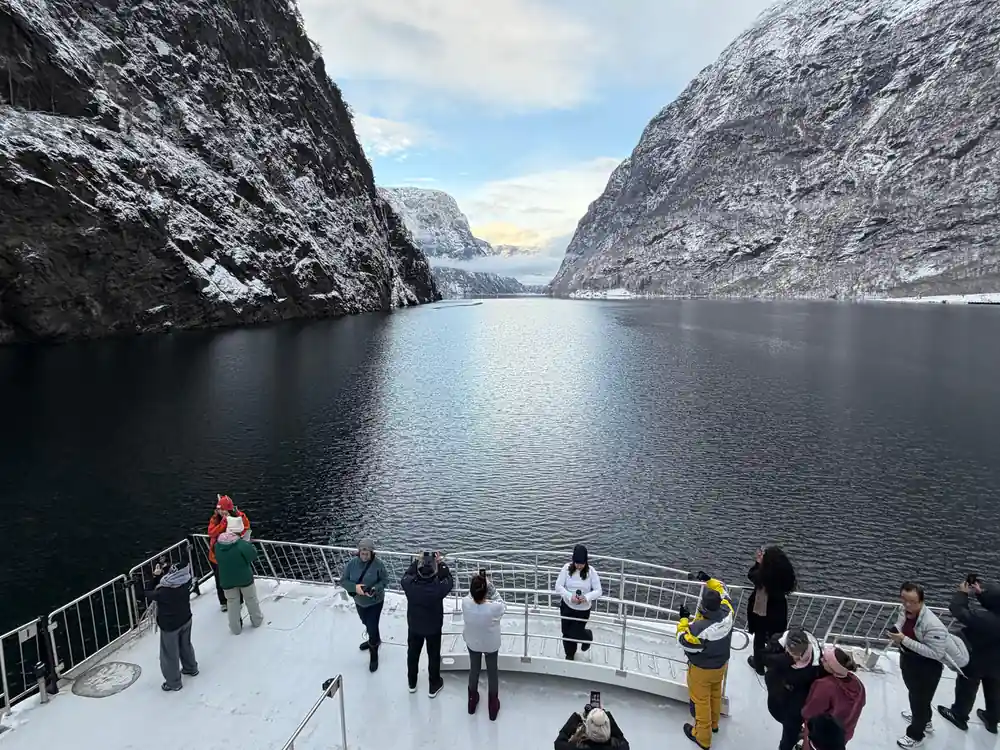
The shape of the day matters for the season question, because the Naeroyfjord cruise is the part most exposed to what the sky is doing. The bus handles Tvindefossen and the Stegastein Lookout, both of which are road stops with a fixed duration, while the fjord leg puts you on water in a valley that funnels moisture off the North Atlantic. Ratings across 629 reviews sit at 4.84 overall, with guide and transportation both at 4.9 and value for money at 4.6, which tells you the day itself is well run when it runs. Whether it runs is the first thing to plan around.
Rain, not cold, is what decides your day
The recorded climate for Bulken, a station 4.4 km from the route and 323 m above sea level, covering 1991 to 2020, gives the honest picture. December is the wettest month at 240 mm across 16 wet days, and January is close behind at 232 mm and 16 wet days[1]. February eases to 184 mm and 14 wet days, and March to 175 mm and 13 wet days[1]. What surprises most visitors is that summer is not dry either: July records 114 mm and 12 wet days, and August 132 mm and 12 wet days[1]. If you are checking a flam forecast before you pack, you are checking the right variable, and the answer is usually some rain.
Temperatures are milder than the latitude suggests because the fjord water moderates the valley. July has an average daily maximum of 19.9 C and a minimum of 10.2 C, while January averages 1.5 C by day and -3.3 C at night[1]. April sits at 8.9 C maximum and 0.6 C minimum, and October at 9.2 C and 3.2 C[1]. The practical read is that flam norway weather is a rain management problem for most of the year rather than a cold management problem, and the months that catch people out are the shoulder ones, where a 9 C day with 215 mm of October rain[1] feels considerably worse than the number suggests.
This is the same station record that a flam norway weather by month table is built from, and it explains why the driest window, May with 89 mm over 9 wet days and June with 97 mm over 10[1], is also the most competitive window to book. It is not that May and June are guaranteed dry. It is that they carry roughly a third of December's rainfall, and on a day that includes an open fjord cruise, that difference is the whole experience.
Spring: the driest stretch and the longest days per unit of rain
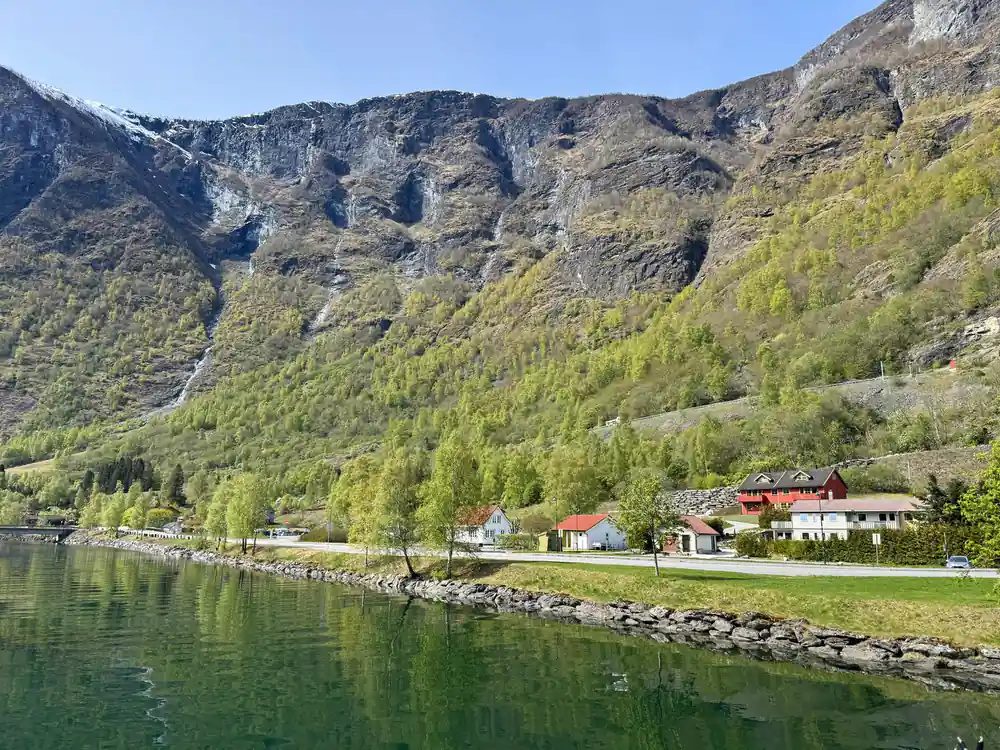
May is the low point of the precipitation year at Bulken, with 89 mm over 9 wet days, and any rain on 15 days of the month at all[1]. June follows at 97 mm over 10 wet days[1]. Temperatures climb fast through the same period: May averages 14.3 C maximum and 4.6 C minimum, June 18.4 C and 8.4 C[1]. Daylight runs 17.2 hours in May and 19.1 hours in June, so even a slow morning leaves the whole afternoon for the fjord and the lookout. This is the window where flam in winter is behind you and the valley is at its most forgiving.
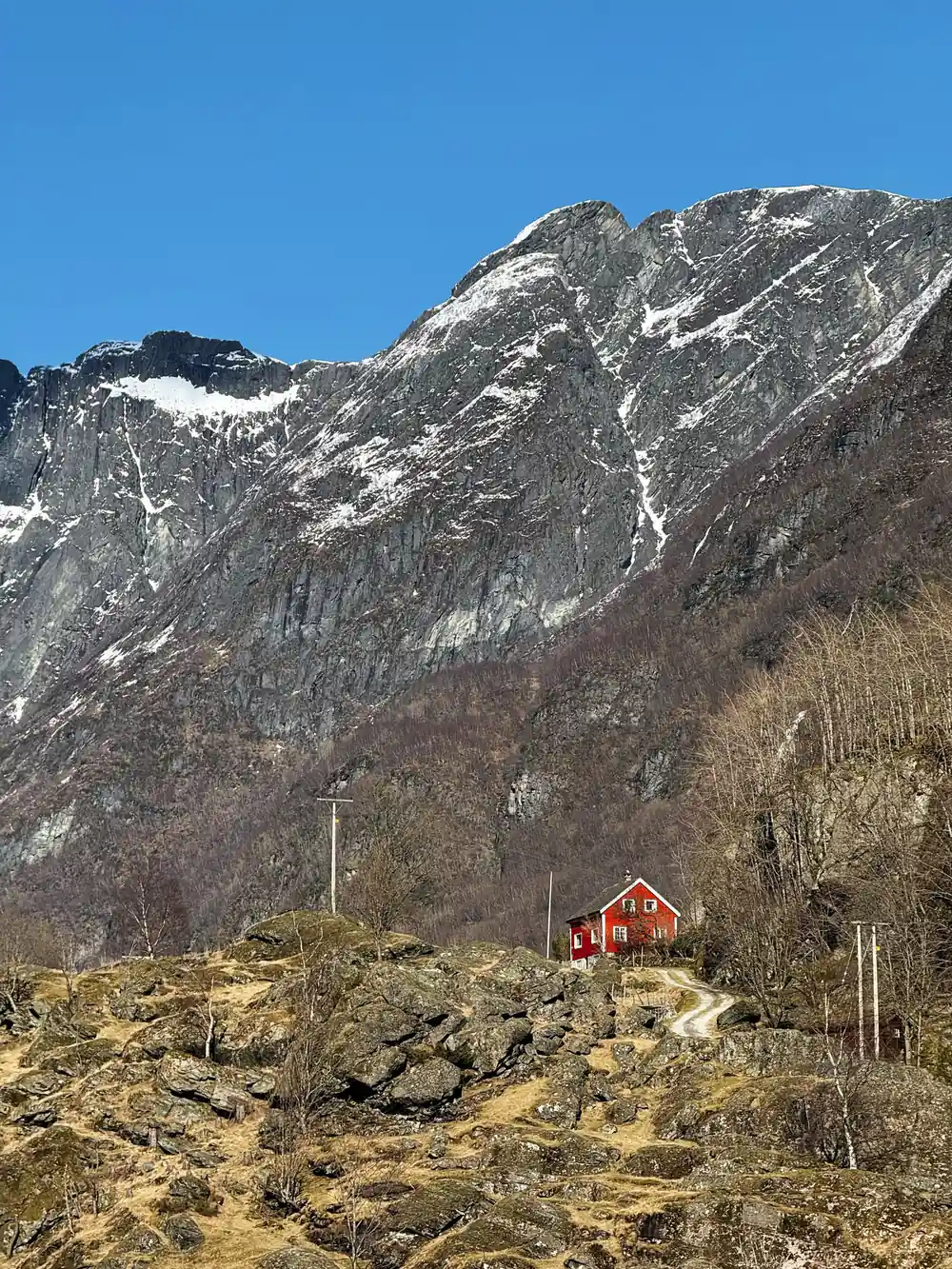
April is the transition month and it is genuinely underrated on paper. Rainfall drops to 107 mm over 10 wet days[1], well below the autumn and winter figures, while the average maximum reaches 8.9 C[1]. Daylight is already 14.5 hours. The trade is that April still averages 0.6 C at night[1], so early departures from Bergen are cold, and the higher ground around Stegastein can still be holding winter. March, at 175 mm and 13 wet days[1], is where the melt is under way and the waterfalls are loud, but the day is shorter at 11.6 hours and the bus spends more of it in grey.
Spring also brings the first real constraint on the calendar rather than the weather. The operator needs a minimum number of travellers for the tour to run[2], and that threshold is easiest to clear in the busy weeks. Booking a shoulder date is not just a question of whether the sky cooperates, it is a question of whether enough other people booked the same morning. Free cancellation up to 24 hours before departure, with a full refund, is the mechanism that makes an early spring booking low risk.
240 mm
December rainfall at Bulken, 4.4 km from the route, the wettest month in the 1991-2020 record[1].
Summer: warm, bright, and still wet
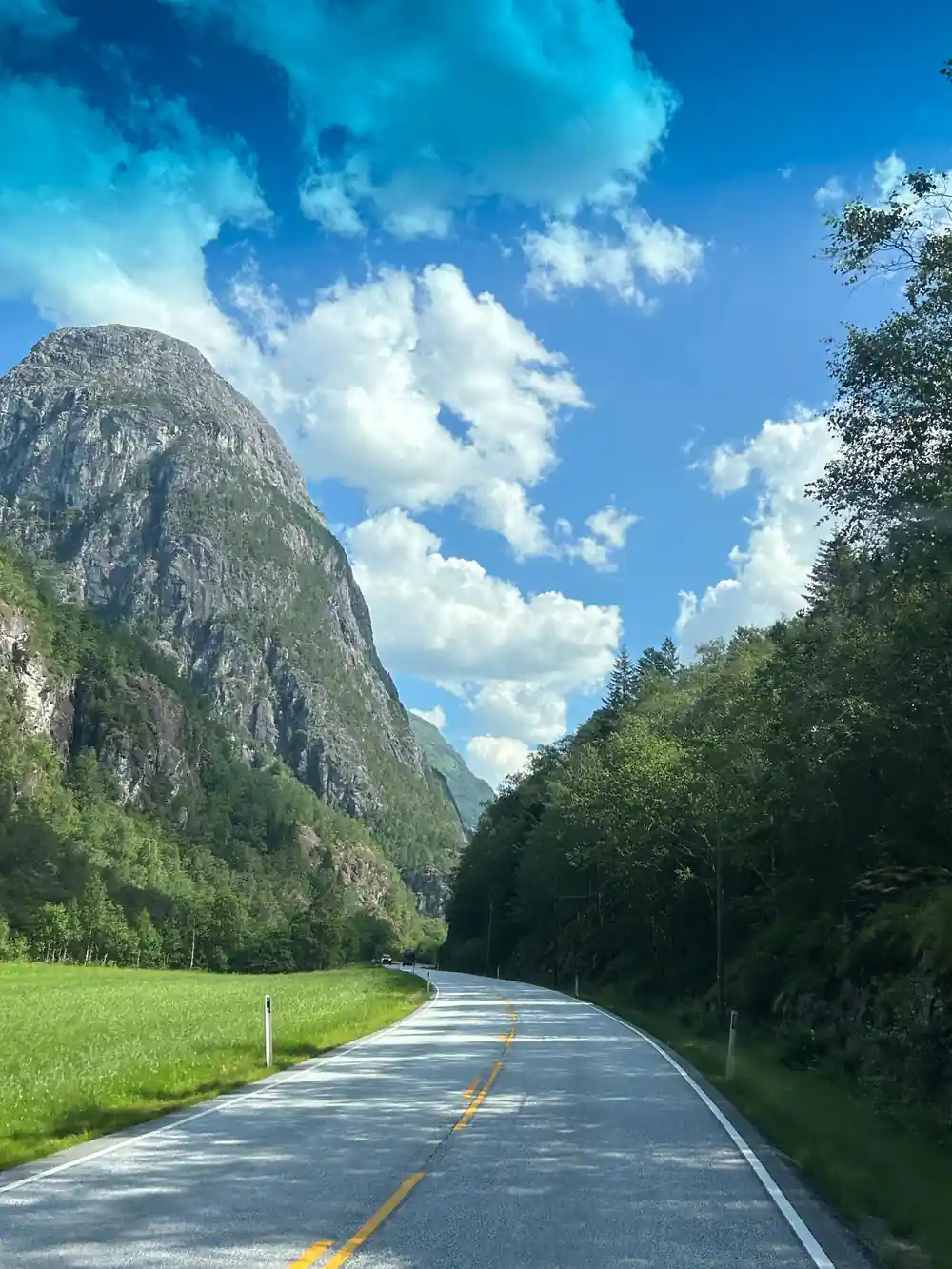
July is the warmest month, averaging 19.9 C maximum and 10.2 C minimum, with 114 mm of rain over 12 wet days[1]. August is statistically identical on temperature at 18.4 C and 9.9 C and slightly wetter at 132 mm over 12 wet days[1]. Daylight is the headline: 19.1 hours in June, 18.4 in July, 15.9 in August. On an 11 hour tour that starts at 08:00, you are never racing the dark in midsummer, and the fjord cruise happens in flat, even light rather than the low sun of spring and autumn.
The honest caveat is that summer rain in this valley is not a light inconvenience. A 12 wet day month with 114 to 132 mm[1] means the rain arrives in real volume when it arrives. The compensating factor is temperature: at 19.9 C[1] in July, being rained on at Stegastein is uncomfortable rather than dangerous, and the bus is a warm, dry place to reset between stops. Food and drink at every stop are excluded, so plan to buy lunch at one of the stops rather than carrying it, and remember that alcohol may not be carried in the vehicle.
Summer is also when the minimum traveller threshold[2] is least likely to bite, because demand is highest. If your dates are fixed and you want the highest probability that the tour actually departs, this is the season to pick. It is not the season with the least rain, and anyone booking July expecting a dry fjord should read the 12 wet days and 114 mm[1] first.
Autumn: the wettest ramp, and the one people underestimate
September holds up reasonably on temperature at 14.9 C maximum and 7.6 C minimum, but rainfall climbs to 193 mm over 13 wet days[1]. October is the turning point: 9.2 C maximum, 3.2 C minimum, 215 mm of rain across 14 wet days and rain on 20 days of the month in some form[1]. November drops to 4.5 C maximum and -0.1 C minimum with 205 mm over 14 wet days[1]. Flam in November is not a snow story, it is a water story, and the cruise leg is the part that feels it most.
Daylight falls quickly through the same weeks: 13.0 hours in September, 10.3 in October, 7.5 in November. An 08:00 departure in late October is starting in twilight and the return to Bergen happens after dark. That does not cancel anything, but it changes what the day is: the Stegastein Lookout at 10.3 hours of daylight in October is a different proposition from the same platform in June. If the view from the lookout is the reason you are booking, autumn is a compromise, and the recorded rainfall[1] is the other half of that compromise.
Autumn does have one advantage that the numbers support. The minimum traveller requirement[2] is easier to miss outside peak weeks, and the operator's weather condition[2] means a genuinely bad forecast is refunded or rescheduled rather than forced. Booking a late October date is therefore less of a gamble than it looks, provided you accept that a rescheduled or refunded day is a real possible outcome rather than an edge case.
Winter: short days, heavy rain, and the question of snow
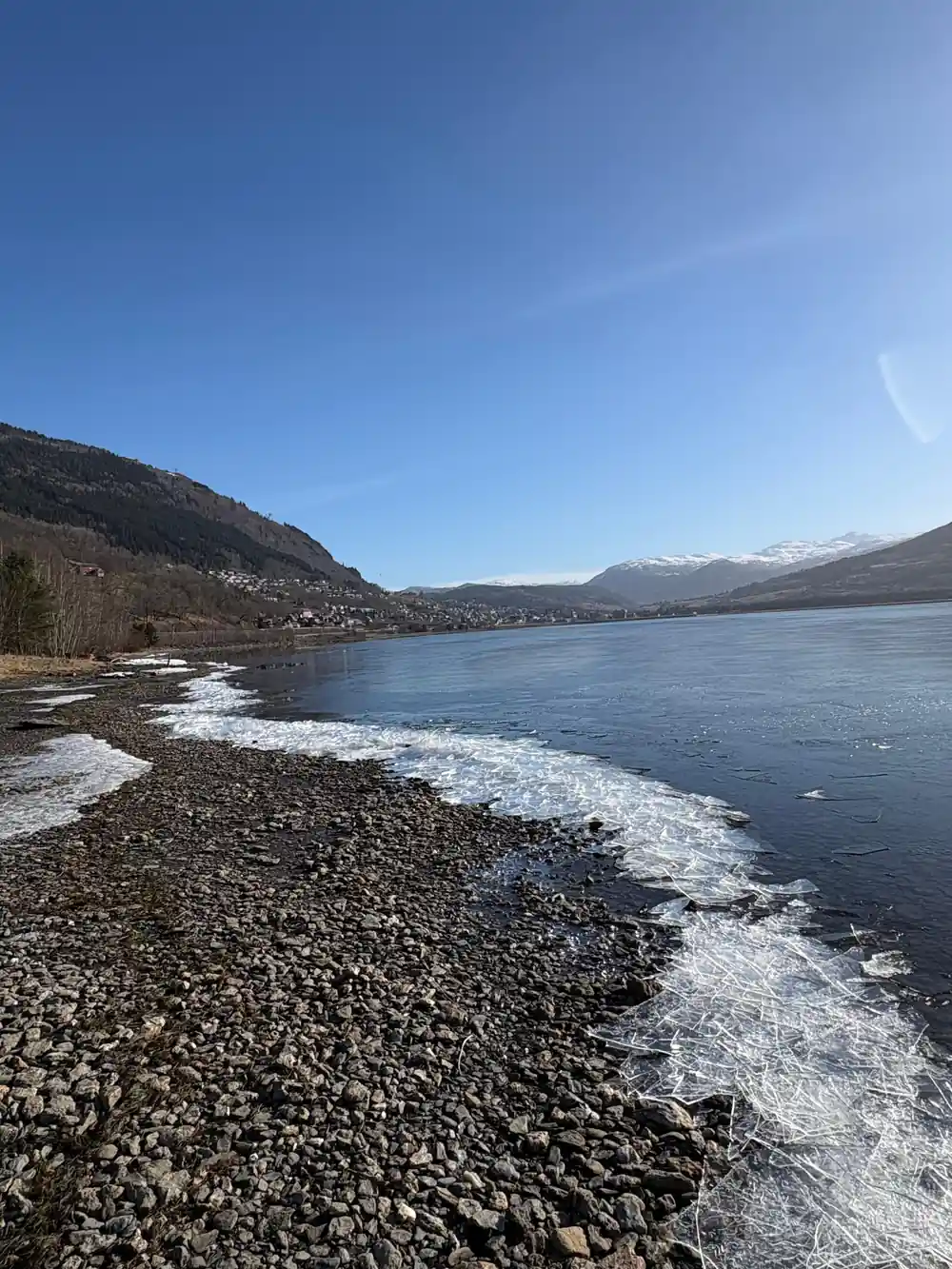
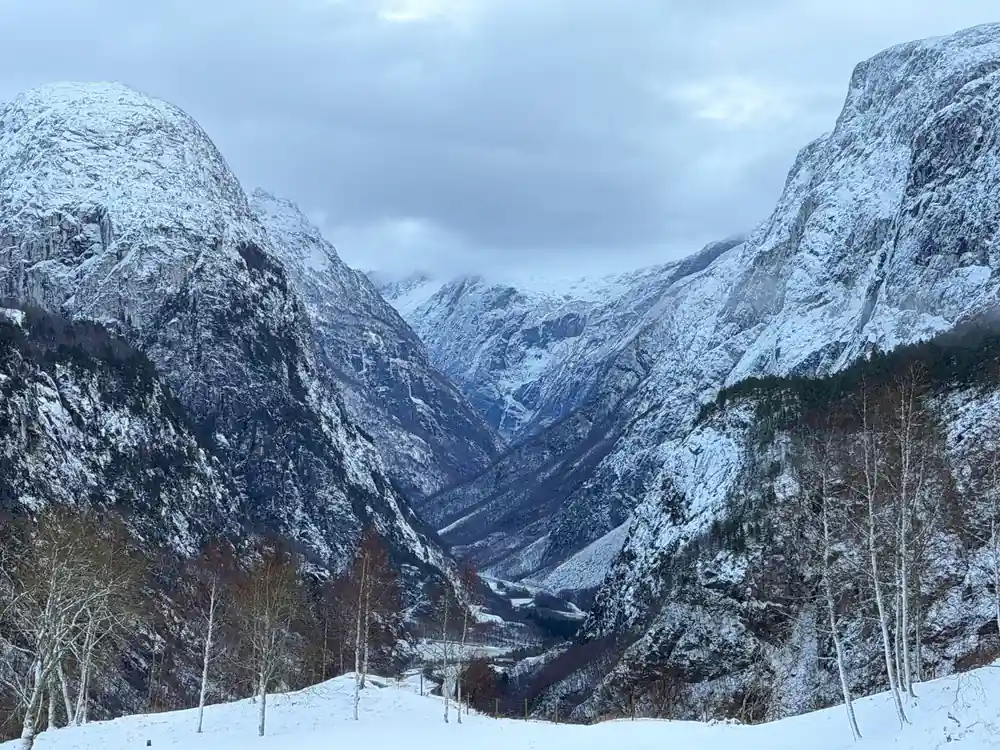
December is the wettest month in the record at 240 mm over 16 wet days, with rain on 21 days in some form[1]. January is 232 mm and 16 wet days, February 184 mm and 14 wet days[1]. Temperatures at Bulken average 2.8 C maximum and -1.5 C minimum in December, and 1.5 C and -3.3 C in January[1]. At 323 m the station is high enough that winter precipitation often falls as snow, and the road to Stegastein is the section where that matters. Daylight is the hard limit: 5.7 hours in December, 6.5 in January, 9 in February. An 11 hour tour in December runs mostly in the dark.
This is why a flam in winter booking needs to be thought about differently from a summer one. The Naeroyfjord cruise, the Stegastein Lookout, and the drive itself are all subject to the operator's judgement about conditions, and the tour explicitly needs good weather or it is refunded or rescheduled[2]. The refund or reschedule is the safety net, not the plan. If you are in Norway for a short window in December, a cancelled tour may not be reschedulable inside your trip, and the full refund does not buy back the day.
February is the most workable winter month in the record: 184 mm over 14 wet days, rain on 18 days[1], and 9 hours of daylight. March improves further at 175 mm and 13 wet days with 11.6 hours of daylight, though temperatures still average -2 C at night[1]. Anyone weighing flam in winter against spring should look at the daylight column first and the rainfall column second, because the short day is what removes options, not the rain.
The two conditions that can cancel the day, and what they mean for booking
The first condition is weather. The tour needs good weather, or it is refunded or rescheduled[2]. This is not a marketing caveat, it is an operational one, and it attaches to the fjord cruise and the mountain road rather than to the bus itself. The practical consequence is that a booking in any month is a booking subject to a decision made close to the day, and the free cancellation up to 24 hours before departure, with a full refund, is the parallel mechanism that covers your own change of plans. Between the two, you have a refund path in both directions.
The second condition is a minimum number of travellers[2]. This one has nothing to do with the sky and everything to do with the calendar. It is least likely to bite in July and August, when demand is highest, and most likely to bite in the shoulder and winter months. If your dates are flexible, that is an argument for picking a busy week rather than a quiet one, because the quiet week can cancel for a reason you cannot influence and cannot see in a flam forecast.
The two conditions combine badly in winter, because December and January have both the shortest daylight and, in many weeks, the thinnest demand. They combine well in late spring and midsummer, where the daylight is long, the rainfall is at its lowest, and the traveller threshold is easiest to clear. That is the whole of the when to go question in one sentence, and it is why the rainfall record and the daylight table should be read together rather than separately.
Rain and daylight through the year
Monthly rainfall at Bulken, 1991 to 2020 normals. May is the driest month on the record.
What the day costs, any season
"From" prices. The boat has a season; the guided day does not, which is what winter actually decides.
What the calendar decides
How to pick your date
Read the rainfall first
May is 89 mm over 9 wet days, December 240 mm over 16[1]. That gap drives everything else.
Then read the daylight
5.7 hours in December against 19.1 in June. An 11 hour tour in winter runs mostly in the dark.
Weigh the traveller minimum
The tour needs a minimum number of travellers[2], and quiet weeks are where that bites.
Accept the weather clause
It needs good weather or it is refunded or rescheduled[2]. A cancellation in a short trip may not be reschedulable.
Book with a refund path
Free cancellation up to 24 hours before departure, with a full refund, protects against your own change of plans.
Check the forecast late
The fjord leg is the exposed one. Look at the flam forecast in the final week, not months out.
Check the tour calendar and pick the season that suits the day you want
from US$312Reserve now & pay later