Quick summary
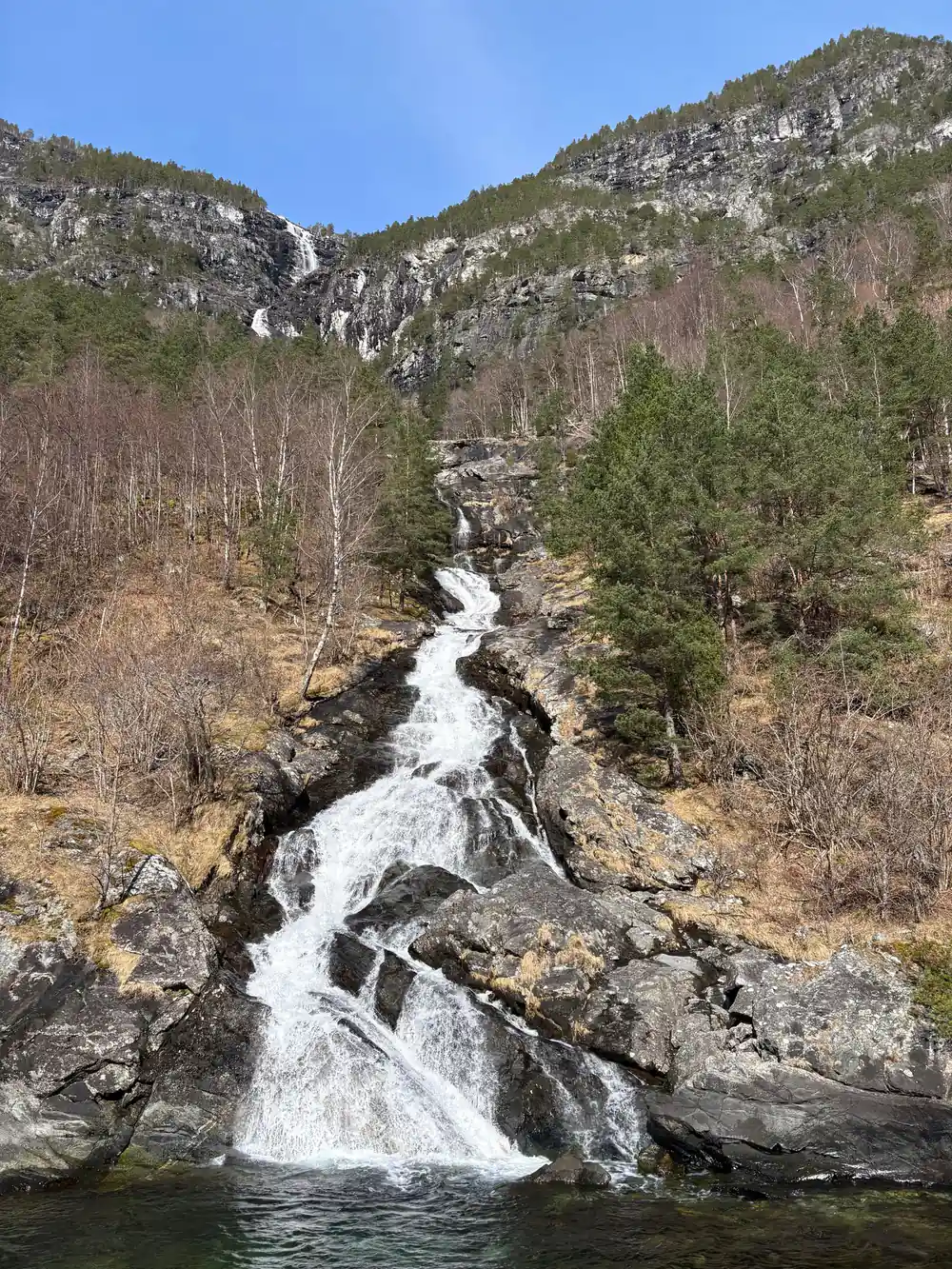
- The falls drop 110 metres in terraces, not in one clean plunge, so the water fans wide across the rock face.
- Admission to Tvindefossen is already covered inside the tour price, so there is nothing to pay at the gate.
- The stop sits on the road east between Bergen and Voss, roughly a third of the way through the driving day [1].
- You get around half an hour on site, which is enough for the main viewpoint and a short walk up the path.
- Every seat on the bus stops here, so the timing of your photos depends on when the coach pulls in.
-
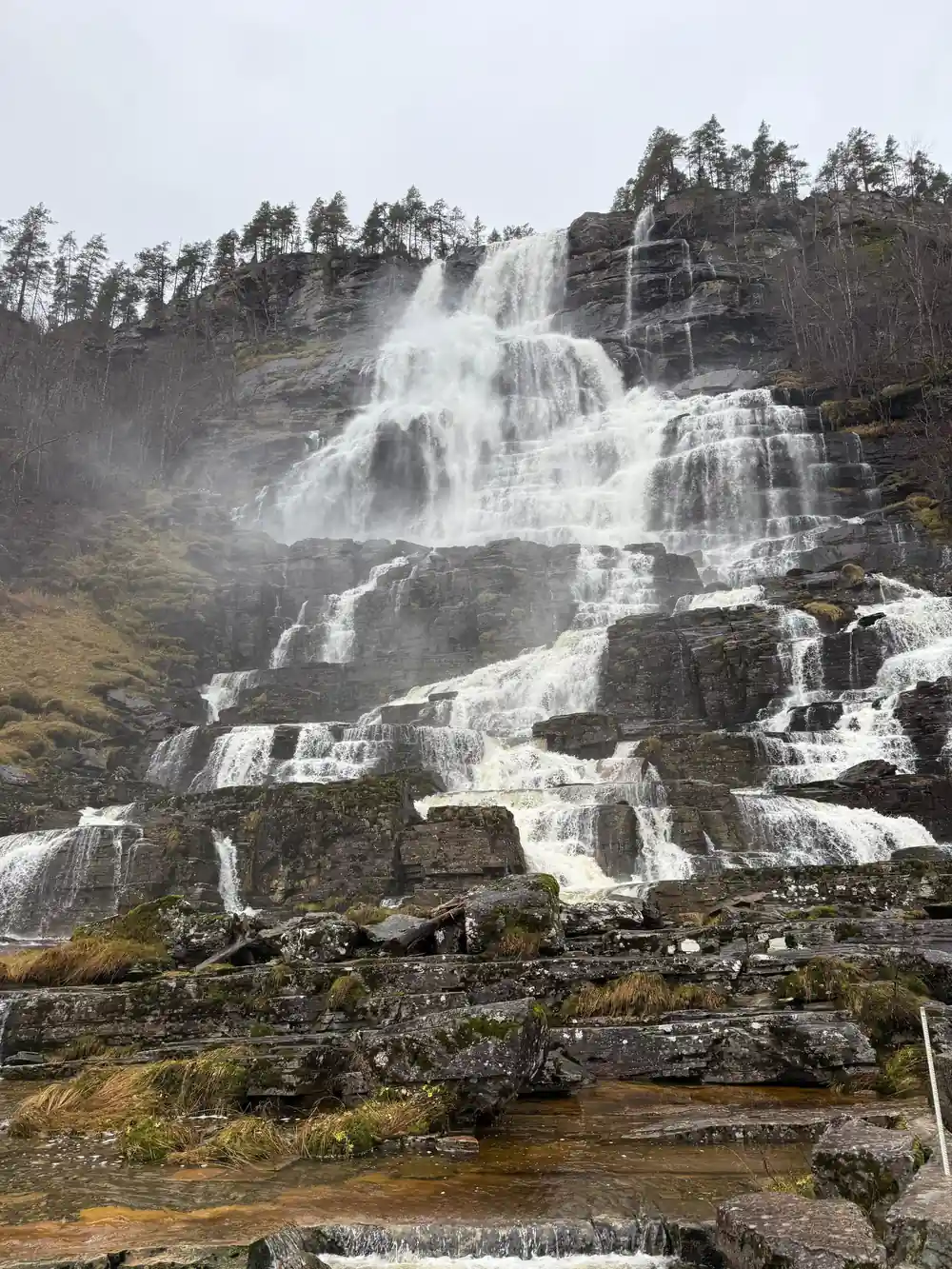 Tvindefossen
About 30 minutes
What you see110 m terraced waterfallAdmission in priceYes, includedTerrainShort walk and pathGreat forWaterfall photosFacilitiesShop and toiletsCosts extraNo, admission covered
Tvindefossen
About 30 minutes
What you see110 m terraced waterfallAdmission in priceYes, includedTerrainShort walk and pathGreat forWaterfall photosFacilitiesShop and toiletsCosts extraNo, admission covered
-
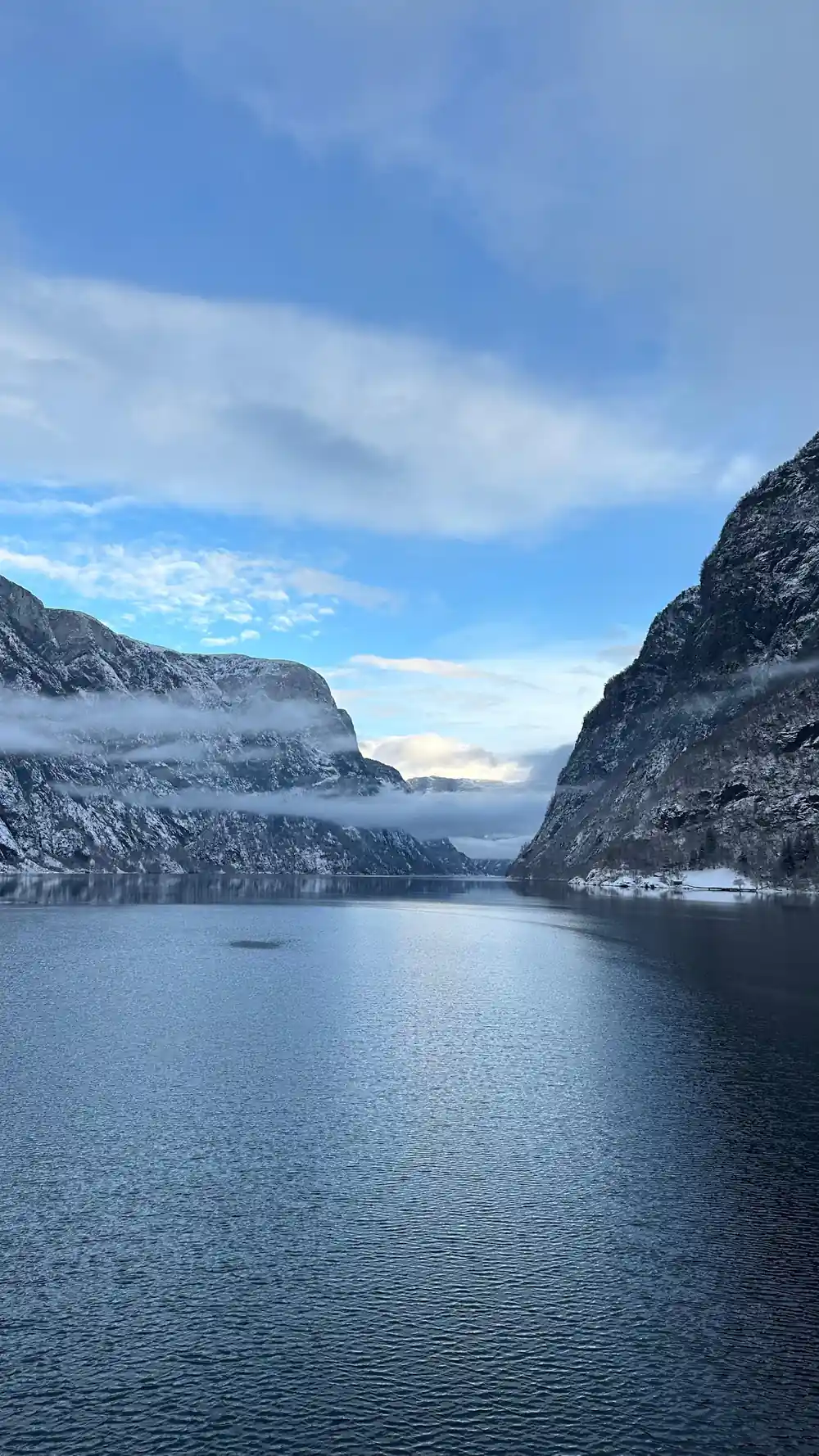
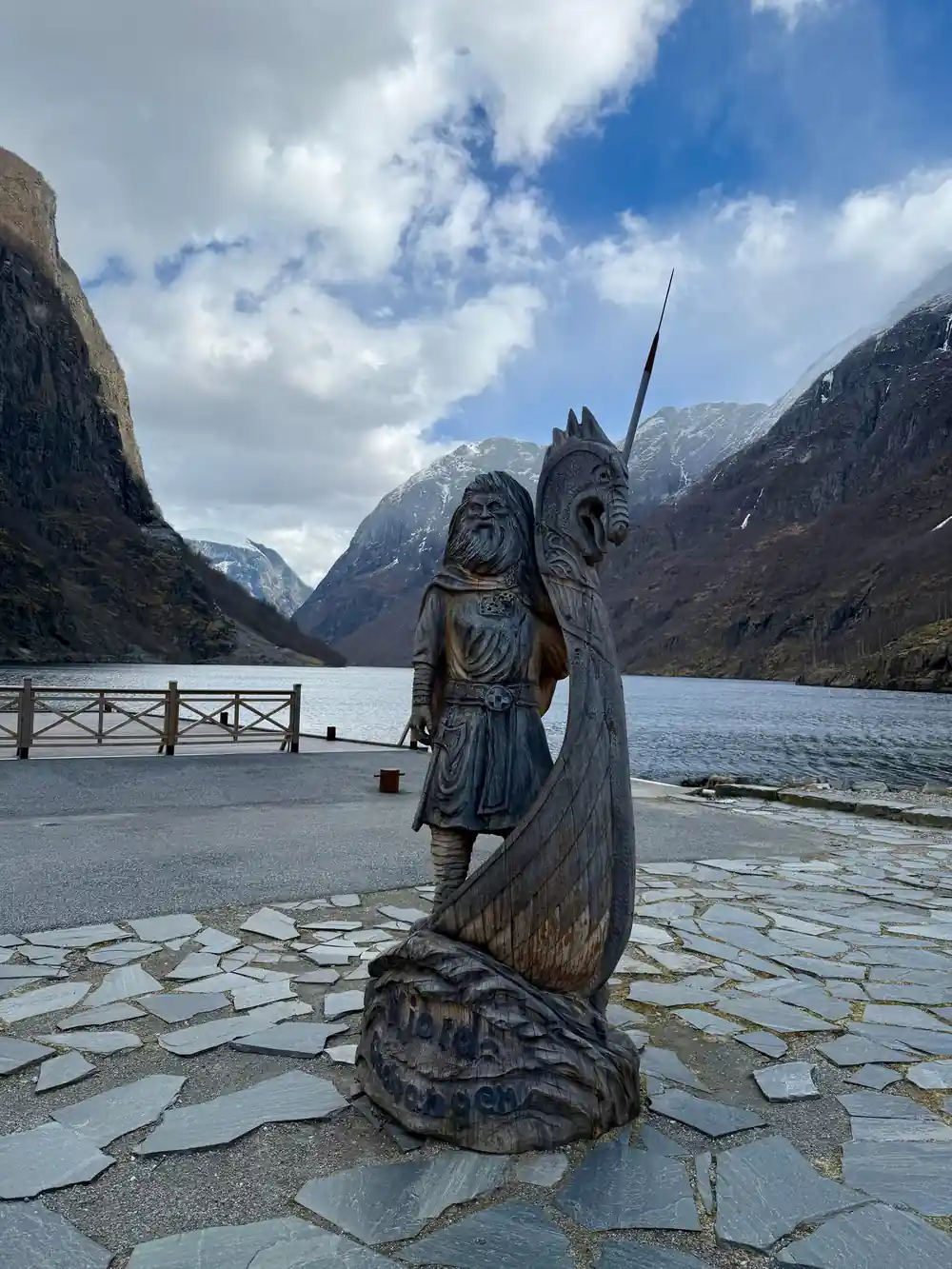 Gudvangen
Village stop before the fjord
What you seeFjord village and water levelAdmission in priceCruise ticket includedTerrainFlat village groundGreat forBoarding the cruiseFacilitiesVillage servicesCosts extraNo, cruise covered
Gudvangen
Village stop before the fjord
What you seeFjord village and water levelAdmission in priceCruise ticket includedTerrainFlat village groundGreat forBoarding the cruiseFacilitiesVillage servicesCosts extraNo, cruise covered
-
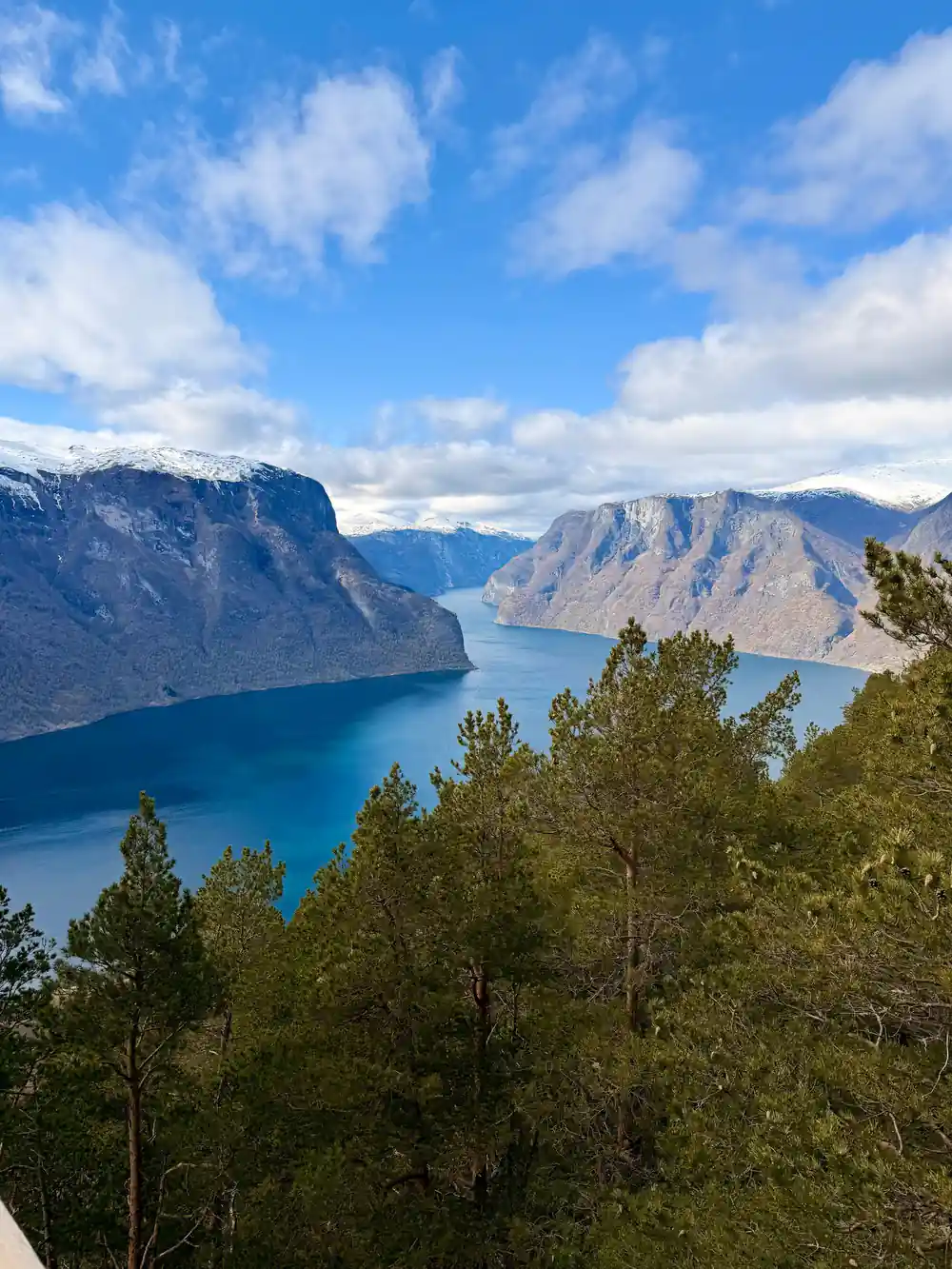
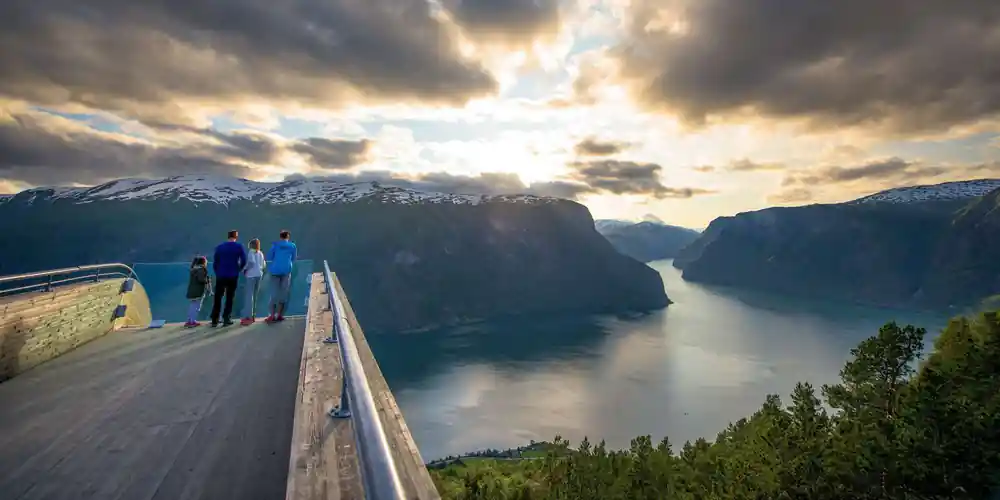 Stegastein
Viewpoint stop on the climb
What you seePlatform over the fjordAdmission in priceYes, includedTerrainBuilt viewpoint, easy accessGreat forWide fjord viewsFacilitiesViewpoint areaCosts extraNo, admission covered
Stegastein
Viewpoint stop on the climb
What you seePlatform over the fjordAdmission in priceYes, includedTerrainBuilt viewpoint, easy accessGreat forWide fjord viewsFacilitiesViewpoint areaCosts extraNo, admission covered
Driving through the Laerdal Tunnel, the world’s longest road tunnel with a length of 24.5 km, will allow you to enjoy a wonderful round trip.
Which stop is worth your half hour
Included in price
- Air conditioned bus for the full 11 hour day
- Admission to Tvindefossen, covered by the tour price [2]
- Admission to Stegastein Lookout, covered by the tour price [2]
- Naeroyfjord cruise ticket, included in what you pay [2]
- Live guide on board, English speaking, all day
- Free cancellation up to 24 hours before, full refund
Not included
- Food and drink at every stop, buy your own or bring it
- Alcohol may not be carried in the vehicle at any point
- Tolls on the route are separate if you drive yourself [1]
- Children under 4 are not allowed on this tour
Why 110 metres matters more than the number suggests
A single 110 metre drop is impressive. Tvindefossen does not do that. The water comes down in a series of terraces, stepping from one shelf of rock to the next, and the effect is a wide curtain rather than a narrow rope of white. That shape is what makes the stop worth the half hour, because you can see the whole structure from the base without walking far.
The terraced form also means the waterfall reads differently depending on how much water is running. After rain the terraces merge into something closer to a solid wall. In drier spells you can pick out the individual steps and the pools between them. Either version is a real waterfall at full height, not a trickle, and the viewing area at the bottom gives you the full vertical.
Photographers tend to walk up the path a little to get the whole fall in one frame. From the parking level you are close enough that a phone camera will crop the top. The short climb costs a few minutes of the half hour and returns a better shot, so budget for it if the light is good.
What half an hour actually gets you
Thirty minutes sounds tight for a 110 metre waterfall. In practice it is comfortable. The walk from where the bus parks to the main viewpoint is short, measured in a couple of minutes rather than a hike, and the ground is straightforward. You are not committing to a trail. You are stepping off a coach, walking a short distance, and standing in front of falling water.
The realistic split is something like ten minutes at the base watching and photographing, ten minutes on the upper path for the wider angle, and the rest back at the bus or in the small area nearby. There is a souvenir shop and toilet stop at the site, which is often the practical reason the half hour exists at all on a long driving day [1].
What half an hour does not get you is a quiet, empty experience. This is a roadside stop on a main route, and it is popular precisely because it costs nothing to see and sits directly on the way. Expect other vehicles. Expect people in your frame. The compensation is that you never have to plan around it, because the bus handles the timing.
Where Tvindefossen sits in the day
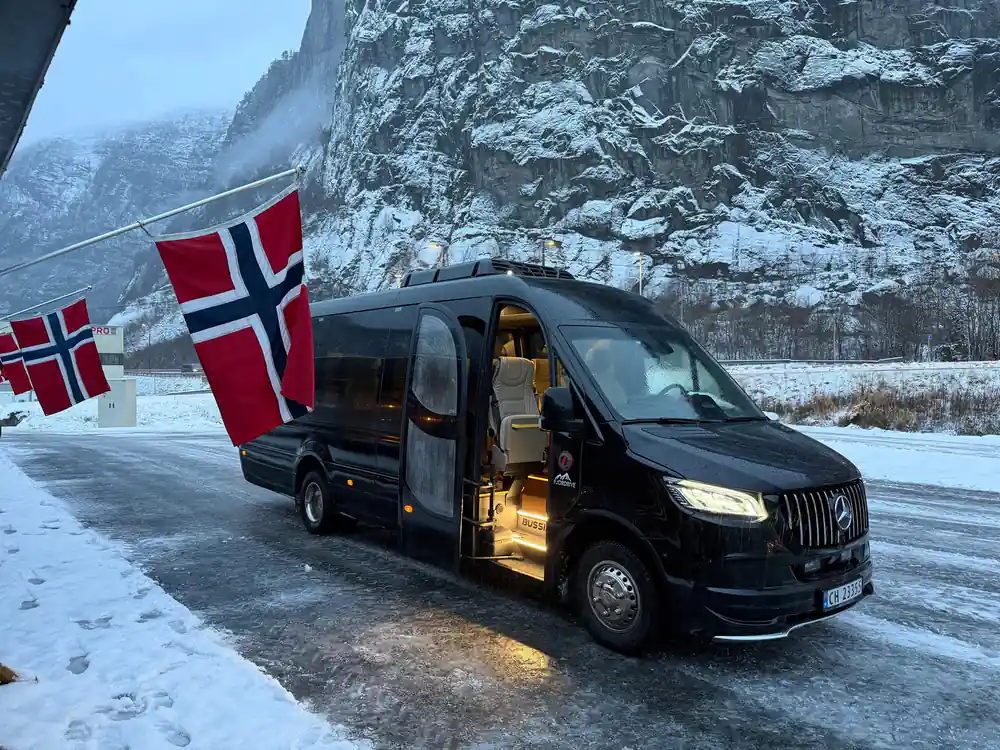
The full tour runs about 11 hours from Bergen, with a live English speaking guide on board and an air conditioned bus for the whole day. The waterfall is an early stop, coming after the drive east out of the city and before the day turns toward the fjord. It functions as a leg stretch and a first proper look at Norwegian landscape, which is exactly what a long bus day needs at that point [1].
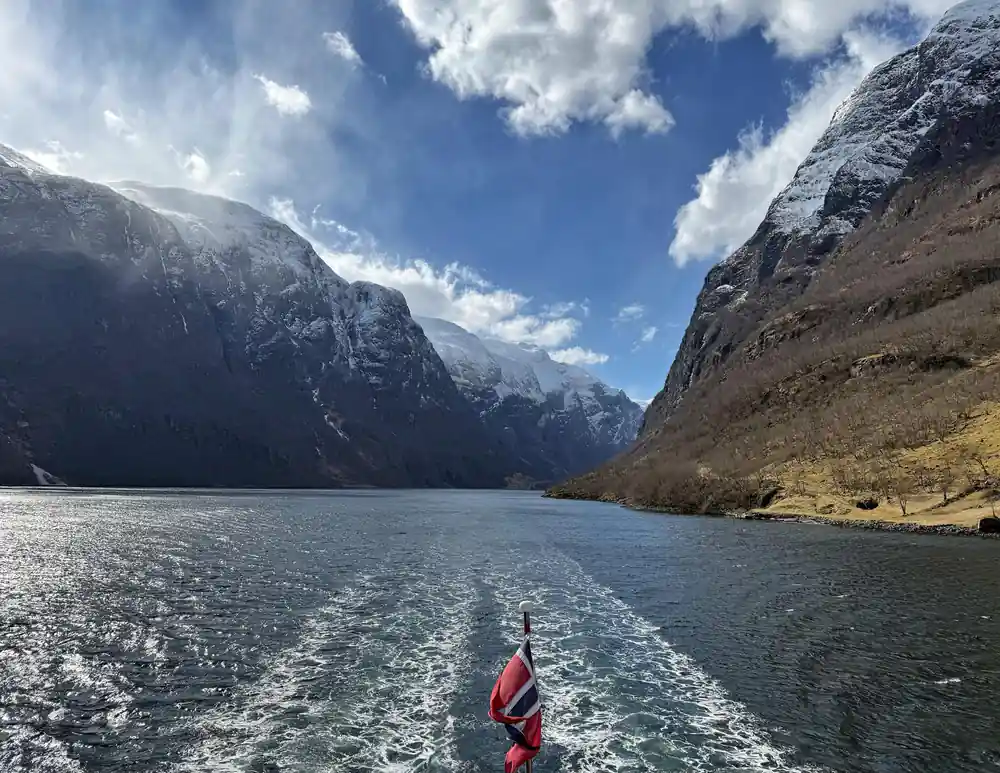
From there the route continues toward Gudvangen and the Naeroyfjord cruise, then on to Flam and the climb to Stegastein Lookout before the return to Bergen. Tvindefossen is therefore the opener of the scenic sequence, not the highlight. If you treat it as the first course rather than the main event, the day's rhythm makes sense.
The meeting point is outside the Tourist Information in Bergen, at 07:50 for an 08:00 departure. That early start is what buys the time for three roadside stops plus the fjord crossing inside 11 hours. Booking includes free cancellation up to 24 hours before departure with a full refund, and the tour needs good weather or it is refunded or rescheduled [2].
110 m
Tvindefossen drops 110 metres, but in terraces rather than one plunge, so the water fans across the rock in steps.
The stop in context: three roadside landmarks
Tvindefossen is one of three roadside stops on the day, and the three are not equivalent. Tvindefossen is a short waterfall visit with admission covered in the tour price [2]. Gudvangen is a village stop tied to the fjord, where the Naeroyfjord cruise begins and the scenery shifts from road side to water level. Stegastein is a built viewpoint, a platform that juts out over the fjord, and its admission is also included in the tour price [2].
That difference matters when you are deciding where to spend your attention and your camera battery. The waterfall is vertical and close. Gudvangen is horizontal and wide. Stegastein is elevated and engineered. None of them repeats another, which is why the day works as a sequence rather than a list of similar stops.
The cruise ticket for Naeroyfjord is part of what you pay for, alongside the bus and the two admissions [2]. Food and drink are not included at any stop, and alcohol may not be carried on the vehicle. The tour also has a minimum number of travellers and does not allow children under 4.
Getting there and the road reality
The stop sits on the road east between Bergen and Voss, on the E16 corridor that the day's driving follows before the route turns toward Flam [1]. This is a working road, not a scenic loop built for tourists, which is part of why the waterfall is easy to reach and also why it is busy. Tolls apply on the route, and the Laerdal Tunnel closure from autumn 2026 is a live factor on this road network [1].
For anyone driving the route independently, the same warnings apply: check current road status before setting out, because a closure on a corridor like this pushes traffic onto alternatives and changes timings [1]. Coach tours absorb that planning for you. You sit, the driver watches the road, and the schedule adjusts if the route demands it.
In practice the bus leg to the falls is the least eventful part of the day. It is a transfer with a purpose. The reward for sitting through it is the first waterfall, then the fjord, then the viewpoint, in that order. The stop is a hinge between the ordinary drive and the scenery the tour is actually sold on.
Prices, currency and what is in the fare
The tour is priced from 311.47 USD per person, sold in US dollars by the operator even though you are in Norway. That is a starting fare, not a fixed quote, and it can move with availability and season. Norwegian transport fares on the same corridor, such as express boat tickets between Bergen and Flam, are quoted in NOK by their operators, so do not expect one currency across everything you book [2].
Inside the tour price you get the air conditioned bus for the day, admission to Tvindefossen, admission to Stegastein Lookout, and the Naeroyfjord cruise ticket [2]. That combination is the reason the fare looks higher than a simple bus ticket: it bundles the two paid attractions and the boat into one number. If you were assembling the day yourself, those would be separate purchases in separate currencies.
What is not in the price is food and drink at any of the stops, and alcohol is not permitted on the vehicle. Bring a water bottle and something to eat, or buy at the stops, because the day runs long and the gaps between meals are wide. The falls themselves cost you nothing extra once you are on the bus [2].
Making the half hour count
Decide before you arrive what the stop is for. If it is photos, go straight to the base viewpoint, take the wide shot, then climb the short path for the elevated frame. If it is a break, use the facilities and the shop and watch the water from the lower level. Trying to do everything at once is how people end up back at the bus with a blurred picture and no idea what they saw.
Wear something that can take spray. Standing near a 110 metre terraced fall means mist, especially when the water is high, and a light jacket beats an umbrella that will turn inside out. Footwear with grip helps on the path up, which can be wet. None of this is expedition gear, just sensible layers for ten minutes of standing still in moving air.
Then get back on time. On an 11 hour itinerary with a cruise and a viewpoint still ahead, the half hour at Tvindefossen is a fixed slot, and the bus leaves when it leaves [1]. The good news is that thirty minutes is genuinely enough here. It is a waterfall, not a national park, and the whole point is that you can see it properly and move on.
How the stops compare in height
The day's three roadside stops, at three very different altitudes.
What the roadside stops cost
"From" prices. Admission to Tvindefossen is inside the tour price, not paid at the gate.
When the falls are at their best
The day, in order
Meet in Bergen
Outside the Tourist Information, 07:50 for an 08:00 start, with the bus and guide waiting.
Drive east
The route follows the road toward Voss, with tolls on the corridor and the Laerdal Tunnel closure a factor from autumn 2026 [1].
Tvindefossen
Half an hour at the 110 metre terraced waterfall, admission already covered in the price [2].
Gudvangen and cruise
Board the Naeroyfjord cruise, ticket included, and see the fjord from water level [2].
Flam and Stegastein
Continue to Flam, then climb to Stegastein Lookout, admission included in the tour price [2].
Return to Bergen
The bus brings you back at the end of roughly 11 hours, with the guide on board throughout.
Ride the day that stops at the 110 metre falls
from US$312Reserve now & pay later